GCM’s VHD Heat Sink Handles 400W at 85°C, Outperforming Copper and Aluminum

Green Critical Minerals’ proprietary VHD graphite heat sink outperforms traditional materials in computational tests, promising enhanced thermal management for high-power microchips in data centres.
- VHD heat sink supports 300-400W power loads at 70-85°C, surpassing copper and aluminum
- Finite Element modelling led by Professor Qing Li confirms superior thermal diffusivity
- Strong global customer interest and collaboration with data centre operator GreenSquareDC
- Prototype manufacturing and testing planned for late 2025
- First sales and revenue expected in first half of 2026
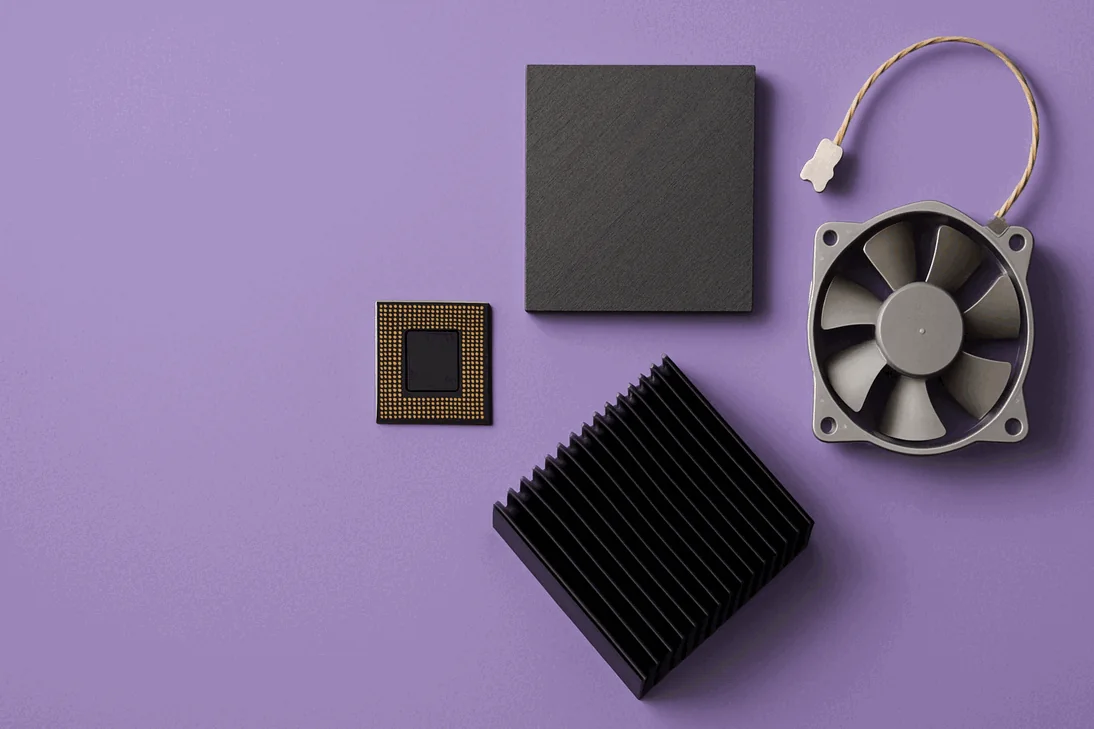

Innovative Heat Sink Technology Validated
Green Critical Minerals (GCM) has announced compelling computational modelling results that validate the exceptional performance of its proprietary VHD Technology graphite heat sinks. Conducted by the University of Sydney’s Center for Advanced Material Technology under the guidance of Professor Qing Li, the Finite Element simulations reveal that VHD heat sinks can dissipate heat from microchips operating at power loads between 300 and 400 watts while maintaining temperatures within the critical 70-85°C range.
This performance notably exceeds that of conventional heat sink materials such as copper, aluminum, and isotropic graphite, which typically manage only 200-250 watts under similar conditions. The findings underscore the VHD heat sink’s superior thermal diffusivity, rapidly dispersing heat away from the microchip base and thus enabling more efficient cooling.
Implications for High-Performance Computing
As data centres and high-performance computing environments increasingly demand microchips capable of handling power loads starting at 300 watts and above, effective thermal management becomes paramount. GCM’s VHD heat sinks offer a promising solution to this challenge, potentially reducing operating temperatures and enhancing the reliability and longevity of critical computing infrastructure.
Managing heat efficiently not only supports operational stability but also contributes to lowering capital and operating expenses for data centres, aligning with broader sustainability goals. The ability to cool more powerful chips effectively could accelerate advancements in computing performance without compromising energy efficiency.
Progressing Towards Commercialisation
GCM is actively engaging with a growing pipeline of global customers, including thermal management providers and semiconductor manufacturers across Australia, Europe, North America, and Asia. The company has also formalised a collaboration with Australian data centre operator GreenSquareDC, reflecting strong industry interest.
Looking ahead, GCM plans to manufacture prototypes from its newly commissioned production facility and conduct performance testing to verify the computational results. The company anticipates executing its first sales agreements and generating revenue in the first half of 2026. Additionally, GCM is exploring applications of VHD technology in cold plates for liquid cooling solutions, further broadening its market potential.
Strategic Outlook and Market Positioning
These developments position GCM at the forefront of thermal management innovation, a sector critical to the future of data centres and semiconductor technology. The company’s ability to scale production and meet customer demand will be key to capitalising on this momentum. With the thermal management market poised for growth amid rising microchip power requirements, GCM’s VHD heat sink technology could become a vital component in next-generation cooling solutions.
Bottom Line?
GCM’s VHD heat sink breakthrough sets the stage for a transformative role in cooling next-gen microchips; next steps will test if prototypes can deliver on modelling promise.
Questions in the middle?
- How will prototype testing results compare with the computational modelling outcomes?
- What are the timelines and scale for GCM’s planned production capacity expansion?
- Which major semiconductor manufacturers might become early adopters of VHD technology?