Aurora Labs Secures $544K Defence Grant, Advances Micro Gas Turbine Production

3 min read
9:32am on Wednesday 30th of July, 2025 AEST ~9am, 30th Jul, 25
Aurora Labs has advanced its micro gas turbine program with key test bench upgrades, a significant Defence grant, and strategic partnerships, positioning itself for international defence market entry.
- Completion of major test bench upgrades for AU-series micro gas turbines
- Secured $544,333 Defence Industry Development Grant for production scale-up
- Signed MoU with Mayman Aerospace for UAV propulsion integration
- Facility upgrades including new CNC machining capabilities underway
- Preparing to exhibit at DSEI 2025 in London on Team Defence Australia stand
 Add us as a preferred source on Google
Micro Gas Turbine Development Milestones
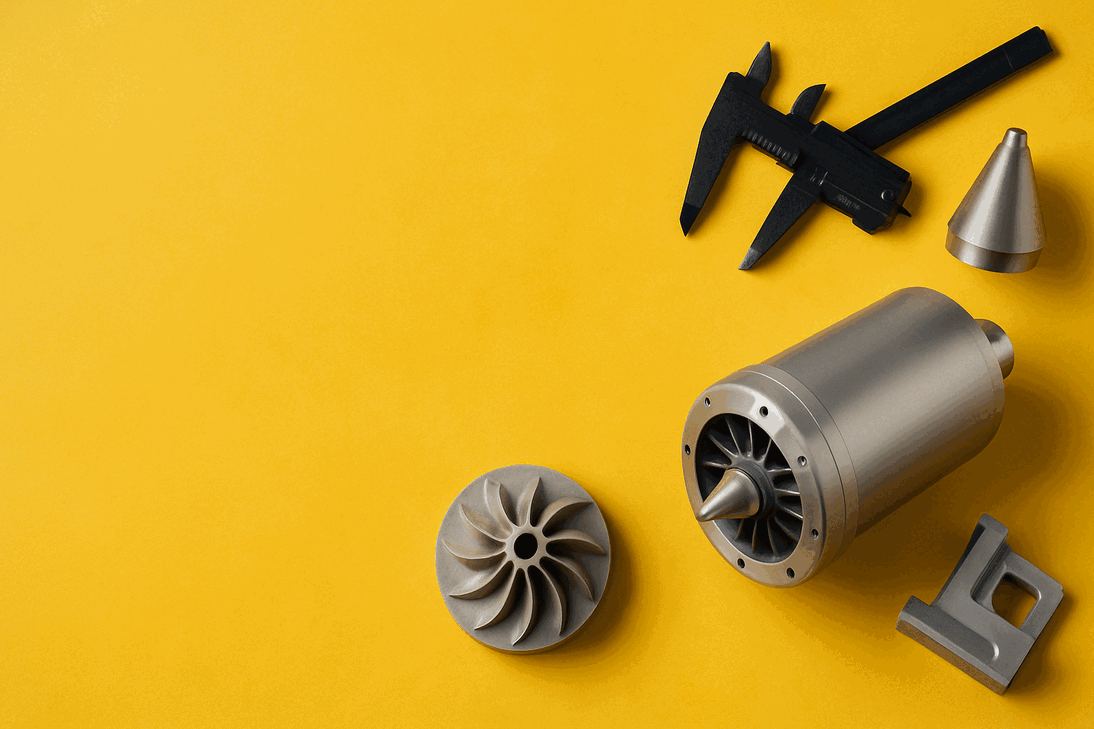
Aurora Labs Limited (ASX:A3D) has reported significant progress in its micro gas turbine (MGT) program during the June quarter of FY2025. The company completed major upgrades to its test bench infrastructure, enabling detailed durability and performance testing of its AU2 and AU4 micro gas turbines. These enhancements allow for high-frequency data capture critical to validating engine performance, safety, and reliability under demanding conditions, a vital step toward certification and operational deployment.
The engines are being prepared for long-duration testing to transition from single-use to reusable propulsion systems, targeting applications in military drones and attritable UAVs. This phase includes rigorous assessments against military standards for environmental durability, vibration tolerance, fuel compatibility, and electromagnetic interference.
Strategic Funding and Facility Expansion
To support scaling production, Aurora Labs secured a $544,333 Defence Industry Development Grant aimed at expanding manufacturing capabilities and vertical integration. This funding underpins the acquisition of advanced CNC machining equipment and the reorganisation of fabrication workshops at its Canning Vale facility in Western Australia. These upgrades will enhance the company’s ability to process engine components in-house, reducing reliance on foreign supply chains and aligning with sovereign defence manufacturing objectives.
Alongside physical upgrades, Aurora is implementing an AS9100D-aligned quality management system to meet stringent aerospace certification requirements. The company also signed a Memorandum of Understanding with Gravitas Technologies to access advanced heat treatment services, further strengthening its aerospace supply chain credentials.
Expanding Commercial and International Engagement
On the commercial front, Aurora Labs continues to generate steady revenue through its Industrial Print Services Bureau, servicing clients such as Alcoa and producing bespoke automotive parts. The print bureau is also advancing pilot production runs of micro gas turbine engines, supporting both commercial and defence testing programs.
Significantly, Aurora signed an MoU with US-based Mayman Aerospace, a company specialising in advanced VTOL and defence technologies. This partnership aims to integrate Aurora’s propulsion systems into next-generation aerial platforms, marking a strategic move into the US aerospace market.
Further international exposure is planned with Aurora’s invitation to exhibit its AU2 and AU4 engines at the Defence and Security Equipment International (DSEI) 2025 event in London. Participation on the Team Defence Australia stand will facilitate engagement with global defence primes and potential customers.
Financial Position and Outlook
Financially, Aurora Labs ended the quarter with $1.156 million in cash, supported by a $500,000 loan secured against its 2025 R&D tax claim. While operating cash flow remains negative, the company is managing its investments prudently to support critical production initiatives and certification efforts.
CEO Rebekah Letheby highlighted the transition from development to production readiness, emphasising the importance of upcoming durability testing campaigns and commercial order procurement. The company’s focus for the next quarter includes advancing engine testing, completing CNC equipment installation, and preparing for volume production aligned with aerospace standards.
Bottom Line?
Aurora Labs is poised at a pivotal juncture, moving from innovation to industrial-scale production with growing defence partnerships and international market ambitions.
Questions in the middle?
- When will Aurora Labs secure its first commercial orders for the attritable micro gas turbines?
- How will the durability testing results influence certification timelines and market entry?
- What impact will the Mayman Aerospace partnership have on Aurora’s US defence market penetration?