Odessa’s Lyndon Exploration Raises Stakes Amid Board Shakeup

Odessa Minerals reports encouraging base metal anomalies and uranium exploration progress at its Lyndon Project, alongside strategic board changes and ongoing acquisition reviews.
- Anomalous lead up to 0.8% and copper up to 0.3% detected at Ebro Bore Prospect
- 14 rock chip samples exceed 0.1% lead, highlighting base metal potential
- Uranium targets identified at fault intersections with calcrete development
- Extensive 100km strike of Devonian carbonates mapped for further exploration
- Board refreshed with two new non-executive directors appointed

 Add us as a preferred source on Google
Exploration Breakthroughs at Lyndon Project
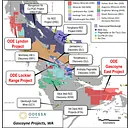
Odessa Minerals Limited has delivered a compelling update on its Lyndon Project in Western Australia, revealing promising early-stage results from its recent field activities. The company’s first-pass reconnaissance mapping and rock chip sampling at the Ebro Bore Prospect have returned anomalous base metal values, with lead concentrations reaching as high as 0.8% and copper up to 0.3%. These findings mark a significant step forward in assessing the mineral potential of the Devonian carbonates within the Gneuda Formation, which extends over approximately 100 kilometres of strike.
Notably, 14 samples collected during the quarter exceeded 0.1% lead, underscoring the prospectivity of the area. The mineralisation appears predominantly hosted within thickly bedded dolomite, particularly in brecciated zones near major fault structures. This geological setting is analogous to known copper-lead-zinc Mississippi Valley-Type deposits in Western Australia, such as those found on the Lennard Shelf, suggesting a credible pathway for further discovery.
Uranium Exploration and Structural Insights
Beyond base metals, Odessa has advanced its uranium exploration efforts by focusing on structural intersections where faults meet stratigraphic boundaries, including the unconformity between the Gneuda Formation and the Glenburgh Terrane. The development of calcrete over these fault intersections is particularly encouraging, as calcrete can act as a trap for uranium mineralisation sourced from radiogenic granites. The company’s mapping has identified calcrete presence over significant portions of the unconformity, highlighting new targets for follow-up exploration.
These structural and stratigraphic insights provide a framework for future work, including detailed mapping, systematic drilling, and geophysical surveys such as VTEM to delineate palaeochannels and potential feeder structures. Such efforts aim to refine target zones and assess the extent of mineralisation concealed beneath surface cover.
Corporate Developments and Financial Position
On the corporate front, Odessa Minerals has refreshed its board with the appointments of Thomas Bahen and Maddison Cramer as non-executive directors, replacing outgoing members. This leadership update aligns with the company’s strategic intent to enhance its exploration portfolio and pursue value-accretive acquisition opportunities. While no acquisitions have been finalised, the company is actively reviewing potential projects that could complement its existing assets.
Financially, Odessa reported net cash outflows from operating and investing activities during the quarter, with cash reserves standing at AUD 2.154 million as of 30 June 2025. The company’s disciplined capital management supports ongoing exploration programs while maintaining flexibility for future growth initiatives.
Looking Ahead
Odessa’s Lyndon Project remains a focal point, with plans to expand mapping across the entire 100km strike of the Gneuda Formation and to conduct drilling programs targeting the unconformity and associated hydrothermal alteration zones. Engagement with local Native Title groups is also progressing to facilitate access for further uranium exploration. Collectively, these developments position Odessa Minerals as a company to watch in the evolving landscape of base metal and uranium exploration in Western Australia.
Bottom Line?
Odessa’s initial discoveries at Lyndon set the stage for a pivotal exploration phase that could redefine its growth trajectory.
Questions in the middle?
- How will upcoming drilling results at Lyndon influence Odessa’s valuation and investor sentiment?
- What specific acquisition targets is Odessa considering to complement its current portfolio?
- How might the new board members shape the company’s strategic direction and operational priorities?