Can Talga’s Talnode-R Break China’s Grip on Graphite Anode Supply?

Talga Group has launched Talnode-R, a recycled graphite anode product derived from lithium-ion battery waste, aiming to transform battery supply chains with sustainable, modular production.
- Talnode-R made from recycled lithium-ion battery anode waste
- Matches performance of synthetic graphite anodes
- Modular production enables localised supply near battery hubs
- Supports global recycling regulations and supply chain resilience
- Commercial discussions underway across USA, UK, Middle East, and Asia
 Add us as a preferred source on Google
A New Chapter in Battery Material Innovation
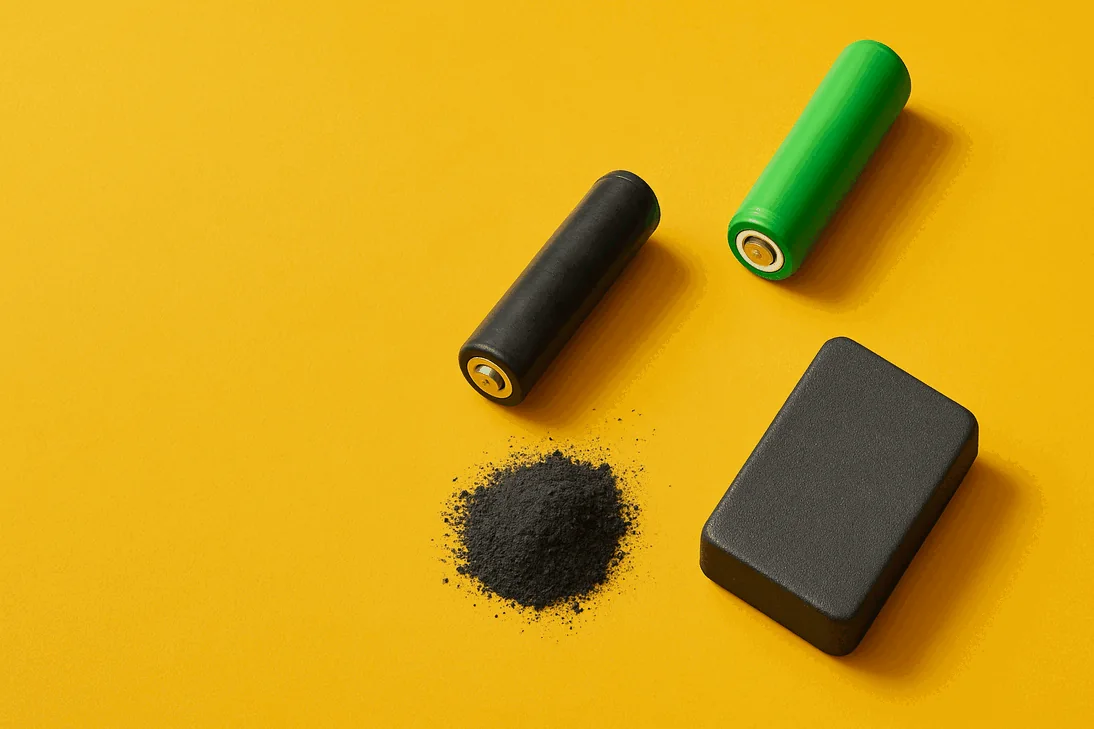
Talga Group Ltd has announced the launch of Talnode-R, a proprietary graphite anode product created from recycled lithium-ion battery waste. This breakthrough technology repurposes graphite extracted from battery recycling streams; specifically anode production scrap and spent anodes from end-of-life batteries; into battery-grade anode material suitable for reuse. As demand for energy storage soars globally, Talnode-R represents a significant step toward more sustainable and resilient battery supply chains.
The process begins with graphite concentrate sourced from battery recyclers’ black mass waste. Talga then applies advanced hydrometallurgical purification to achieve 99.95% purity, followed by proprietary shaping and coating to produce an anode material that rivals the performance of newly synthesized graphite. This innovation not only ensures consistent, commercial-quality recycled graphite but also introduces modular production facilities that can operate independently or alongside Talga’s planned natural graphite refinery in Sweden.
Strategic and Regulatory Advantages
Talga’s approach aligns closely with global regulatory trends, including the EU’s Critical Raw Materials Act, which aims to boost domestic recycling capacity and foster circular economies. By enabling localised production near battery manufacturing hubs in regions such as the USA, UK, Middle East, and Asia, Talnode-R supports supply chain security and reduces reliance on dominant Chinese graphite suppliers. The company’s patented technology platform, currently advancing through IP stages in the USA, offers a competitive edge in this evolving market.
Feasibility studies and pilot plant operations have validated Talnode-R’s technical and commercial viability. Testing has demonstrated high purity, excellent electrochemical performance, and durability comparable to synthetic graphite anodes. These results are particularly notable given the challenges historically associated with recycling spent battery graphite, which is often contaminated and unsuitable for reuse.
Market Context and Future Outlook
The global lithium-ion battery recycling market is expanding rapidly, with pre-treatment capacity reaching 3.5 million tonnes in the first half of 2025. Graphite anode material constitutes roughly 10-15% of this volume. Talga’s technology is well-positioned to capitalize on this growth, especially as production scrap and end-of-life battery volumes increase. While recycled graphite will complement rather than replace natural graphite in the long term, Talnode-R’s modular and scalable production model offers a flexible solution to meet rising demand sustainably.
Talga is actively engaged in commercial discussions with multiple global battery manufacturers and potential partners, advancing funding and site development plans. This positions the company to play a pivotal role in the transition toward greener battery materials and more secure supply chains.
Bottom Line?
Talga’s Talnode-R could redefine graphite supply dynamics, but scaling and market adoption remain key hurdles ahead.
Questions in the middle?
- How quickly can Talga scale Talnode-R production to commercial volumes?
- What are the cost competitiveness and pricing dynamics versus synthetic graphite?
- Which global partners will lead initial commercial adoption and site development?