Untested Wilga Flats Targets Could Make or Break Koonenberry’s NSW Ambitions

Koonenberry Gold (ASX:KNB) reports promising soil sampling results from its Wilga Flats Project in NSW, revealing a 4.2km gold and base metal anomaly akin to the nearby Cowal Gold Mine. The company aims to progress these targets to drill-ready status backed by a strong cash position.
- 4.2km gold + base metal soil anomaly identified at Wilga Flats
- Anomaly consistent with Cowal-style epithermal carbonate base metal mineralisation
- Wilga Flats located 20km north of Evolution Mining’s 13Moz Cowal Gold Mine
- Strong gold and copper soil anomalies remain undrilled
- Koonenberry Gold holds $8.7M cash to fund exploration

Exploration Breakthrough at Wilga Flats
Koonenberry Gold (ASX:KNB) has unveiled encouraging initial exploration results from its 100%-owned Wilga Flats Project in New South Wales. The company’s recent systematic soil sampling along the Olaf’s Trend has delineated a substantial 4.2-kilometre-long gold and base metal pathfinder element anomaly. This discovery is particularly significant given its geological resemblance to the nearby Cowal Gold Mine, operated by Evolution Mining, which boasts a 13 million ounce gold endowment.
The Wilga Flats Project lies just 20 kilometres north of Cowal, within the highly prospective Lachlan Fold Belt, a region renowned for hosting world-class gold and copper deposits. The soil anomaly includes elevated levels of gold, lead, zinc, copper, bismuth, silver, and tellurium, a geochemical signature consistent with epithermal carbonate base metal mineralisation, the hallmark of Cowal-style deposits.
Geological Context and Significance
Geological investigations have identified outcropping high-potassium calc-alkaline basaltic-andesite volcanics within the anomaly area, confirming the presence of Macquarie Arc stratigraphy. This supports the exploration rationale, as the Macquarie Arc is known to host significant porphyry and epithermal mineral systems. The anomaly also features a semi-coincident 1.2-kilometre copper-in-soil anomaly, with peak copper values associated with malachite and chalcopyrite mineralisation in volcanic rocks.
Historical drilling in the region, although limited and focused on base metals, has returned intervals of gold mineralisation, including a notable 2.22 metres at 7.64 grams per tonne gold. However, the newly defined soil anomalies along Olaf’s Trend have not yet been tested by drilling, presenting a compelling opportunity for Koonenberry Gold to potentially replicate Cowal-style mineralisation.
Funding and Forward Plans
With a robust cash balance of $8.7 million as of June 30, 2025, Koonenberry Gold is well positioned to advance exploration activities. The company plans to undertake follow-up fieldwork, including infill soil sampling and induced polarization geophysical surveys, to refine drill targets. The goal is to progress these targets to drill-ready status in the near term.
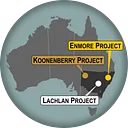
Meanwhile, drilling is scheduled to resume at the company’s Enmore Gold Project in northeast NSW, with up to 10,000 metres planned for infill, extensional, and discovery drilling. This multi-project approach underscores Koonenberry’s commitment to unlocking value across its extensive NSW portfolio.
Strategic Implications
The Wilga Flats results mark a pivotal step for Koonenberry Gold, highlighting the potential to discover significant gold-copper mineralisation in a region already proven by major producers. The geological and geochemical parallels to Cowal elevate the prospectivity of Wilga Flats, potentially positioning KNB as a key player in the Lachlan Fold Belt’s ongoing exploration renaissance.
Bottom Line?
Koonenberry Gold’s Wilga Flats discovery sets the stage for a critical drill campaign that could reshape its NSW exploration narrative.
Questions in the middle?
- Will drilling confirm the presence of Cowal-style gold mineralisation at Wilga Flats?
- How might the Wilga Flats results influence Koonenberry’s exploration priorities and capital allocation?
- What are the implications of the Macquarie Arc geology for broader regional exploration strategies?