Nanoveu’s Edge AI Ambitions Face Market Adoption and Competition Challenges

Nanoveu Limited showcased its cutting-edge EMASS semiconductor technology at the Ignite Investment Summit in Hong Kong, highlighting a new ultra-low-power AI chip designed to revolutionize edge computing across multiple industries.
- Presentation of EMASS division strategy by CEO Mark Goranson
- Introduction of ECS-DoT chip with up to 20x energy efficiency
- Roadmap includes 16nm tape-out and enhanced AI capabilities
- Focus on scalable AI solutions for drones, wearables, and IoT
- Nanoveu’s positioning as a leader in 3D content and edge AI markets
 Add us as a preferred source on Google
Nanoveu’s Strategic Showcase at Ignite Summit
Nanoveu Limited (ASX:NVU) took center stage at the Ignite Investment Summit in Hong Kong, where its Semiconductor Technologies CEO, Mark Goranson, presented the company’s ambitious strategy for its EMASS division. This event marked a significant moment for Nanoveu as it detailed its vision for advancing ultra-low-power AI-driven system-on-chip (SoC) solutions tailored for edge computing applications.
EMASS and the ECS-DoT Chip, A Leap in Edge AI
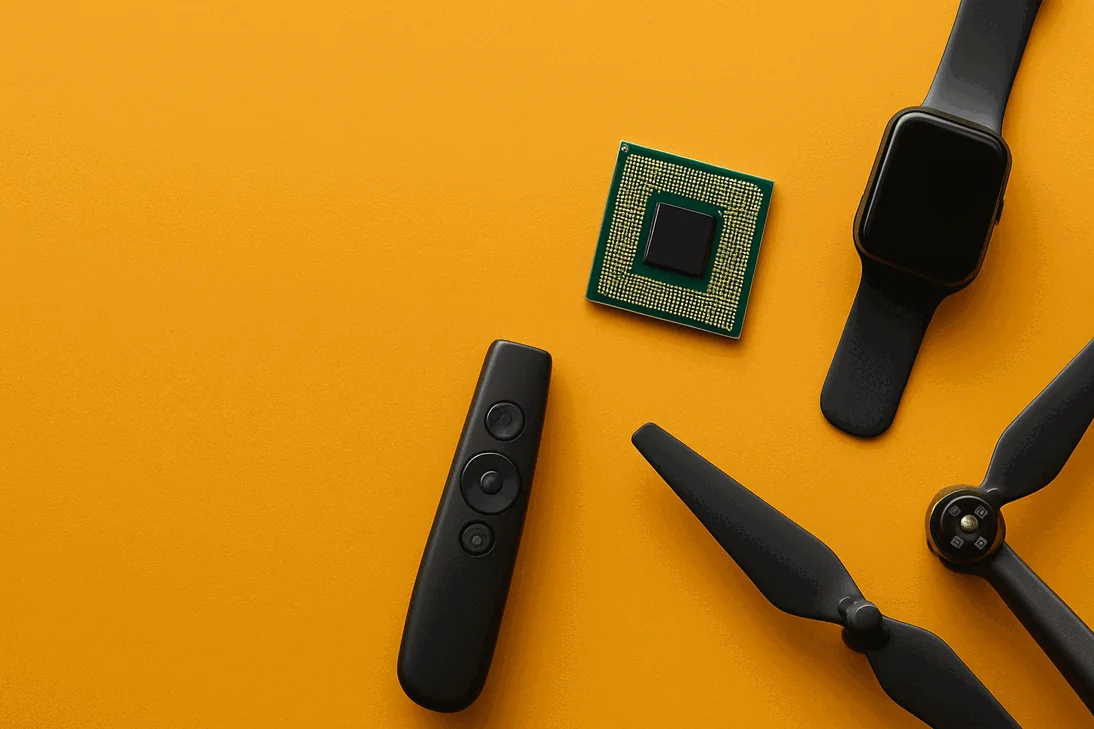
Central to the presentation was the ECS-DoT chip, a flagship product developed by EMASS, which Nanoveu fully acquired earlier this year. The chip boasts up to 20 times greater energy efficiency compared to its competitors, a critical advantage for devices requiring continuous AI processing without draining battery life. Designed for a broad spectrum of applications, from drones and wearables to IoT devices, the ECS-DoT enables always-on AI inference at power consumption levels as low as 1 to 5 milliwatts.
Technological Innovations and Market Potential
The presentation highlighted the upcoming tape-out of an advanced 16nm architecture, leveraging TSMC’s FinFET technology, which promises improved AI performance, smaller die size, and lower power consumption. This next-generation chip supports a wide range of AI models, including convolutional neural networks and transformers, and integrates wireless connectivity options such as LoRa, Bluetooth 5.x, and Wi-Fi. These features position Nanoveu to capitalize on rapidly growing markets including hearables, wearables, AI cameras, and drones, sectors forecasted to reach billions in value over the next decade.
Building Commercial Momentum and OEM Engagement
Nanoveu is actively engaging original equipment manufacturers (OEMs) to accelerate adoption of its technology. The company emphasized the ECS-DoT’s ability to reduce system costs and enable sleeker product designs through its small form factor and low power requirements. Live drone benchmarking and new evaluation boards are part of Nanoveu’s strategy to demonstrate real-world performance gains, including significant improvements in drone flight endurance.
Positioning for the Future of Edge Computing
With its comprehensive approach combining advanced semiconductor design, AI expertise, and strategic market targeting, Nanoveu is carving out a distinctive niche in the edge AI semiconductor landscape. The integration of EMASS’s technology into Nanoveu’s broader portfolio, which also includes 3D visualization and antimicrobial surface solutions, underscores the company’s commitment to innovation across multiple high-growth sectors.
Bottom Line?
Nanoveu’s EMASS-driven edge AI strategy sets the stage for a transformative push into ultra-efficient, always-on AI devices.
Questions in the middle?
- How soon will Nanoveu’s 16nm ECS-DoT chip enter commercial production and deployment?
- What are the specifics of ongoing OEM partnerships and potential revenue impacts?
- How will Nanoveu differentiate itself against established semiconductor players in the edge AI market?