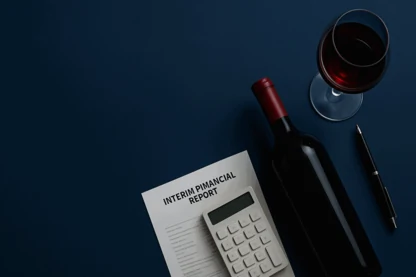
Why Did TWE Take a $649m US Asset Hit and Suspend Dividends?

Treasury Wine Estates reports a sharp 39.6% drop in earnings and a $649 million statutory loss due to a major US asset impairment, suspending dividends to preserve capital while advancing a $100 million cost-cutting transformation.
- EBITS down 39.6% to $236.4 million, missing guidance
- Statutory NPAT loss of $649.4 million driven by $751 million US asset impairment
- Interim dividend suspended to prioritise capital preservation and reduce leverage
- TWE Ascent transformation program targets $100 million annual cost savings
- Strategic focus on reducing customer inventory in US and China, managing RNDC distributor exit

 Add us as a preferred source on Google
A Challenging Half-Year for Treasury Wine Estates
Treasury Wine Estates (TWE) has revealed a difficult first half of fiscal 2026, with earnings before interest, tax, SGARA, and material items (EBITS) falling 39.6% to $236.4 million, below its prior guidance range. The decline reflects adverse market trends in key regions, notably the US and China, alongside deliberate shipment restrictions aimed at curbing parallel imports in China and the cycling of prior year shipments.
Most strikingly, TWE reported a statutory net loss after tax (NPAT) of $649.4 million, heavily impacted by a non-cash impairment charge of $751 million post-tax related to its US-based assets. This impairment primarily affected goodwill and brand values within the Treasury Americas and Treasury Collective divisions, signalling a reassessment of long-term growth prospects in the US wine market.
Operational Highlights and Brand Resilience
Despite the headline losses, TWE’s underlying brand performance shows resilience. The Penfolds brand, a flagship for the company, continues to demonstrate strong consumer demand with depletion growth of 17.2% in China and 3.5% in Australia. Other premium labels such as Bin 389 and Bin 407 also posted solid growth. However, shipment volumes were intentionally moderated to reduce excess inventory and combat parallel import issues, particularly in China.
In the US, Treasury Americas faced a 63.6% drop in EBITS, driven by softer market conditions and the disruption caused by the closure of RNDC’s California operations. TWE has reached a settlement with RNDC, which includes repurchasing inventory in California and compensating for the closure’s impact. Outside California, depletions grew modestly, supported by brands like DAOU and Frank Family Vineyards.
Financial Discipline and Strategic Transformation
To address these challenges, TWE has suspended its interim dividend, a temporary but significant move to preserve capital and reduce leverage, which currently stands at 2.4 times net debt to EBITDAS. The company emphasises that dividend resumption will depend on improved financial performance and leverage reduction, supported by the benefits of its ongoing transformation program, TWE Ascent.
TWE Ascent is a multi-year initiative targeting $100 million in annual cost savings through portfolio optimisation, operating model simplification, and enhanced execution. Early progress is promising, with management expressing high confidence in achieving these savings and asset realisation benefits. The program’s detailed plans will be unveiled at an investor day scheduled for June 2026.
Looking Ahead, Cautious Optimism
While the near-term outlook remains cautious due to ongoing market softness and the complexity of the transformation, TWE expects second-half EBITS to improve, particularly as the California distribution transition completes and momentum builds. The company’s focus remains on executing strategic actions to maintain brand strength, reduce customer inventory in critical markets, and accelerate cash flow improvements.
CEO Sam Fischer highlighted the company’s commitment to building a stronger, more resilient business, underscoring the importance of TWE Ascent as the cornerstone of this reset. The underlying brand health and consumer engagement provide a foundation for optimism, even as the company navigates a challenging operating environment.
Bottom Line?
TWE’s path to recovery hinges on successful transformation execution and market stabilisation amid significant financial headwinds.
Questions in the middle?
- How quickly will TWE’s cost-saving initiatives translate into improved profitability?
- What is the timeline for dividend resumption given current leverage and cash flow forecasts?
- How will evolving US and China market dynamics affect TWE’s long-term growth prospects?