Temas’ RCL Technology Validated with 65% Cost Cut, New Advisory Board Formed

3 min read
9:02am on Friday 27th of March, 2026 AEDT ~9am, 27th Mar, 26
Popular on LinkedIn
Temas Resources has formed a Scientific Advisory Board of hydrometallurgical leaders to accelerate the rollout of its innovative Regenerative Chloride Leaching technology, promising major cost and environmental benefits in critical minerals processing.
- Scientific Advisory Board established with world-class hydrometallurgical experts
- Focus on commercialising and scaling Temas’ proprietary RCL technology
- RCL platform offers up to 65% cost reduction and lower environmental footprint
- Pilot testing confirms high-purity titanium dioxide production
- Board to evaluate joint ventures and licensing opportunities globally

A Strategic Move to Accelerate Innovation
Temas Resources Corp has taken a decisive step to advance its proprietary Regenerative Chloride Leaching (RCL) technology by appointing a Scientific Advisory Board (SAB) composed of leading experts in hydrometallurgy. This move signals Temas’ intent to fast-track the commercialisation and global deployment of its innovative mineral extraction platform, which promises to disrupt traditional metallurgical processes.
The SAB brings together a diverse group of seasoned professionals, including geologists, chemists, and metallurgical engineers, each with decades of experience in complex ore processing and sustainable technology development. Their expertise will guide Temas in optimising the RCL process, scaling operations, and assessing third-party mineral deposits for potential joint ventures or licensing deals.
RCL Technology: A Potential Industry Game-Changer
Temas’ RCL platform is designed to extract multiple metals, including refractory gold, titanium, nickel, vanadium, and rare earth elements, from complex ores, concentrates, slags, and tailings. Unlike conventional methods, RCL operates at atmospheric pressure and lower temperatures, utilising a closed-loop reagent recycling system that significantly cuts operating costs and environmental impact.
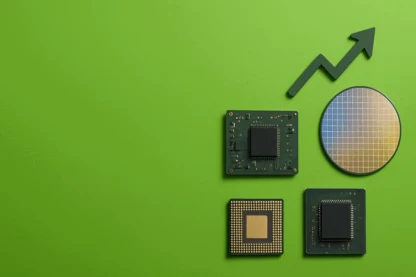
Independent evaluations and pilot testing have validated the technology’s potential, demonstrating up to 65% cost reductions in titanium dioxide processing and producing a 99.8% pure TiO2 product. These efficiencies are expected to translate across other critical and battery metals, positioning Temas as a leader in sustainable mineral processing.
Expertise Driving Commercial Success
The SAB’s inaugural members include Mr David Caldwell, a geologist with over 35 years’ experience in polymetallic deposits; Dr Vaikuntam I. Lakshmanan, a globally recognised innovator in sustainable process technologies and one of the founding scientists behind the RCL platform; and Mr Daniel Dutton, a metallurgical engineer specialising in titanium and vanadium extraction. Their combined knowledge is expected to enhance Temas’ R&D capabilities and accelerate industry adoption of RCL.
CEO Tim Fernback emphasised the importance of this expert team, highlighting their role in navigating the complexities of refractory and complex ores and driving solutions that could replace less efficient traditional metallurgical processes. The company also plans to expand the SAB with additional global scientific leaders in the coming months.
Looking Ahead: Commercialisation and Market Impact
Temas’ dual business model combines proprietary technology licensing with strategic mineral ownership, including advanced titanium-vanadium projects in Québec, Canada. This integrated approach aims to create a low-carbon, mine-to-market supply chain that strengthens Western critical mineral independence.
While the announcement does not specify timelines for commercial rollout or concrete licensing agreements, the establishment of the SAB and pilot test successes mark significant milestones. Investors and industry watchers will be keen to see how Temas leverages this expertise to secure partnerships and scale its technology globally.
Bottom Line?
With a world-class advisory team now in place, Temas is poised to turn its RCL technology from promising innovation into industry standard.
Questions in the middle?
- When will Temas announce concrete licensing or joint venture agreements leveraging the RCL platform?
- How quickly can the RCL technology be scaled from pilot to commercial operations across different minerals?
- What additional experts will join the Scientific Advisory Board to further bolster Temas’ technical capabilities?