Sovereign Metals Elevates Kasiya with US$2.2bn NPV and Rare Earth Discovery

Sovereign Metals' March 2026 update reveals a robust DFS for its Kasiya Rutile-Graphite Project, a substantial resource upgrade, strategic offtake MOUs, and a high-value heavy rare earth by-product discovery.
- US$2.2 billion pre-tax NPV8 and 23% IRR from Kasiya DFS
- Measured and Indicated rutile resource up 32% to 16.1Mt
- Offtake MOUs with Mitsui (rutile) and Traxys (graphite)
- Heavy rare earth monazite by-product with premium DyTb and yttrium content
- Successful rehabilitation trials underpin community partnerships

Kasiya DFS Confirms Exceptional Economics and Scale
Sovereign Metals Limited (ASX:SVM) has delivered a Definitive Feasibility Study (DFS) for its Kasiya Rutile-Graphite Project in Malawi that projects a pre-tax net present value (NPV8) of US$2.2 billion on a capital outlay of US$727 million to first production. With a 25-year mine life, the project is set to generate an annual EBITDA of US$476 million and free cash flow of US$452 million, underpinning robust margins with operating costs as low as US$450 per tonne FOB Nacala.
The DFS outlines Kasiya’s ambition to become the world’s largest producer of natural rutile and flake graphite, with steady-state annual outputs of 222,000 tonnes and 275,000 tonnes respectively. This scale positions Kasiya as a critical supplier of minerals designated as strategic by the US and EU, while the project benefits from a dry mining method and hydropower-sourced grid electricity, reducing operational risk and environmental footprint. The DFS was completed with technical oversight from Rio Tinto and aligned with IFC Performance Standards, enhancing its bankability and ESG credentials.
These figures build on the earlier Kasiya DFS Confirms US$2.2bn NPV announcement, reinforcing Sovereign’s standing in critical minerals supply chains.
Resource Upgrade Strengthens Financing Foundations
Supporting the DFS is a significant mineral resource upgrade announced in March 2026. The combined Measured and Indicated rutile resource surged 32% to 16.1 million tonnes contained rutile, with the total resource base rising to 2.1 billion tonnes at 0.96% rutile. Notably, the project declared its first-ever Measured Resource category, covering the initial six years of mining and providing the high-confidence classification needed for bankable project financing.
This resource confidence leap is a critical milestone that sets Kasiya apart in the global rutile landscape and is a key factor in securing strategic partnerships and financing. The upgrade was underpinned by extensive infill drilling and rigorous geological modelling, confirming Kasiya’s status as a long-life, low-cost supplier of critical minerals. Sovereign’s resource boost echoes the resource upgrade cements global leadership narrative of Kasiya’s growing prominence.
Strategic Offtake MOUs with Mitsui and Traxys
Sovereign has signed non-binding MOUs with Mitsui & Co. for up to 70,000 tonnes per annum of natural rutile concentrate and with Traxys North America LLC for approximately 40,000 tonnes per annum of graphite in the initial phase. Mitsui’s involvement secures over half of Phase 1 rutile production, tapping into Japan’s critical titanium supply chain, which supplies more than 70% of US titanium sponge imports. Traxys, selected as one of three traders for the US$12 billion Project Vault strategic reserve, targets the high-value refractory graphite market with potential expansion into battery anode supply chains.
These MOUs set the stage for binding agreements that will underpin project revenues and market access. The partnerships align with Sovereign’s strategy to integrate into critical minerals supply chains outside Chinese control, particularly amid tightening global geopolitical dynamics.
Rare Earths Discovery Adds a Third Revenue Stream
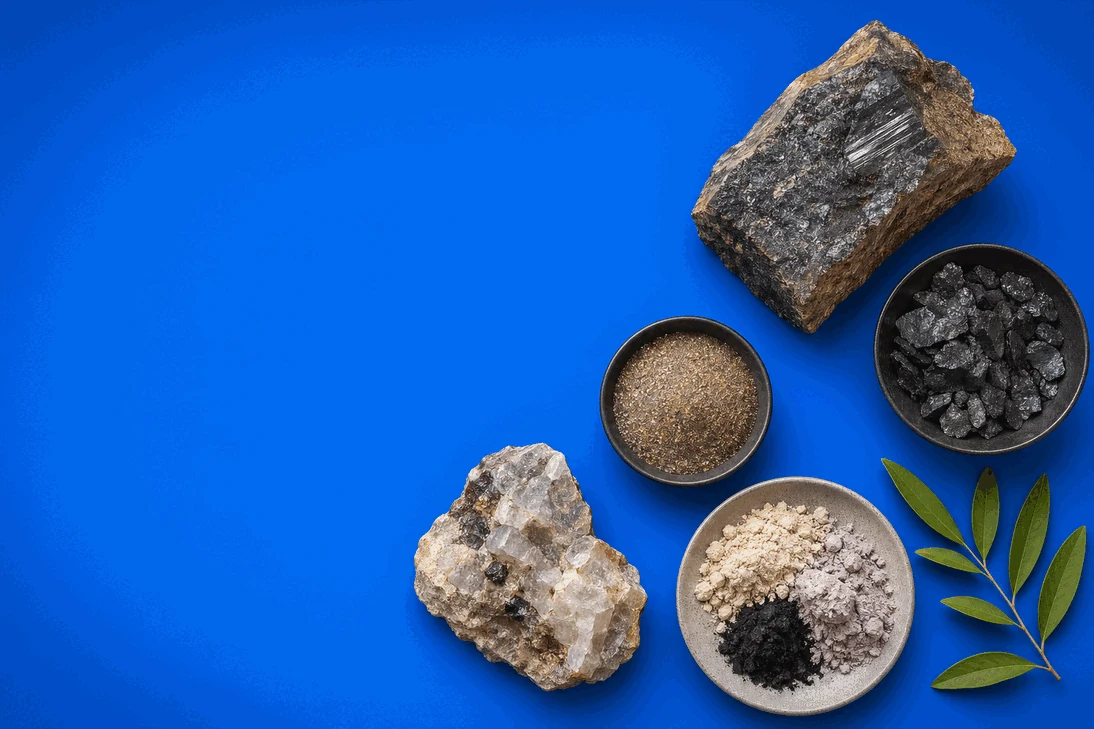
Beyond rutile and graphite, Sovereign has uncovered a high-value heavy rare earth element (REE) by-product in the form of monazite concentrate recovered from rutile tailings. This concentrate boasts heavy rare earth content; dysprosium-terbium (DyTb) and yttrium; approximately seven times higher than the five largest global rare earth producers combined, with a DyTb average of 2.9% and yttrium at 11.9%. The light rare earth content, including neodymium-praseodymium (NdPr), also compares favourably.
This discovery is strategically significant given China’s tightened export controls on these elements, which are essential for permanent magnets used in defence, aerospace, and advanced manufacturing. Importantly, the rare earth recovery requires no additional processing circuit, implying near-zero incremental cost and a potentially lucrative third revenue stream. Sovereign is advancing mineralogical characterisation and economic evaluation to integrate this by-product into the project’s financial model. The rare earth breakthrough complements the company’s ongoing rare earth breakthrough at Kasiya and rare heavy earths recovered disclosures.
Rehabilitation Trials and Community Engagement
Sovereign’s commitment to sustainable development is underscored by successful rehabilitation trials at Kasiya, demonstrating that post-mining land can yield maize harvests five times the regional average. The second-year trials introduced diversified cropping, including bamboo and legumes, promoting long-term soil health and carbon sequestration. The rehabilitation approach is designed for local community adoption, with minimal soil disturbance and hand-based farming methods.
Local farmers involved in the trials have formally requested Sovereign’s continued support to establish a farming cooperative, highlighting strong community endorsement and social license. This initiative aligns with the company’s broader social transition strategy and IFC collaboration, enhancing Kasiya’s ESG profile and bankability.
Bottom Line?
Sovereign’s Kasiya project is shaping up as a critical multi-commodity supplier with strong economics and strategic partnerships, but the path to binding offtake agreements and rare earth by-product validation will be pivotal in defining its ultimate value.
Questions in the middle?
- Will Sovereign convert its non-binding MOUs with Mitsui and Traxys into binding agreements on schedule?
- How will the integration of heavy rare earth by-products reshape Kasiya’s project economics and financing terms?
- What impact will Malawi’s evolving regulatory and environmental approvals have on Kasiya’s development timeline?