Visible Gold Confirmed in Ardiden’s Rouyn Drill Hole AS-26-793

Ardiden Limited has identified visible gold in drill hole AS-26-793 at the Astoria deposit within its Rouyn Gold Project, Québec, reinforcing the geological model of a structurally controlled orogenic gold system. Assay results are pending and expected in late May.
- Visible gold observed as 1-7mm coarse flakes in drill hole AS-26-793
- Mineralisation hosted in quartz-carbonate-chlorite veins within ultramafic volcanics
- Drilling supports continuity of high-grade zones at Astoria deposit
- Assay results expected late May with advanced fire assay techniques
- Rouyn Project hosts 1.66 million ounces gold resource under JORC code
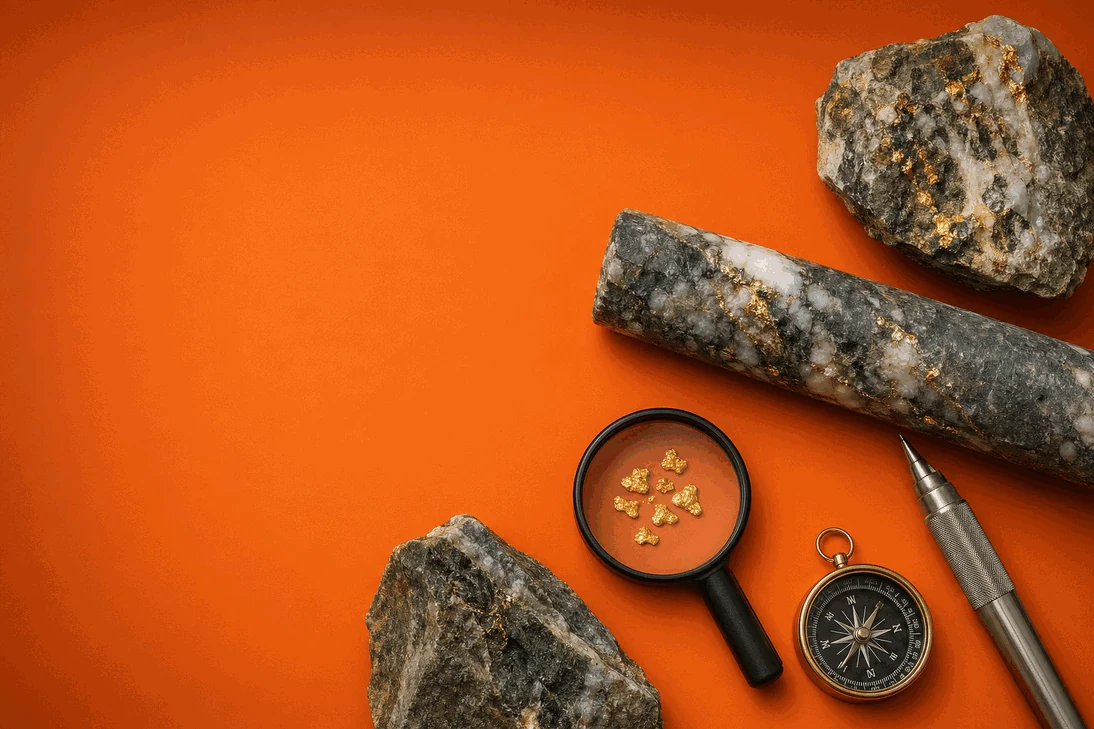

Visible Gold Discovery at Astoria Deposit
Ardiden Limited (ASX:ADV) has reported the presence of visible gold within drill hole AS-26-793 at its Astoria deposit, part of the Rouyn Gold Project in Québec. The gold appears as coarse flakes up to 7mm in length, embedded in a quartz-carbonate-chlorite vein system hosted by Piché Group ultramafic volcanics. This observation aligns with Ardiden’s geological model of a structurally controlled orogenic gold system typical of the Abitibi Belt.
Managing Director Andrew Stocks highlighted that the visible gold occurrence offers additional confidence in the continuity of mineralisation, although he cautioned that visual estimates are qualitative and cannot substitute for laboratory assays. The company expects assay results from AGAT Laboratories by late May, employing screened and fraction split fire assay methods to address the coarse nature of the gold.
Geological Setting and Drilling Details
The drill hole AS-26-793 was designed to test the lateral limits of mineralisation at Astoria. It intersected polygenic conglomerates before entering the target ultramafic volcanics at about 148.15m downhole. The visible gold zone was encountered around 152.05m, within a broader hydrothermal alteration zone characterised by 10–40% quartz-chlorite-tremolite brecciated veins, pervasive carbonate alteration, and minor biotite, but with no significant sulphides.
This mineralisation style is consistent with orogenic gold deposits along the Cadillac–Larder Lake Break, where structurally controlled zones often host high-grade shoots. The presence of visible gold supports the interpreted continuity of these zones, although final grade and width will be confirmed by assays. This drilling build on previous results that have confirmed mineralisation continuity and support ongoing resource expansion at Astoria, as detailed in Ardiden’s earlier large-scale high-grade gold system expansion announcement.
Resource Context and Next Steps
The Rouyn Gold Project currently hosts a JORC-compliant Mineral Resource Estimate of 1.66 million ounces at an average grade of 3.28 g/t gold, combining indicated and inferred resources. The Astoria deposit is a key component of this resource base, with ongoing drilling aimed at extending mineralised zones beyond the current envelope.
Following the discovery of visible gold, Ardiden plans to submit core samples from AS-26-793 for detailed fire assay analysis, including metallic screen techniques to capture coarse gold effects. Results are anticipated within approximately four weeks, which will provide critical data to refine the geological model and support potential resource upgrades.
This development occurs as Ardiden continues to advance its Canadian gold assets, complementing recent strategic moves such as the acquisition of the Golden Patricia Mine in Ontario’s Pickle Lake district, which expands its footprint in high-grade Archean gold belts. The broader drilling campaign at Rouyn, initiated earlier this year, aims to unlock further resource growth potential along strike and at depth, reinforcing Ardiden’s position in the region’s competitive gold exploration landscape.
Bottom Line?
Visible gold in Ardiden’s Rouyn drilling adds geological weight to resource expansion hopes, but assay results will be decisive.
Questions in the middle?
- Will the upcoming assays confirm high-grade continuity implied by visible gold observations?
- How might coarse gold influence sampling accuracy and resource estimation at Astoria?
- Could further drilling extend the mineralised zones beyond current resource boundaries?