Alpha HPA Reports $225M Capital Raise and Expands Letters of Intent to 700+ Tonnes

Alpha HPA Limited reports robust progress on its HPA First Project Stage 2, backed by a $225 million capital raise, while securing significant demand upgrades from Japanese semiconductor customers.
- Stage 2 construction advances with major civil and equipment milestones
- Japanese customers upgrade Letters of Intent to over 700 tonnes per annum
- Stage 1 production at full capacity, expanding milling and nano-powder capabilities
- Completed $225 million equity raise with cornerstone institutional support
- Strong cash position supports over 18 quarters of funding

Stage 2 Construction Accelerates at Gladstone
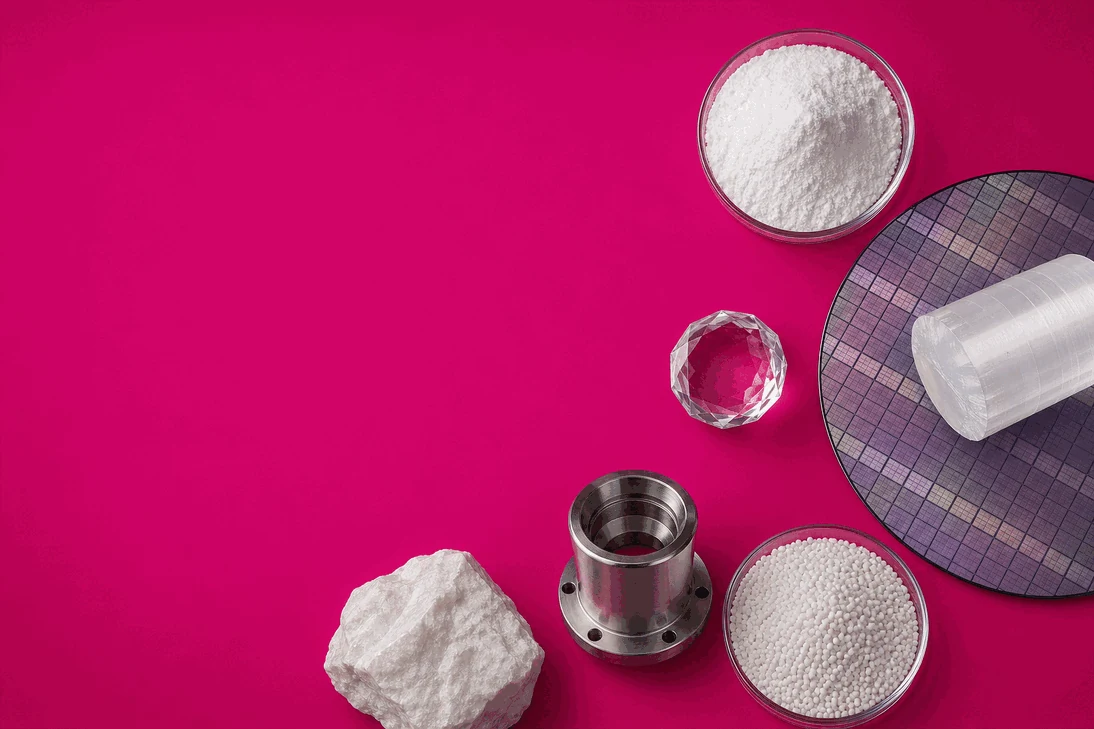
Alpha HPA Limited (ASX:A4N) is steadily transforming its Gladstone site into the world’s largest single-site high purity alumina (HPA) manufacturing facility. The company’s HPA First Project Stage 2 is advancing across key workstreams including civil works, procurement, engineering, and construction. Recent deliveries of large column filter vessels and pipe rack segments have arrived on site, while major concrete foundations and earthworks have opened new construction fronts. Notably, the installation of solvent extraction (SX) modules has enabled further civil contractor access to supporting infrastructure works.
The appointed SMP contractor has installed large SX modules using a 250 tonne crawler crane, and the first by-product tank has been sealed. Electrical supply infrastructure is progressing with buried services and high voltage cabling trenches completed. The company reports no safety incidents during these activities, reflecting disciplined site management.
Surging Demand from Japanese Semiconductor Customers
Demand momentum in the semiconductor sector remains Alpha’s strongest commercial driver. Two premium Japanese customers have significantly upgraded Letters of Intent (LOIs) for high purity alumina products. One manufacturer of thermal fillers expanded its LOI from 100 to 360 tonnes per annum (tpa) with expectations to reach approximately 720tpa. A second Japanese end-user specialising in semiconductor ceramics and thermal fillers boosted its LOI from 60 to 96tpa, with anticipated demand surpassing 700tpa as multiple products complete qualification.
This surge aligns with the broader AI infrastructure buildout driving advanced node semiconductor production, where Alpha’s ultra-high purity, zero-alpha radiation alumina materials are critical for thermal management and packaging. The company is also seeing increased qualification activity for Chemical Mechanical Polishing (CMP) abrasives, with 22 end-users now actively testing Alpha’s nano alumina dispersions and powders. Such developments echo the company’s earlier reported semiconductor demand upgrades and binding supply contracts in this sector.
Stage 1 Production at Capacity and Capacity Expansion Initiatives
Alpha’s Stage 1 facility continues 24/7 production, fully utilising its capacity to meet qualification and commercial orders. However, demand now exceeds existing throughput, prompting capacity expansion efforts. The company has implemented initiatives to increase jet milling output, optimised ATH process circuits, and advanced installation of nano-milling equipment to produce ultra-high purity alumina nano-powders preferred by CMP customers. This nano-milling unit is expected to be operational by June 2026 and will also support Stage 2 production.
Synthetic Sapphire Growth and Market Traction
Alpha Sapphire, a wholly owned subsidiary, is progressing its Phase A sapphire glass growth units, producing synthetic sapphire for sales and qualification. The company’s primary sapphire optics customer in Hong Kong increased 2026 sales orders from 1,500kg to 2,000kg of sintered HPA tablets, reflecting rising demand for sustainable, low-carbon sapphire materials. Additional orders for 200mm sapphire wafers support ongoing qualification for gallium-nitride (GaN) on sapphire semiconductors, an emerging technology for high power devices.
$225 Million Capital Raise Bolsters Expansion
In January 2026, Alpha completed a fully underwritten $225 million equity placement at $0.75 per share, cornerstoned by the National Reconstruction Fund Corporation (NRFC), AustralianSuper, and Orica Limited. The capital raise was executed in two tranches, with shareholder approval secured for the second tranche. Additionally, a Share Purchase Plan raised nearly $6.8 million from existing shareholders. Proceeds are earmarked primarily for Stage 2 construction, Stage 1 capacity expansion, and general corporate purposes.
This funding milestone complements government grants and existing cash reserves, leaving Alpha with a strong cash position of AUD 211.7 million at quarter-end, supporting an estimated 18.6 quarters of funding at current operating cash burn rates. The company also maintains a $30 million royalty investment facility with QIC Critical Minerals and Battery Technology Fund, repayable via royalties on production.
Financials and Related Party Payments
Alpha’s March quarter cash flow report reveals significant investment in property, plant and equipment totaling nearly $48 million, reflecting the heavy capital intensity of Stage 2 construction. Operating cash flows remain negative at $11.4 million for the quarter, consistent with the company’s growth phase. Related party payments amounted to $517,197, mainly comprising directors’ fees and administrative services from a director-related entity.
With Stage 2 engineering packages entering tender and operational readiness activities ramping up, Alpha aims to capitalise on its proprietary solvent extraction and refining technology to deliver ultra-high purity aluminium products into critical semiconductor, lithium-ion battery, LED lighting, pharmaceutical, and water treatment markets.
Bottom Line?
Alpha HPA’s substantial capital backing and expanding semiconductor demand position it well, but successful Stage 2 commissioning and ongoing qualification remain key hurdles.
Questions in the middle?
- Can Stage 2 construction and commissioning timelines meet escalating customer demand?
- How will Alpha manage supply chain risks amid rapid capacity expansion?
- What is the pace and scale of qualification success in the lithium-ion battery and pharmaceutical sectors?