Orbital Reports $0.5M Net Cash Outflow with $43M Business Pipeline

5 min read
11:29am on Wednesday 29th of April, 2026 AEST ~11am, 29th Apr, 26
Orbital Corporation advances its UAV engine production and hybrid propulsion technology while managing a $0.5 million net cash outflow in Q1 2026, supported by a $43 million business pipeline and new international contracts.
- Delivered 27 propulsion systems with 18 more scheduled for FY27
- Secured $1.1 million UAE long-term supply agreement
- Advanced hybrid ICE-Electric propulsion and power management systems
- Reduced headcount and product costs through efficiency initiatives
- Maintained $2 million cash balance with $2 million standby facility
 Add us as a preferred source on Google
Global Production and New Contracts Drive Growth
Orbital Corporation Limited (ASX:OEC) maintained steady production of its heavy-fuel propulsion systems for tactical UAVs across multiple regions in the March 2026 quarter. The company delivered 27 propulsion systems with a further 18 units scheduled for production in the coming months, underscoring a solid operational tempo heading into FY27. Notably, Orbital secured a Long-Term Distribution Agreement in the UAE valued at USD 1.1 million, marking a significant foothold in the Middle East with deliveries set to commence in early FY27 to a sovereign government customer. This deal builds on Orbital's expanding international footprint, complementing its active programs in the US, Asia-Pacific, and Australia.
In the US, Orbital's engines have accumulated over 1 million flight hours with the Navy, powering platforms like the Scan Eagle and Aerosonde UAVs. The company completed engineering development on a power upgrade for the Aerosonde 4.7® UAV and received an initial order for 25 upgrade kits slated for delivery in FY27. Technical support for the Boeing Insitu Scan Eagle also resumed, maintaining Orbital's critical role in US defence supply chains. Meanwhile, in Asia-Pacific, production for Singapore’s Veloce 60 UAV program was completed ahead of schedule, and flight testing continues for the Veloce 150 UAV equipped with Orbital’s 350HFE systems. The partnership with India’s Dynamatic Technologies to supply propulsion systems for the Cheel tactical UAV program also advanced, with new orders received as Dynamatic pursues multiple Indian military tenders. This global expansion reflects Orbital’s broadened customer base and product range since 2021, now encompassing 12 active customers and 11 products across five regions.
Engineering Innovation Focuses on Hybrid and Power Management
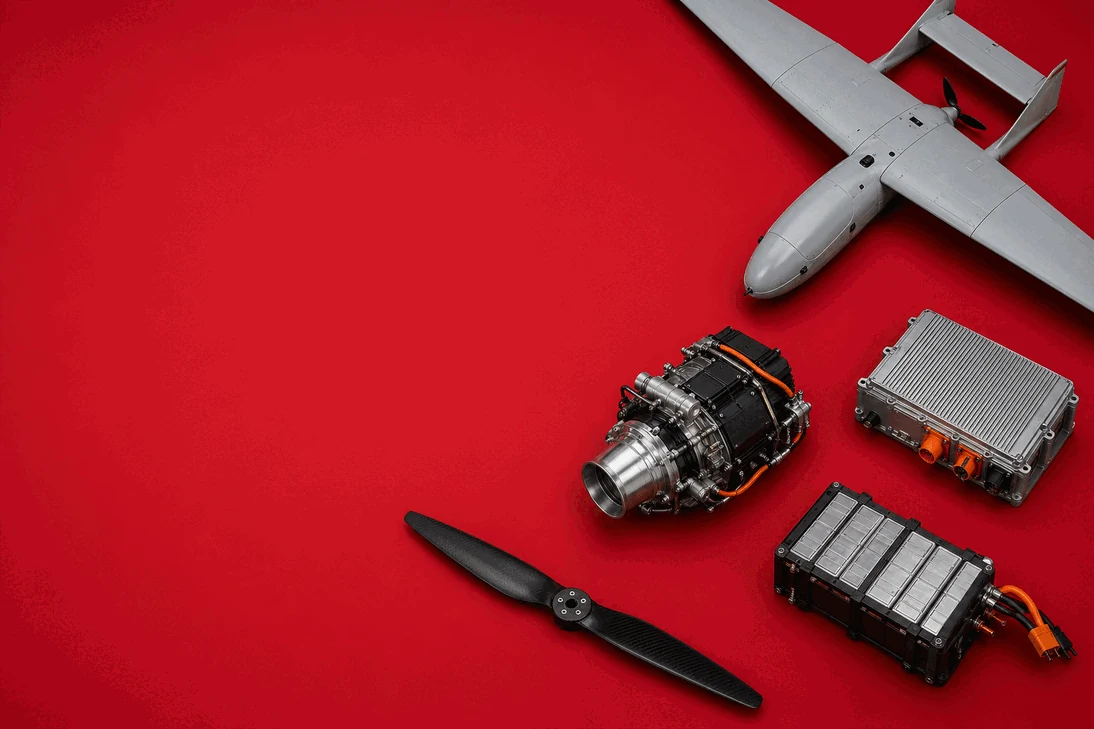
Orbital continues to invest heavily in next-generation propulsion technologies. The company delivered its first 350HFE ICE-Electric hybrid propulsion system to a US customer, designed to extend flight duration and range by supplementing battery-powered engines on heavy-lift multi-rotor UAVs. Development of this hybrid system, alongside the Generation 2 Power Management System (PMS) offering increased output power and remote-start capabilities, is set to expand Orbital’s addressable market in both military and commercial sectors. The Generation 2 PMS is expected to be available to customers from Q2 FY27. Additionally, Orbital has completed detailed designs for a new 500cc heavy-fuel engine targeting over 40 horsepower to meet growing payload demands, with prototype builds anticipated in FY27 depending on market interest.
Financial Position and Cost Efficiency Measures
Despite strong operational activity, Orbital reported a net cash outflow from operations of $0.5 million for the quarter, contrasting with a $0.7 million inflow in the previous year’s corresponding period. Cash receipts from customers declined to $1.6 million from $3.0 million in March 2025, reflecting timing differences in contract deliveries. The company ended the quarter with $2 million in cash and an undrawn $2 million standby working capital facility, providing liquidity to support ongoing production ramp-up and new program investments. Orbital also implemented a cost reduction plan, trimming its full-time equivalent headcount from 54 to 42 and achieving product cost savings through engineering and supply chain optimisation. These efforts aim to enhance operational efficiency as the company scales its production footprint.
Expanding Market Opportunities Amid Regulatory Shifts
Orbital’s business development pipeline stands at A$43 million, excluding US military programs and performance-based contracts, reflecting qualified opportunities across the US, Asia-Pacific, Europe, Middle East, and Australia. The company is positioning itself to benefit from regulatory reforms enabling beyond visual line of sight (BVLOS) drone operations, which are expanding the commercial market for Group 2 and 3 UAV propulsion systems. In the US, the commercial total addressable market is estimated between US$1.5 billion and US$2.2 billion over five years, buoyed by recent regulatory changes. Similarly, Australia’s Civil Aviation Safety Authority (CASA) is adopting BVLOS reforms, opening avenues in infrastructure inspection, cargo logistics, and environmental monitoring. On the defence front, Orbital signed a Memorandum of Understanding with Norway’s Bertel O. Steen Defence & Security to support a NATO-aligned UAV tender expected in mid-2026, reflecting its strategic intent to penetrate European defence markets. This builds on earlier initiatives such as the 150HFE engine order from Freespace Operations and the UAE military propulsion order and partnership secured in recent months.
Outlook Focused on Growth and Innovation
Looking ahead, Orbital is prioritising revenue growth through new contract acquisitions and delivery, continued product development of its hybrid propulsion and power management systems, and active engagement across its four revenue streams: partnership programs, commercial off-the-shelf engines, in-service support contracts, and performance-based Power by the Hour agreements. The company remains vigilant on capital and cash management, with the board assessing funding needs to support production scale-up and new program investments. While the timing and scale of future revenues remain uncertain, Orbital’s diversified pipeline and ongoing innovation efforts position it to capture emerging UAV propulsion opportunities in both defence and commercial markets.
Bottom Line?
Orbital’s broadening global contracts and hybrid propulsion advances are promising, but watch cash flow trends as production scales.
Questions in the middle?
- How will Orbital’s hybrid propulsion systems impact its competitive positioning in the expanding UAV market?
- What is the likelihood and timing of contract awards from the $43 million business pipeline, especially in defence tenders?
- Can the company sustain operational cash flow improvements while scaling production and managing cost pressures?