Basin Energy Confirms District-Scale REE and Uranium Potential at Sybella-Barkly

Basin Energy confirms district-scale rare earth and uranium potential at Sybella-Barkly, sells Canadian uranium asset with retained upside, and raises A$1.1 million post-quarter to support exploration.
- Maiden drilling confirms large sediment-hosted REE system at Sybella-Barkly
- Uranium anomalism supports roll-front potential in palaeochannels
- Definitive sale of Marshall Uranium Project with equity upside retained
- Secures A$349K government grants for geophysics and drilling
- Raises A$1.1 million post-quarter from uranium-focused strategic investors

District-Scale Rare Earths Confirmed at Sybella-Barkly
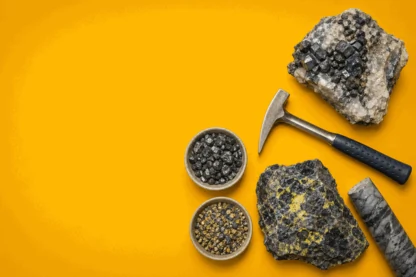
Basin Energy (ASX:BSN) has delivered compelling early results from its maiden aircore drilling program at the Sybella-Barkly Project in northwest Queensland. The program has confirmed a district-scale sediment-hosted rare earth element (REE) system, with mineralisation open in all directions. Notably, drillhole SBDH25021 ended in 2 metres grading over 1,100 ppm Total Rare Earth Oxide (TREO), including 302 ppm of the critical Neodymium-Praseodymium (NdPr) oxides, a strong indication of the project's potential for high-value rare earths.
The Sybella-Barkly tenure covers approximately 5,805 km² and hosts three exploration concepts: sediment and ionic clay-hosted REE, palaeochannel roll-front uranium, and hard-rock granite-hosted REE. The sediment-hosted REE horizon lies beneath a thick red clay sequence, with multiple wide-spaced holes confirming lateral continuity of mineralisation over kilometres. This wide footprint, combined with the open-ended nature of the system, suggests substantial upside potential for further high-grade zones.
Alongside the REE discoveries, the program has delineated a coherent palaeochannel system prospective for roll-front uranium mineralisation. Drillhole SBDH25027 returned uranium values up to 35 ppm U₃O₈ over 3 metres, approximately ten times background levels, alongside anomalous vanadium, reinforcing the potential for a significant uranium system. The oxidised nature of the sediments drilled to date indicates the potential uranium trap remains untested down-gradient, offering a clear target for follow-up drilling.
Government Grants and Exploration Acceleration
To accelerate exploration, Basin secured $349,065 in non-dilutive funding from the Queensland Government’s Collaborative Exploration Initiative. This includes $272,652 towards a high-resolution airborne electromagnetic (AEM) survey planned for mid-2026, covering 1,518 km² with tighter flight line spacing to better map conductive features such as clay horizons and palaeochannels. Additionally, $76,413 co-funding supports a reverse circulation drilling program targeting phosphorite-hosted heavy rare earth enrichment within the Georgina Basin, a target supported by recent academic research.
These grants represent a meaningful boost to Basin’s exploration budget, particularly given the company’s reported cash position of approximately A$260,000 at quarter-end, before receipt of government reimbursements and the recent capital raise. The AEM survey and drilling program are expected to deliver critical data to refine targets and advance the project’s development.
Canadian Uranium Asset Sale with Strategic Upside
On the corporate front, Basin executed a binding Mineral Rights Purchase and Sale Agreement to divest 100% of its Marshall Uranium Project in Saskatchewan to Green Canada Corporation (GCC). The deal includes up to C$600,000 in cash, C$300,000 in shares, and a 9.99% equity interest in the resulting issuer, subject to escrow. Basin retains a 25% buyback right exercisable for C$1 million and a three-year right of first refusal on future sales, preserving meaningful upside exposure.
The Marshall and adjacent North Millennium projects are strategically located near Cameco’s Millennium deposit and the prolific McArthur River uranium mine, underscoring their prospective nature. GCC is committed to a minimum C$1.5 million exploration program within two years, which should expedite drill testing. Basin also retains governance influence with the right to nominate a director to GCC’s board.
This transaction crystallises value from a non-core asset while maintaining optionality, a move that complements Basin’s focus on its Queensland critical minerals projects. The sale follows earlier announcements outlining the deal’s terms and strategic rationale, reflecting a broader portfolio optimisation strategy.
Capital Raising to Support Exploration and Operations
Post-quarter, Basin completed a A$1.1 million placement, led by two new uranium-sector strategic investors contributing over 40% of the raise. This capital injection, combined with the government grants, significantly improves Basin’s funding position and supports ongoing exploration activities, including the recently commenced drilling at the Newmans hard-rock REE prospect. The Newmans program targets the depth extent of a 3 km NdPr-dominant anomaly defined by 2023 auger drilling, aiming to complement the sediment-hosted discoveries at Sybella-Barkly.
Despite reporting net cash outflows of A$182,000 from operating activities and A$480,000 from investing activities during the quarter, Basin’s management expects the company to continue operations supported by the recent placement and grant receipts. The company’s cash runway was limited to approximately 0.4 quarters at quarter-end, highlighting the importance of the capital raise and funding from government initiatives.
Basin’s strategic moves and exploration progress position it well within an emerging critical minerals district west of Mount Isa, a region gaining increasing attention for its rare earth and uranium potential. The company’s approach balances advancing promising exploration targets with prudent portfolio management and capital raising to sustain momentum.
Investors following Basin Energy may watch closely how the airborne survey results and ongoing drilling programs at Sybella-Barkly and Newmans unfold, alongside developments from the Marshall Project sale and the company’s broader funding strategy.
These developments build on Basin’s recent A$1.1 million placement and its sale of Marshall Uranium Project, which together underscore a clear shift toward focusing resources on high-impact Queensland exploration while crystallising value from Canadian assets.
Bottom Line?
Basin Energy’s recent capital raise and government grants provide a crucial lifeline as it pushes forward with promising rare earth and uranium targets, but sustaining momentum will hinge on exploration success and prudent cash management.
Questions in the middle?
- Will follow-up drilling at Sybella-Barkly confirm higher-grade rare earth zones beneath the red clay horizon?
- How quickly can Green Canada Corporation advance exploration at Marshall under the new agreement?
- What is Basin’s longer-term funding strategy beyond the recent placement and government grants?