Nanollose Boosts Microbial Cellulose Fibre Output with 60% Lab Efficiency Gain

Nanollose has completed its largest pilot run of Nullarbor™ fibre, integrating microbial cellulose directly into lyocell production without pre-processing, while achieving a 60% efficiency improvement in lab-scale processes.
- 580kg Nullarbor™ fibre produced in largest pilot spin
- Microbial cellulose integrates without pre-processing
- ≥60% efficiency uplift demonstrated at lab scale
- Downstream partner evaluations and international trials underway
- Cash bolstered by $311K R&D rebate and $423K funding
Record Pilot Run Validates Microbial Cellulose Integration
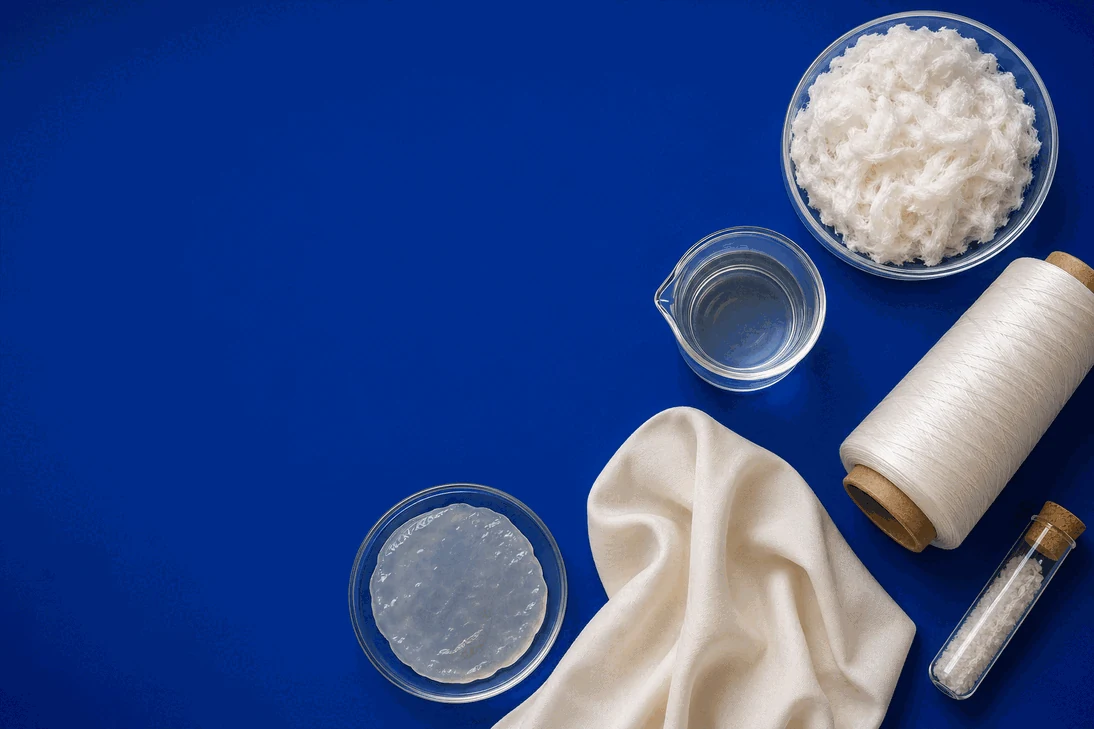
Nanollose Limited (ASX:NC6) has marked a significant milestone with its fourth pilot production spin, churning out 580kg of its Nullarbor™ fibre; the largest batch yet. This run successfully demonstrated that microbial cellulose can be directly integrated into existing lyocell infrastructure without any pre-processing, a breakthrough that substantially lowers barriers for industry adoption. The microbial cellulose feedstock, supplied by Hainan Guangyu Biotechnology, was blended with FSC-certified wood pulp and processed alongside partner Birla Cellulose in India, confirming the technology’s compatibility with commercial lyocell production lines.
This achievement builds on earlier progress where Nanollose refined its microbial cellulose process to ease integration, as highlighted in its largest pilot production during January 2026. The current run not only increases scale but also validates the incremental use of microbial cellulose as a fungible feedstock within established manufacturing environments.
Step-Change Efficiency Gains Signal Improved Economics
Post-spin laboratory trials have revealed a production process at least 60% more efficient than the method used for the fourth spin, indicating a fundamental shift in development economics. These improvements yield a more uniform, higher-quality fibre and simplify the manufacturing pathway with fewer stages and inputs compared to conventional cellulosic fibre production. Nanollose is now focused on engineering this enhanced process for scale-up, with international equipment trials underway to identify suitable drying and dewatering solutions; historically the most challenging aspects.
The company’s capital-light, partner-backed approach aims to establish a dedicated microbial cellulose processing facility capable of producing multiple tonnes of pulp monthly, a threshold critical for formal collaboration agreements and unlocking shareholder value. Progress toward this facility accelerated post-quarter with successful equipment trials in the UK and process simplification steps that eliminated an entire production stage, reducing costs.
Advancing Commercial Pathways with Strategic Partnerships
Downstream activities are advancing as Nullarbor™ fibres are being shipped to Paradise Textiles, the innovation hub of Alpine Group, for conversion into yarns and fabrics. These materials will be distributed to commercial development partners and potential customers for evaluation, a crucial step toward broader market adoption. Nanollose’s strategy focuses squarely on Nullarbor™ fibre within the estimated US$20 billion regenerated cellulosic fibre market, prioritising scalability and licensing opportunities over multiple product lines.
The company’s strong intellectual property position, with 15 granted patents and 8 trademarks, supports its commercialisation and licensing strategy. Recent filings include national phase applications for the Biollose™ dewatering patent across 12 jurisdictions, reinforcing its competitive moat.
Financial Position Strengthened Amid Board Changes
Financially, Nanollose ended the quarter with $494,000 cash, boosted by a $311,000 Australian Government R&D Tax Incentive rebate and $423,000 raised through option conversions. Operating cash outflows were significantly reduced to $99,000, down from $519,000 the previous quarter, reflecting tighter cost control and government support. The company also repaid a $200,000 short-term borrowing during the period.
On the governance front, Non-Executive Director Heidi Beatty resigned effective 1 April 2026, with the board reviewing its composition to align with near-term commercial objectives. CEO Andrew Moullin reiterated the company’s focus on executing defined milestones to convert technical progress into commercial traction and shareholder value.
With Nanollose’s microbial cellulose technology now proven at pilot scale and efficiency gains reshaping its economics, the next critical phase will be the successful scale-up of production and securing formal partnerships to commercialise Nullarbor™ fibre. The outcome of ongoing international equipment trials and partner evaluations will be key indicators of the company’s ability to meet these ambitions.
Bottom Line?
Nanollose’s leap in pilot scale and lab efficiency sets the stage for commercial scale-up, but execution risks remain as it seeks to convert technical advances into industrial partnerships.
Questions in the middle?
- Will Nanollose’s improved lab-scale efficiency translate effectively at commercial scale?
- How quickly can the company establish its dedicated microbial cellulose processing facility?
- What feedback will downstream partners provide on Nullarbor™ fibre’s performance in textiles?