Pure Resources Signs US$100K DOE Partnership for Garnet Rare Earth Recovery

Pure Resources has partnered with Oak Ridge National Laboratory to develop a rare earth extraction process from its Garnet Hills garnet, aiming to add critical minerals value alongside its industrial minerals business.
- Strategic partnership with US DOE's Oak Ridge National Laboratory
- Focus on heavy rare earth elements plus yttrium recovery
- Four research tasks through to March 2027
- US$100,000 capped financial commitment
- Supports Pure’s downstream defence and advanced manufacturing strategy
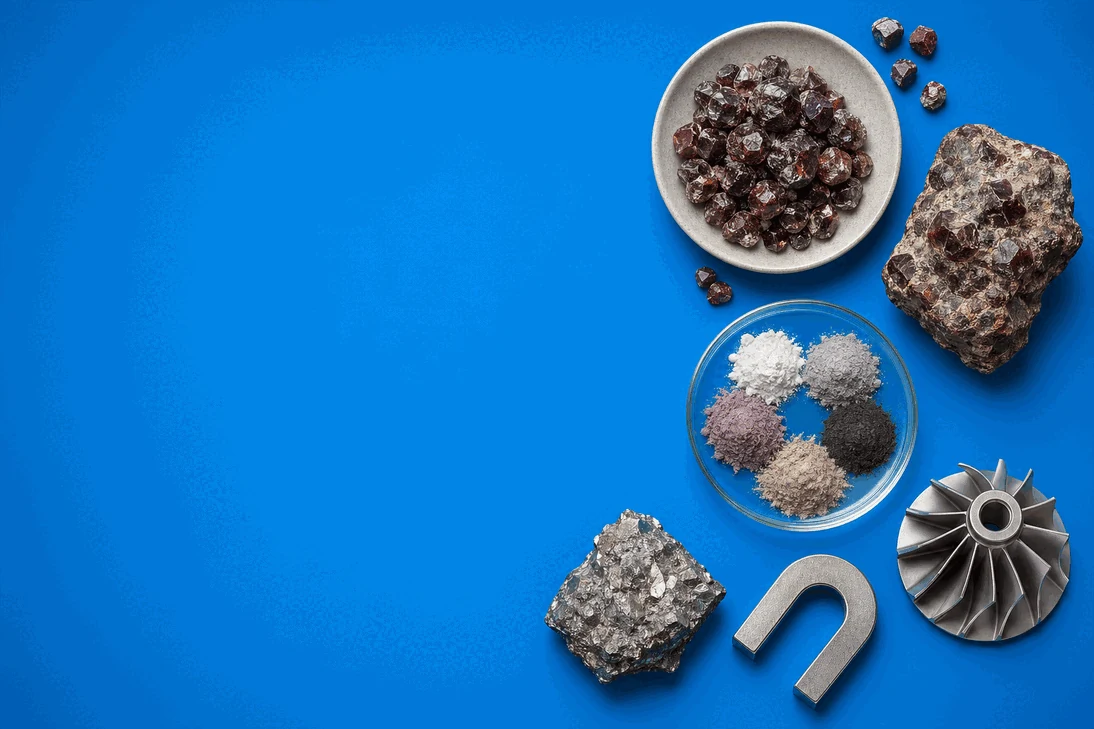

Strategic Partnership with Oak Ridge National Laboratory
Pure Resources Limited (ASX:PR1) has formalised a collaboration with UT Battelle, LLC, the operator of Oak Ridge National Laboratory (ORNL) under the U.S. Department of Energy (DOE), to develop an economical method for recovering heavy rare earth elements plus yttrium (HREE+Y) from its Garnet Hills industrial garnet deposit in Western Australia. The agreement, known as a Strategic Partnership Projects (SPP) contract, sets a fixed term running until March 31, 2027, with a modest financial commitment capped at US$100,000.
The program will focus on four key research tasks: identifying garnet feedstock with elevated HREE+Y grades, conducting digestion experiments to liberate these elements into solution, applying separation and purification protocols, and delivering a final report outlining an industrial design pathway suitable for patenting and commercialisation. This partnership positions Pure Resources within the critical materials ecosystem of the US DOE, a significant strategic step given the supply risks associated with these rare earths.
Rare Earths Critical to Defence and Advanced Manufacturing
Heavy rare earth elements, including dysprosium, terbium, and yttrium, are essential for high-performance permanent magnets used in electric vehicle motors, offshore wind turbines, and crucially, defence systems such as the F-35 fighter jet and nuclear submarines. The US currently imports almost all its HREE+Y supply, making domestic sources and innovative recovery technologies a priority.
Pure’s Garnet Hills garnet, specifically andradite, is geochemically suitable for hosting these elements. If the ORNL program demonstrates economically viable recovery, Garnet Hills could evolve from a single-commodity industrial mineral project into a dual-pathway asset, serving both industrial abrasives and critical minerals markets. This complements Pure’s ongoing downstream initiatives, including its funded R&D collaboration with Rice University on carbon nanotube fibre thermal management systems, which also utilises Garnet Hills graphite as feedstock, reinforcing an integrated mine-to-market strategy R&D collaboration with Rice University.
Advancing US Defence Engagement and Market Position
Beyond the DOE partnership, Pure is preparing to engage formally with the US Department of Defense (DoD) to explore grant, co-investment, and offtake opportunities tied to garnet-derived rare earths for defence applications. This includes leveraging frameworks such as the Defense Production Act Title III and the US-Australia Critical Minerals Framework under AUKUS, aligning with broader geopolitical efforts to secure critical mineral supply chains.
Interim CEO Rocco Tassone emphasised that this partnership "strategically positions Pure inside the US Department of Energy’s critical materials ecosystem and establishes a second value pathway for Garnet Hill." The company is stacking rare earth recovery on top of its MIL SPEC abrasive program, aiming for a comprehensive US downstream strategy from a single Australian hard rock source Rocco Tassone appointed interim CEO.
Technical Expertise and Research Leadership
The ORNL program is led by Dr N. Alex Zirakparvar, a specialist in garnet geochemistry whose prior work independently identified the HREE+Y potential in garnet populations. The research will generate high-precision data on garnet feedstock, assess the economics of rare earth liberation, and apply existing separation technologies, aiming to produce a commercial flowsheet by the end of the project term.
The DOE’s Critical Materials Innovation Hub, co-hosted by ORNL, has a track record of developing licensed technologies for rare earth recovery from alternative feedstocks, such as coal fly ash and magnet swarf. The garnet pathway is currently unexplored by domestic US companies, underscoring the novelty and potential strategic importance of Pure’s project.
Bottom Line?
Pure’s collaboration with a premier US national lab could pivot Garnet Hills into a rare earths contender, but the path to commercial viability remains a multi-year research endeavour.
Questions in the middle?
- Will the ORNL research demonstrate economically viable HREE+Y recovery from garnet?
- How will Pure’s US Department of Defense engagement influence funding and offtake prospects?
- Can Garnet Hills support a scalable dual industrial and critical minerals operation without compromising either market?