Tusker Minerals commissions new lab and uncovers high-grade rutile in Malawi

Tusker Minerals has commissioned a new heavy mineral sands lab in Cameroon and uncovered high-grade rutile in Malawi, while proposing to divest its Tundulu REE project to focus on rutile exploration.
- Yaoundé HMS laboratory operational, accelerating exploration
- Hand-auger drilling tests historic rutile corridor in Cameroon
- High-grade rutile discovery confirmed at Mzimba, Malawi
- Proposed Tundulu REE divestment for up to A$5.55 million
- Quarter-end cash position at approximately A$1.35 million
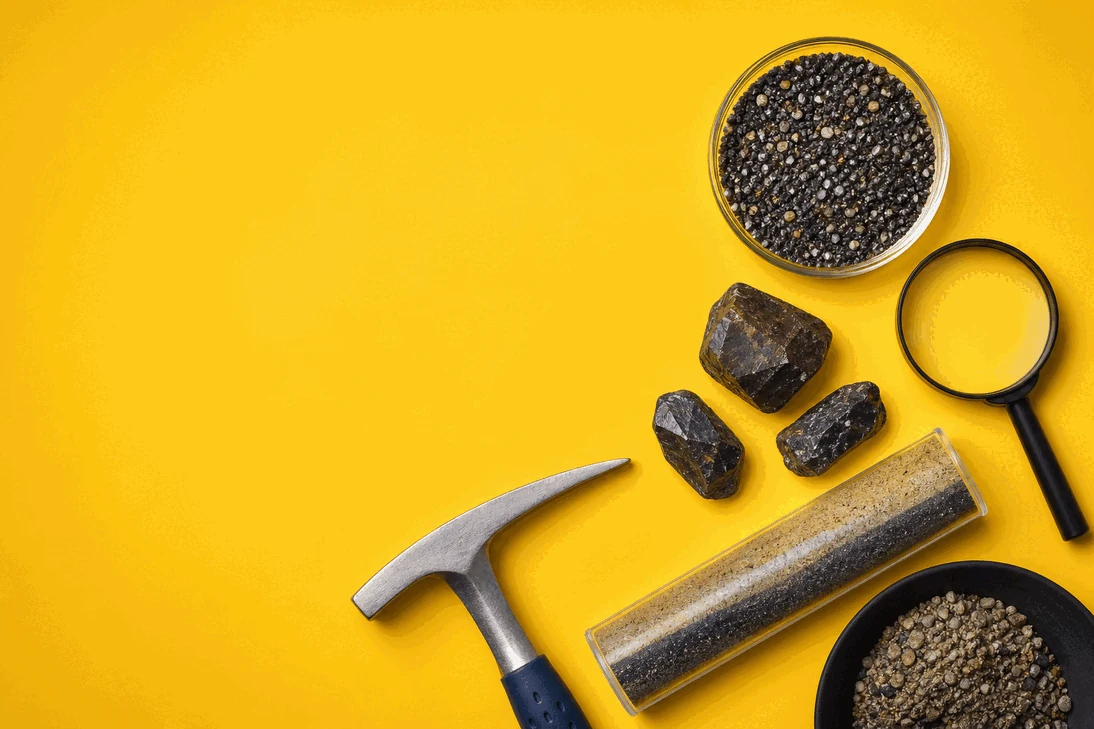

New Heavy Mineral Sands Lab Boosts Cameroon Exploration
Tusker Minerals (ASX:TSK) has taken a significant step in its African rutile exploration campaign with the commissioning of its purpose-built Heavy Mineral Sands (HMS) laboratory in Yaoundé, Cameroon. This facility enables in-country mineral separation and analysis, allowing the company to directly estimate recovered rutile concentrations rather than relying on total heavy mineral percentages. The new lab is already processing all soil and hand-auger drill samples from Tusker’s Cameroon portfolio, cutting assay turnaround times and reducing exploration costs.
The lab’s four-stage workflow includes sample preparation, gravity separation, magnetic separation, and pXRF analysis, which together provide a clearer picture of rutile content and rare earth element signatures. This capability is a marked improvement over conventional methods and represents a strategic advantage as Tusker advances drilling programs across historically mapped rutile corridors.
Systematic Drilling and Soil Sampling in Cameroon
Hand-auger drilling is progressing at the Bounde and Nganda licences, targeting depths of 12–16 metres to test the 70 × 15km high-grade residual rutile corridor initially mapped by BRGM. This is the first methodical drill evaluation of this corridor using modern techniques. Concurrently, systematic soil sampling has commenced across the Yaoundé West licence package to generate priority drill targets and expand regional-scale exploration.
In parallel, desktop remote sensing and target generation studies are underway at the Douala Basin HMS Project to identify prospective palaeo-shoreline features and geomorphological targets ahead of planned Q3 drilling. These integrated efforts reflect Tusker’s push to build a comprehensive exploration pipeline in Cameroon.
High-Grade Rutile Discovery at Mzimba, Malawi
Meanwhile, Tusker’s reconnaissance sampling across approximately 7% of its 710.5km² Mzimba licence package in northern Malawi has revealed a new high-grade rutile discovery. Peak assays reached 1.88% TiO₂, with 47% of soil samples exceeding 1% TiO₂, indicating strong near-surface titanium enrichment. XRD mineralogical analysis confirmed the titanium is hosted predominantly as high-purity rutile with minor anatase, and no ilmenite was detected.
The geological setting at Mzimba mirrors that of Sovereign Metals’ Kasiya deposit, the world’s largest primary rutile deposit located 200km south, giving further credence to the exploration upside. Tusker has planned follow-up infill and wide-spaced soil sampling, auger drilling, geophysical interpretation, and preliminary metallurgical testwork to better understand the deposit’s scale and recovery characteristics. This discovery complements the company’s ongoing work in Cameroon and adds a promising new dimension to its African rutile portfolio.
Strategic Divestment and Financial Position
Post quarter-end, Tusker announced a proposed divestment of its 100% interest in the Tundulu Rare Earth Elements (REE) Project in Malawi to AuKing Mining Limited for up to A$5.55 million in staged cash and equity consideration. This non-dilutive funding is intended to strengthen Tusker’s balance sheet and extend its funding runway through 2026, enabling a sharper focus on rutile and heavy mineral sands exploration.
As of 31 March 2026, the company held approximately A$1.35 million in cash, with exploration expenditure of A$683,000 during the quarter. Senior management has actively engaged with institutional investors at Mining Indaba 2026 and 121 Mining Investment Cape Town, highlighting Tusker’s operational progress and strategic direction.
It is worth noting that Tusker’s TSKO securities remain suspended pending compliance resolution, a factor investors should monitor alongside exploration developments.
Bottom Line?
Tusker’s new lab and Malawi discovery position it well for accelerated rutile exploration, but the Tundulu divestment and capital constraints highlight a delicate balance ahead.
Questions in the middle?
- How will assay results from the new HMS lab influence drilling priorities in Cameroon?
- What scale and grade can Tusker ultimately define at Mzimba with expanded sampling and drilling?
- Will the Tundulu divestment close on schedule, and how will proceeds be allocated?