Canadian Phosphate Gains Five-Year Exploration Permit for Wapiti Project

Canadian Phosphate (ASX:CP8) has locked in a five-year exploration permit for its Wapiti Phosphate Project in British Columbia, setting the stage for immediate drilling and a refreshed JORC resource estimate by late 2026.
- Five-year exploration permit granted for Wapiti Project
- Immediate drilling planned to confirm 2025 Exploration Target
- At least 2000m core drilling and up to 56 holes permitted
- ~500 tonne bulk sample for advanced metallurgical testing
- Updated JORC Mineral Resource Estimate expected Q4 2026

Strategic Permit Unlocks Wapiti Drilling Campaign
Canadian Phosphate Ltd (ASX:CP8) has secured a crucial five-year exploration permit from British Columbia’s Ministry of Mines and Critical Minerals for its wholly owned Wapiti Phosphate Project. This permit greenlights an ambitious drilling program aimed at validating the company’s 2025 Exploration Target and expanding geological understanding across the 11,815-hectare sedimentary basin.
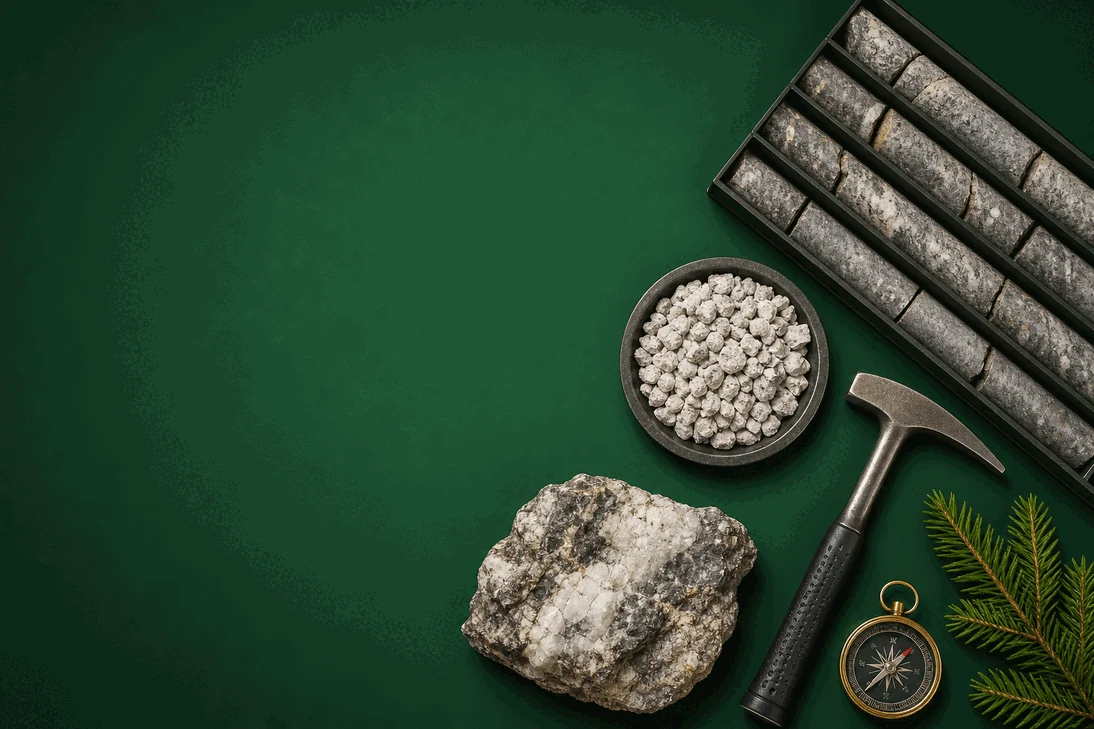
With drilling set to commence in the northern summer of 2026, CP8 has contracted Dahrouge Geological Consulting for oversight and Proterra Drilling as the drill contractor. The program includes a minimum 2000 metres of NQ core drilling, with the permit allowing up to 56 holes and one trench, designed to yield a ~500 tonne bulk sample for advanced metallurgical testing. This sample will underpin further studies, including the potential production of purified phosphoric acid for lithium-ion battery markets, leveraging technology from Novaphos.
Addressing North America’s Phosphate Supply Vulnerability
CP8’s Managing Director Daniel Gleeson emphasised Wapiti’s strategic importance as one of only two known sedimentary phosphate deposits in Canada, both held by the company. The project aligns with CP8’s vision to establish a secure domestic phosphate supply, a goal that has gained urgency amid geopolitical disruptions affecting global phosphate markets.
Recent tensions in the Middle East and export restrictions from dominant producers like China and Russia have spotlighted vulnerabilities in phosphate supply chains. Morocco’s control of roughly 70% of global rock phosphate resources further concentrates strategic leverage. Meanwhile, the United States remains a net importer of rock phosphate, underscoring the need for resilient local sources.
CP8’s permit and planned drilling activities follow its broader push to accelerate North American phosphate projects, as detailed in its recent drilling preparations and bulk sampling plans. This momentum is supported by prior capital raises and strategic partnerships, including a non-binding Letter of Intent with Novaphos to develop advanced phosphate processing technologies.
Pathway to Resource Update and Economic Assessment
The drilling program aims to test lateral and depth extensions of the phosphate seam within the Wapiti synclinal basin, which features a continuous phosphate horizon spanning an additional 16.5 kilometres of prospective strike. Results from this campaign will feed into an updated JORC Mineral Resource Estimate, targeted for release in Q4 2026, updating the previous 2015 resource calculation.
Following the resource update, CP8 plans to advance a Preliminary Economic Assessment (PEA) for Wapiti. This study will explore the feasibility of producing single super phosphate (SSP) fertilizer, marking a critical step toward CP8’s ambition to become Canada’s sole domestic phosphate fertilizer supplier. The permit also supports Phase 3 of the company’s strategy, involving the production of purified phosphoric acid and super phosphoric acid for both fertilizer and lithium iron phosphate (LFP) battery applications.
CP8’s recent capital raises and strategic partnerships have bolstered its financial footing to support these initiatives, reflecting growing investor interest in critical mineral supply chain diversification. The project’s proximity to Tumbler Ridge, a mining hub with established infrastructure and skilled labour, further enhances its development potential.
Bottom Line?
CP8’s permit unlocks a critical phase of exploration that could solidify Canada’s role in phosphate supply amid global market strains.
Questions in the middle?
- Will the upcoming drilling confirm significant resource expansion beyond the 2015 estimate?
- How will metallurgical test results influence the feasibility of producing purified phosphoric acid for battery markets?
- What impact will ongoing geopolitical tensions have on CP8’s timeline and strategic partnerships?