AU$1.2 Million Portable ARCEMY System Installed at Navy AM CoE

AML3D has installed its first portable ARCEMY additive manufacturing system at the US Navy's Additive Manufacturing Centre of Excellence, marking a milestone in its partnership with Austal USA and expanding its footprint in military-grade 3D printing.
- First portable ARCEMY system installed at US Navy AM CoE
- AU$1.2 million order completed with final payment triggered
- Portable system containerised for rapid redeployment
- Austal USA now operates three ARCEMY systems at Danville
- Supports US Navy’s Maritime Industrial Base expansion plans
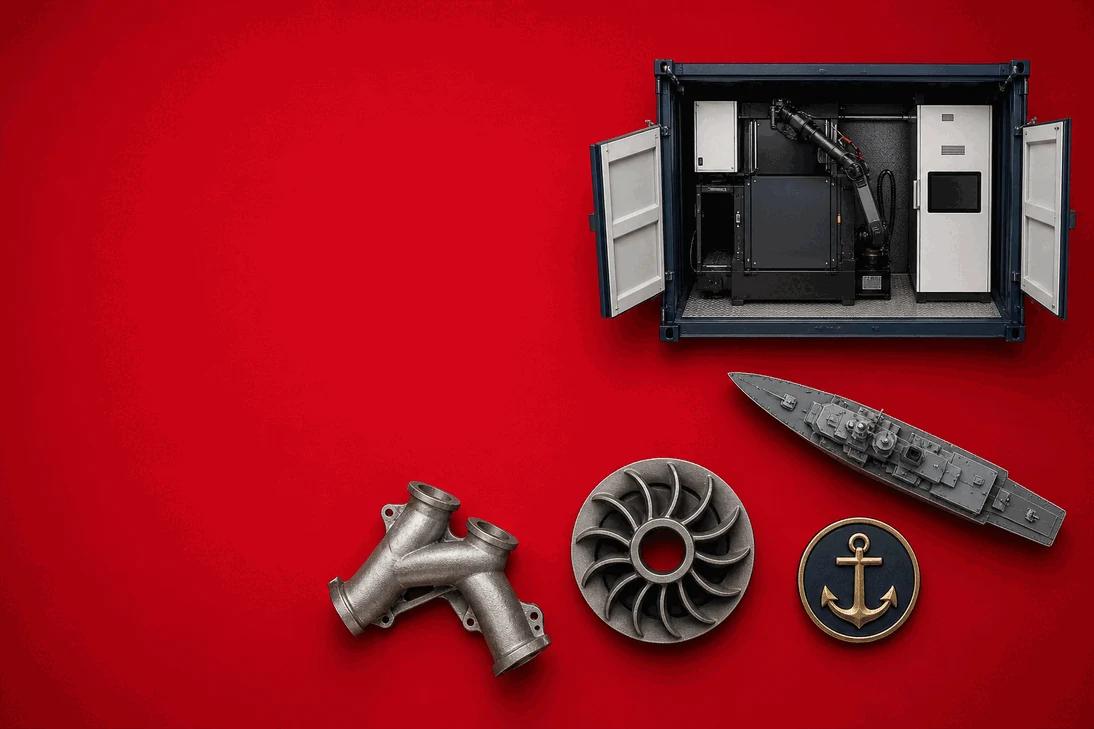

Portable ARCEMY System Enhances US Navy Manufacturing
AML3D Limited (ASX:AL3) has delivered and installed its first portable ARCEMY® small edition additive manufacturing system at the US Navy’s Additive Manufacturing Centre of Excellence (AM CoE) in Danville, Virginia. Operated by Austal USA, the system is containerised within a 20-foot shipping container, allowing rapid redeployment and flexible use across different military manufacturing sites. This installation completes a AU$1.2 million order, triggering the final 50% payment to AML3D.
The portable ARCEMY complements Austal USA’s existing fleet of two larger custom ARCEMY® X systems at Danville, expanding the US Navy’s additive manufacturing capabilities. Designed for point-of-need production, the system promises significantly reduced lead times for high-quality metal parts that meet US military specifications. Austal USA’s Vice President Don Hairston described the containerised system as a “game-changer” that enhances supply chains by enabling production exactly where and when it is needed.
Strategic Partnership with Austal USA Deepens
AML3D CEO Sean Ebert highlighted the growing relationship with Austal USA, noting that the portable ARCEMY demonstrates AML3D’s ability to tailor its technology to diverse military and industrial applications. The addition of the portable system brings Austal USA’s ARCEMY fleet at Danville to three units, underscoring the US Navy’s increasing reliance on AML3D’s Wire Additive Manufacturing (WAM®) technology. This development aligns with the Letter of Intent from the US Navy, which anticipates a requirement for up to 100 additive manufacturing systems and 3,400 additively manufactured parts by 2030.
The containerised design slashes field service time for installation from weeks to just one or two days, enhancing operational flexibility. This feature may also facilitate forward deployment across multiple US military branches, expanding the potential applications of AML3D’s technology beyond the Navy’s Maritime Industrial Base.
AML3D’s US Defence Expansion Gains Momentum
This milestone builds on AML3D’s recent US defence sector achievements, including a $1.7 million ARCEMY X system order at FasTech and a $9.9 million contract to supply ARCEMY X systems to Newport News Shipbuilding. These contracts reflect AML3D’s aggressive push to scale its US manufacturing footprint and deepen its presence in military additive manufacturing. The company is investing heavily in expanding capacity, including a $12 million US facility upgrade to support growing demand.
The portable ARCEMY delivery complements these efforts by offering a versatile, mobile solution that can adapt to the evolving needs of defence manufacturers and shipbuilders. Austal USA’s role as operator of the Navy’s AM CoE places it at the forefront of integrating advanced manufacturing technologies into naval shipbuilding and sustainment programs.
AML3D’s technology, which combines robotics, welding science, and proprietary software, positions it well to capitalize on the US Navy’s strategic emphasis on additive manufacturing for supply chain resilience and fleet readiness. The company’s recent contracts and capacity expansions indicate a broader trend of increasing adoption of metal 3D printing in defence manufacturing, as seen in its steady $29 million order book and entry into UK and European defence markets.
Bottom Line?
The portable ARCEMY system’s deployment signals AML3D’s deepening integration into US military manufacturing, but scaling to meet the Navy’s ambitious 2030 targets remains a key challenge.
Questions in the middle?
- How quickly can AML3D scale production to fulfill the US Navy’s potential 100-system demand?
- Will the portable ARCEMY find adoption beyond the Navy, across other US military branches?
- How will AML3D’s expanding US footprint impact competition in military additive manufacturing?