BrainChip Reports AKD1500 Volume Production and Expanding Defense Collaborations

BrainChip detailed significant progress in its neuromorphic AI technology and commercial strategy at its 2026 AGM, highlighting the AKD1500 chip launch and expanding defense and industrial collaborations.
- AKD1500 chip enters volume production
- Strategic deals with Parsons and Raytheon
- Focus on mission-critical defense and wearables
- On-device generative AI product planned for 2026
- Expansion into modules and reference designs
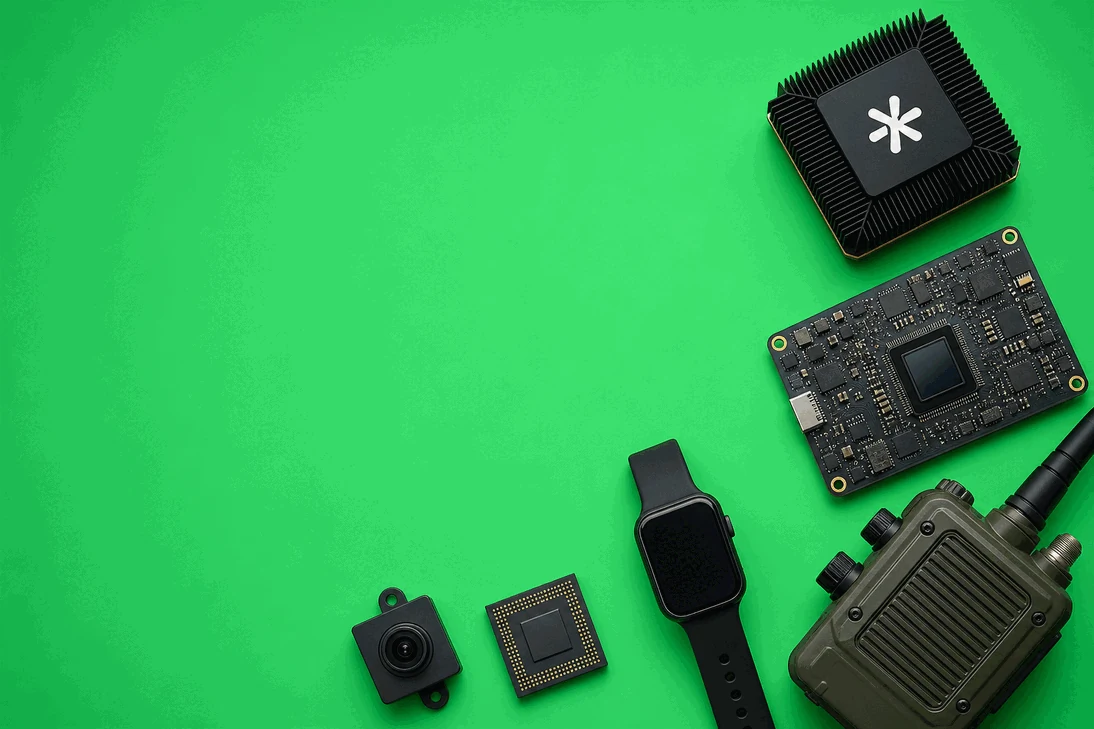

AKD1500 Production Marks Commercial Turning Point
BrainChip Holdings Ltd (ASX:BRN) has positioned itself for a pivotal year in 2026 with the volume production of its AKD1500 neuromorphic AI chip, marking a shift from prototype to scalable commercial deployment. This milestone, announced at the company’s Annual General Meeting, underscores BrainChip’s evolution from a technology pioneer to a full-system partner, integrating silicon, modules, and reference designs to accelerate customer adoption.
The AKD1500’s commercial availability has already attracted significant orders, including a multi-year strategic supply agreement with Parsons Corporation, securing an initial 10,000-chip order. Parsons plans to embed BrainChip’s Akida processors into defense platforms requiring adaptive performance under constrained conditions, validating the chip’s readiness for demanding mission-critical environments. This deal complements BrainChip’s earlier announcement of a $1.8 million neuromorphic radar project with Raytheon, a major U.S. defense contractor, focusing on low-power radar signature analysis for missile and drone systems.
Expanding Footprint Across High-Value Sectors
BrainChip’s CEO Sean Hehir highlighted the company’s deliberate focus on sectors where edge AI’s power efficiency and real-time processing offer the most acute advantages. These include aerospace, defense, medical devices, industrial IoT, and wearables. The partnership with Onsor Technologies in Oman, deploying the AKD1500 in wearable glasses to predict epileptic seizures with over 95% accuracy, exemplifies real-world impact beyond defense applications.
Commercial traction is also growing through a broad ecosystem of collaborators. Information Systems Laboratories is co-developing neuromorphic radar solutions, while Arquimea demonstrated Akida’s integration with event-based cameras on drones for rapid swimmer detection. Additionally, Chelpis Quantum Corp. is qualifying Akida chips for industrial robotic security, further extending BrainChip’s reach into autonomous systems. The company’s distribution partnership with DigiKey, introducing Akida-based development boards globally, is a strategic move to broaden commercial access and accelerate adoption.
Technology Leadership in Neuromorphic Edge AI
BrainChip’s Akida technology uniquely blends neuromorphic engineering with deep learning, enabling real-time on-chip learning at milliwatt power levels. Founder Peter Van Der Made traced this innovation back to a vision formed in 2004, inspired by the human brain’s efficiency and adaptability. The AKD1000 chip, launched in 2019, remains relevant as a low-power solution, while the AKD1500 improves performance and form factor. The upcoming Akida 2 and 3 families aim to handle more complex neural networks and private large language models on small devices.
The company is also investing heavily in developer engagement, launching the MetaTF 2.13 platform and Akida Cloud to lower barriers for engineers to build and iterate AI models without physical hardware. This ecosystem focus is critical in a market where customers demand not just superior silicon but accessible, deployable solutions.
Commercial Execution and Market Positioning
Despite technological progress, BrainChip acknowledged that past execution did not consistently translate into expected commercial results. The management team is taking decisive steps to bridge this gap, concentrating on converting a growing pipeline of opportunities into revenue. Early 2026 has seen new licensing and chip orders, including a key Akida 2 licensee, EdgeAI, which secured a down-select by a defense contractor for ASIC and chip orders, reinforcing BrainChip’s expanding IP licensing footprint. This deal builds on the company’s recent Akida 2 licensing deal with Korea’s EDGEAI, highlighting its global reach in edge AI semiconductors.
Financially, BrainChip strengthened its position with a A$35 million capital raise earlier this year and commenced volume production of the AKD1500 chip, as detailed in a January announcement. The company’s strategic partnership with Parsons and expanded patent portfolio further underpin its commercial ambitions. These developments follow the company’s A$35m capital raise and AKD1500 launch, setting the stage for accelerated growth.
Looking Ahead: On-Device Generative AI and Scaling
BrainChip plans to launch its Akida GenAI product in the second half of 2026, aiming to deliver on-device generative AI capabilities that operate without cloud connectivity at ultra-low power. This offering targets a market increasingly demanding private, real-time AI on edge devices, such as wearables and industrial sensors. The company is also rolling out reference design platforms tailored to wearables, radar, speech assistants, and electronic warfare to reduce time-to-market for partners and demonstrate its transition from IP licensor to complete solution provider.
With a clear execution roadmap, BrainChip’s leadership expresses confidence in converting technology milestones into commercial success. The company’s evolution mirrors the long journeys of industry giants, underscoring that deep-tech breakthroughs require patience, perseverance, and strategic reinvention.
Bottom Line?
BrainChip’s 2026 pivots towards volume chip production, strategic partnerships, and on-device generative AI position it at a critical juncture, though commercial execution remains a key challenge.
Questions in the middle?
- How quickly will Akida GenAI capture market share in on-device AI?
- Can BrainChip sustain momentum converting its growing pipeline into revenue?
- What competitive pressures will emerge as edge AI adoption accelerates?