Orbital Books US$392,000 Engine Order from US UAS Customer with Service Upside

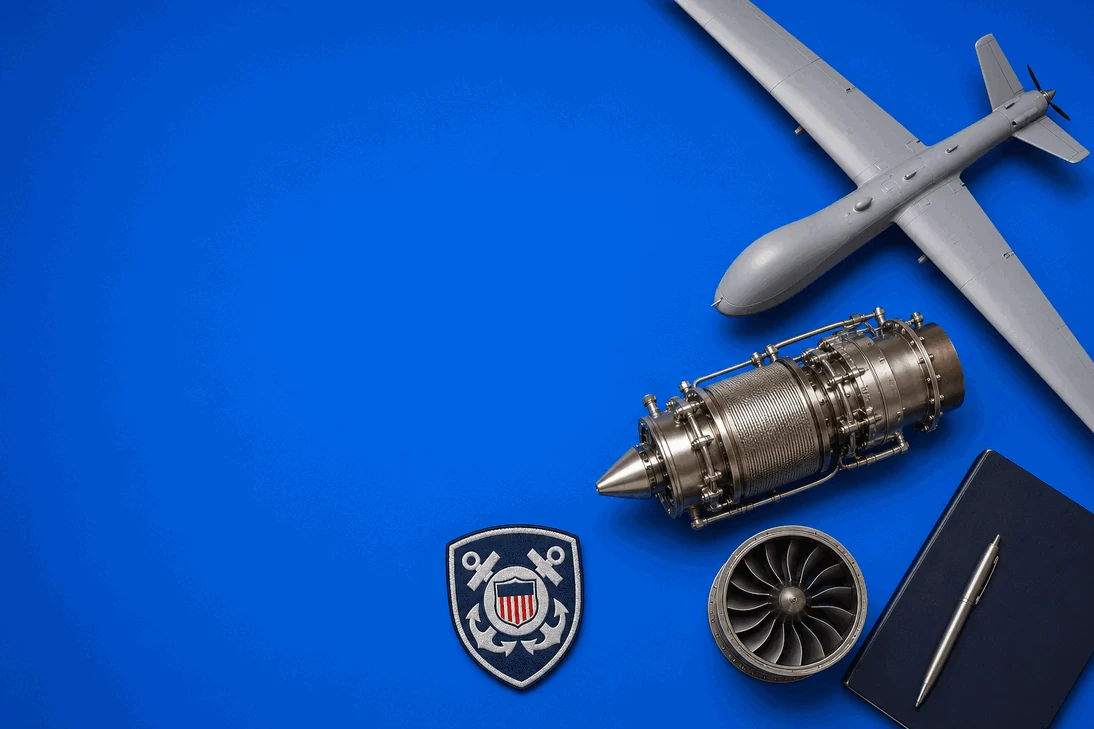
Orbital Corporation has landed a key US order for five 150HFE heavy fuel engines, setting the stage for a lucrative Power by the Hour service model tied to a major US Coast Guard ISR program.
- US unmanned aircraft customer orders five 150HFE engines
- Order worth approximately A$600,000 including engineering services
- Potential transition to multi-year Power by the Hour contracts
- Opportunity linked to large US Coast Guard ISR program
- 150HFE engine proven in demanding long-endurance BVLOS operations
 Add us as a preferred source on Google
Strategic US Order Validates 150HFE Engine in Long-Endurance UAVs
Orbital Corporation Limited (ASX:OEC) has secured a purchase order worth around A$600,000 from a US-based unmanned aircraft systems (UAS) company for five of its 150HFE heavy fuel engines. The order also includes the FlexDT™ Diagnostic and ECU Management Tool, a Power Management System, and Non-Recurring Engineering services. These engines will power a Group 3 long-endurance UAS that demonstrated a 24-hour continuous flight in March 2025 and holds commercially approved Beyond Visual Line of Sight (BVLOS) clearance in the US National Airspace System.
This deal is more than just a hardware sale; it represents a strategic foothold in a potentially lucrative recurring revenue stream. Orbital’s CEO Stephen Pearce highlighted that the order validates the 150HFE engine’s capability in demanding maritime ISR (Intelligence, Surveillance, and Reconnaissance) applications, and marks the start of what could be a substantial long-term partnership.
Power by the Hour Model Could Triple Revenue Per Engine
The order is a precursor to Orbital’s Power by the Hour (PBH) service model, which the company recently detailed in its April 29 Quarterly Review of Operations Outlook. Under PBH, Orbital supplies and supports engines under multi-year service contracts, generating recurring revenue based on operating flight hours rather than one-off hardware sales. The company estimates that total revenue per engine over the life of a PBH contract could be approximately three times the equivalent direct hardware sale price.
If the US customer secures a contract under the US Coast Guard’s Contractor Owned Contractor Operated (COCO) UAS ISR Services program, Orbital expects to transition from hardware supplier to PBH service provider by Q3 FY2027. This program, under a Basic Ordering Agreement with a potential 10-year term, could require up to 80 UAS systems, making it one of the largest sustained COCO ISR opportunities in the US Department of Homeland Security’s procurement portfolio.
Orbital’s 150HFE engine is specifically designed for the endurance and reliability demands of persistent maritime ISR missions. It delivers 11.9 horsepower at 20,000 feet AMSL with a 750-hour Time Between Overhaul, and its heavy fuel technology has already logged over one million operational flight hours with the US Navy. This pedigree strengthens Orbital’s positioning for the COCO ISR opportunity and underpins the recurring revenue potential of the PBH model.
Milestone Payments and Engineering Services to Support Delivery
Delivery of the five engines and completion of the associated Non-Recurring Engineering services will be staged across a structured milestone payment program concluding in October 2026. The first NRE milestone has commenced immediately, signalling Orbital’s active engagement with the customer’s procurement process.
This US order builds on Orbital’s recent momentum, following a series of propulsion orders and partnerships including a USD 1.1 million Middle East military propulsion deal and expanded UAV engine production plans amid a $43 million business pipeline, as noted in the company’s UAV Propulsion Orders Amid Cash Outflow. The company’s ongoing efforts to scale its heavy fuel engine range and service offerings are well aligned with growing global demand for persistent UAV operations.
While Orbital is currently unable to precisely quantify the future revenue from the PBH services under the US Coast Guard ISR program, the strategic implications are clear. The transition from one-off hardware sales to a service-based model could significantly enhance Orbital’s revenue visibility and operational leverage in the expanding unmanned systems market.
The 150HFE engine order also follows Orbital’s recent expansion into NATO-aligned UAV programs and diagnostic support agreements with major defence contractors, reinforcing its position in the global UAV propulsion ecosystem and potential for sustained growth through recurring service contracts, as seen in the Global Reach with NATO Partnership.
Bottom Line?
Orbital’s US engine order signals a promising pivot towards recurring revenue, but the scale hinges on the customer securing a major Coast Guard ISR contract.
Questions in the middle?
- Will Orbital successfully convert this hardware sale into a multi-year Power by the Hour contract?
- How competitive is Orbital’s 150HFE engine against other propulsion systems in the US ISR market?
- What timelines and milestones will determine the progression of the COCO UAS ISR Services program procurement?