Wandanya Blended Manganese Feeds Reach 45% Grade with 82% Recovery

Black Canyon's latest beneficiation trials at Wandanya have consistently upgraded manganese feeds to 40-45% Mn grades with strong recoveries, while iron ore tests show a premium lump product. Ongoing drilling and larger scale testwork aim to refine project economics.
- Stage 3 beneficiation yields 40-45% Mn from blended feeds
- Manganese recoveries between 73% and 82% with low impurities
- Iron ore drop tower tests confirm 74% lump at 59.7% Fe
- Resource drilling 40% complete with assays imminent
- Larger scale Dense Media Separation testwork planned
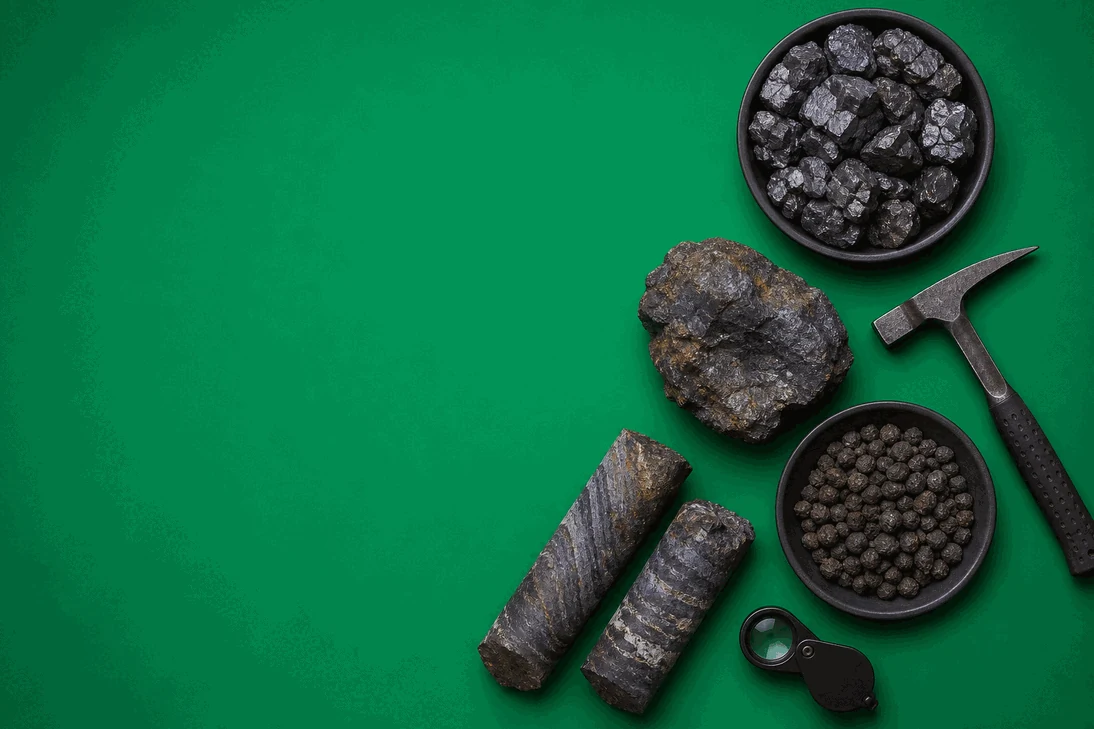

Consistent High-Grade Manganese Upgrades from Blended Feeds
Black Canyon Limited (ASX:BCA) has delivered compelling metallurgical results from its Wandanya manganese project, with Stage 3 beneficiation trials upgrading blended low, medium, and high-grade manganese feeds to premium manganese oxide products grading between 40% and 45% Mn. Using simple density-based Heavy Liquid Separation (HLS), the company achieved recoveries ranging from 73% to 82%, alongside low levels of penalty elements, a combination attractive to potential customers.
Two blended composites were tested: Blend 1 combined 20% low, 60% medium, and 20% high-grade material, while Blend 2 mixed 25% low and 75% medium-grade. Both blends showed significant manganese grade uplift from feed grades around 30% Mn to beneficiated grades exceeding 40% Mn at densities of 2.8 and 3.0 g/cm3. For instance, Blend 1 improved from 32.4% Mn feed to 41.8% and 45.3% Mn at respective densities, with recoveries up to 80%.
These results build on earlier sighter-level tests and reinforce the potential for scalable, cost-effective processing methods similar to those employed at established manganese operations like Woodie Woodie and Groote Eylandt. Black Canyon is now preparing these blends for larger scale Dense Media Separation (DMS) testwork to better approximate commercial beneficiation processes.
Iron Ore Lump Product Shows Premium Characteristics
Complementing the manganese work, iron ore drop tower tests at Wandanya demonstrated a durable product with a lump to fines ratio of 74% to 26%, significantly higher than the typical Pilbara benchmark of 30-40% lump. The lump fraction graded 59.7% Fe, suggesting strong potential for direct shipping ore (DSO) status with associated pricing premiums. The fines, by contrast, graded 54.8% Fe.
This high lump content could enhance the project's economic profile, although further analysis is required to fully understand product value and market positioning. The iron mineralisation appears to be a lateral equivalent to the manganese zones, adding to the project's resource diversity.
Resource Drilling Progress and Next Steps
Black Canyon's 15,000m resource definition drilling campaign at Wandanya is approximately 40% complete, targeting a 3km base case zone of mineralisation. Assay results from this drilling are expected in the coming weeks, which will provide further insight into grade continuity and support ongoing metallurgical evaluations. This drilling phase follows the company's earlier 15,000m RC drilling underway and high-grade manganese DSO potential announcements.
Following the completion of HLS testwork, the company is moving towards larger scale DMS testwork to better simulate commercial beneficiation. This will inform conceptual flowsheet designs and scoping-level cost estimates. Black Canyon is also considering bulk sampling from diamond drill core or test pits once resource drilling concludes, aiming to refine geometallurgical models.
Environmental baseline surveys, including flora, fauna, short-range endemics, and heritage assessments, have been completed to support ongoing development activities and ensure compliance with native title agreements with the Karlka Nyiyaparli Aboriginal Corporation.
Implications for Project Scalability and Economic Potential
Managing Director Brendan Cummins highlighted that the beneficiation results strengthen confidence in Wandanya's scalability and processing flexibility, crucial factors for advancing the project towards development. The ability to upgrade low to high-grade manganese feeds to premium products with strong recoveries and low impurities underpins this potential.
While these metallurgical results are promising, they remain based on composite and sighter samples. Larger scale testwork outcomes and forthcoming assay data will be critical to validating these findings and quantifying economic viability. The project's iron ore component, with its unusually high lump content, adds a valuable dimension to the resource base.
Bottom Line?
Black Canyon’s beneficiation successes at Wandanya set a solid foundation, but upcoming large-scale testwork and assay results will be pivotal in defining the project’s commercial trajectory.
Questions in the middle?
- How will larger scale Dense Media Separation testwork impact manganese recovery and product quality?
- What will the upcoming assay results reveal about grade continuity and resource scale at Wandanya?
- How might the high lump iron ore product influence project economics and market positioning?