Provaris Advances Hydrogen Shipping with K LINE and Norwegian Hydrogen

Provaris Energy, alongside Kawasaki Kisen Kaisha (K LINE) and Norwegian Hydrogen, has formalised a cooperation to develop a commercial hydrogen shipping supply chain from Norway to Northern Europe, focusing on cost modelling and charter terms for compressed hydrogen transport.
- Cooperation targets hydrogen export from Norway to Northern Europe
- Provaris’ proprietary H2NeoTM carriers and H2LeoTM barge to be utilised
- K LINE brings shipping operational expertise and regional experience
- Term sheet secured with Uniper Global Commodities for hydrogen offtake
- Focus on maturing shipping costs and long-term charter agreements
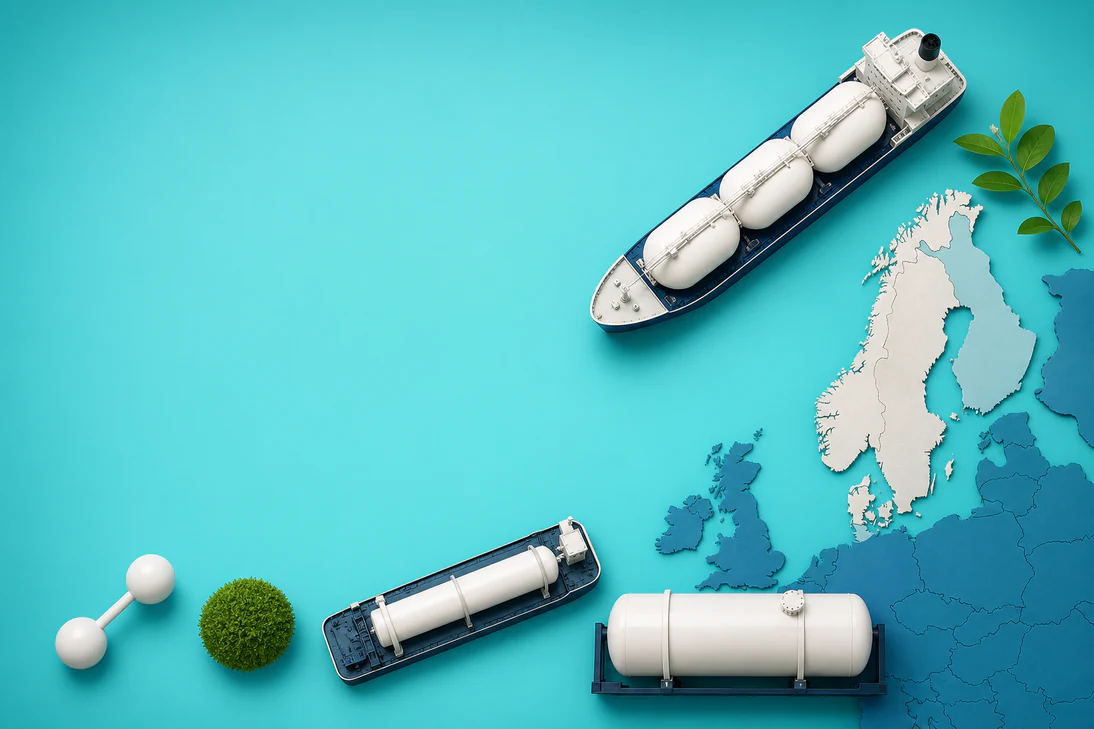

Strategic Alliance Targets Hydrogen Export Supply Chain
Provaris Energy Ltd (ASX:PV1) has taken a significant step towards commercialising renewable hydrogen exports from Norway through a new cooperation agreement with shipping giant Kawasaki Kisen Kaisha (K LINE) and Norwegian Hydrogen AS. The partnership aims to develop a viable hydrogen supply chain centred on the FjordH2 Project at Ørskog, which plans to produce up to 40,000 tonnes per annum of compressed hydrogen for export to Northern Europe.
The collaboration will leverage Provaris’ proprietary compressed hydrogen transport technologies, namely the H2NeoTM carriers and H2LeoTM barge, designed for efficient maritime shipping of compressed hydrogen. Meanwhile, K LINE will contribute its extensive shipping operations expertise, particularly its regional experience from LNG and liquid CO2 projects in Norway and Northern Europe, to mature the commercial viability of the supply chain.
Commercial Cost Modelling and Charter Terms in Focus
A core objective of the cooperation is to refine a detailed cost model for the hydrogen delivery chain, incorporating shipping cost assessments and fleet management plans. This includes drafting terms for long-term charter agreements, as well as exploring financing options and ownership structures for the hydrogen carriers and barges. K LINE’s history operating LNG carriers at the Snøhvit project and liquid CO2 carriers for the Northern Lights CCS project underpins its role in these commercial studies.
Norwegian Hydrogen has already secured key project milestones including land acquisition, advanced permitting, and feasibility studies confirming the technical and economic viability of the export site. The project also holds a term sheet with Uniper Global Commodities, which outlines long-term offtake terms with take-or-pay provisions, signalling early market commitment for the hydrogen supply.
Complementary Expertise Drives Supply Chain Development
Provaris CEO Martin Carolan emphasised the strength of combining hydrogen production, transport technology, and European market access to build a scalable and cost-competitive export pathway. “By combining Norwegian Hydrogen’s project development with K LINE’s shipping expertise and Provaris’ compressed hydrogen transport solution, we are focused on maturing a scalable, cost-competitive pathway that aligns with Europe’s demand for pipeline-ready RFNBO-compliant hydrogen,” he said.
K LINE Corporate Officer Kei Onishi noted the company’s commitment to advancing practical compressed hydrogen shipping solutions, highlighting the strategic importance of supporting hydrogen supply chains for Northern Europe. Norwegian Hydrogen CEO Jens Berge described K LINE’s involvement as a “great positive milestone” that strengthens the entire value chain.
This agreement builds on Provaris’ recent progress in hydrogen and CO2 storage technologies, including an oversubscribed $1.325 million capital raise earlier this year to advance prototype tanks and Class Approval programs. Such developments reinforce Provaris’ positioning in regional supply chains supporting the global energy transition. The cooperation with K LINE and Norwegian Hydrogen marks a pivotal move towards commercialising hydrogen exports from Norway, a market increasingly critical to Europe’s renewable energy ambitions.
Bottom Line?
The partnership sets a foundation for commercial hydrogen exports from Norway, but final shipping costs and charter agreements remain key milestones to watch.
Questions in the middle?
- How will shipping cost models evolve as the project moves towards commercialisation?
- What financing structures will underpin the ownership of hydrogen carriers and barges?
- How might market demand from Northern Europe shape the scale and timing of hydrogen exports?