Ultranode 95 Achieves Over 390 Wh/kg and 300 Cycles in Independent Tests

AnteoTech has secured independent validation of its Ultranode™ 95 silicon anode in commercial-format battery cells, demonstrating over 40% higher energy density and strong cycle life, advancing its push into the growing drone battery market.
- Ultranode™ 95 achieves >390 Wh/kg in 5 Ah Multi-Layer Pouch cells
- Over 300 cycles at 70% capacity retention surpasses defence drone targets
- Cost-effective micro-silicon supply offers significant anode cost advantage
- Production of 18650 cylindrical cells underway for expanded format testing
- Engagements progressing with US and Australian drone battery manufacturers
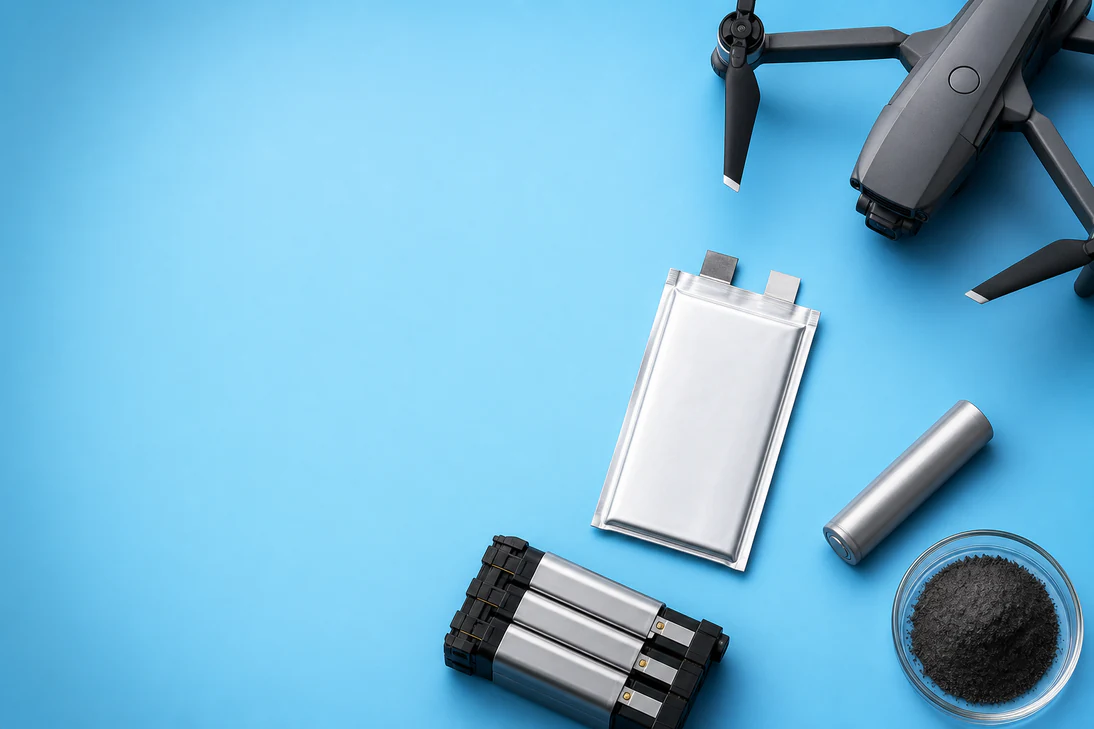

Independent Validation Confirms Ultranode™ 95 Performance Leap
AnteoTech Ltd (ASX:ADO) has crossed a critical milestone with the Battery Innovation Centre (BIC) in Indiana independently validating its Ultranode™ 95 silicon anode technology within commercial-format 5 Ah Multi-Layer Pouch (MLP) cells. The tests revealed a specific energy density exceeding 390 Wh/kg, marking a more than 40% improvement over traditional graphite anodes and positioning the technology as a standout for weight-sensitive applications like drones, UAVs, and portable medical devices.
Beyond raw energy density, the cells sustained over 300 charge cycles while retaining 70% capacity, comfortably surpassing the 200-cycle benchmark typical for defence drone batteries. This combination of high energy and cycle life signals a promising step toward commercial viability, especially given the independent nature of the BIC validation.
Cost Advantages and Supply Chain Security
Ultranode™ 95 leverages low-cost, micro-silicon sourced from multiple global suppliers, offering a bottom-quartile cost base compared to pricier silicon-carbon composites. AnteoTech’s analysis suggests an anode active material cost reduction of up to 85-95% on a $/Wh basis relative to Western silane-derived alternatives, though these figures exclude full cell production costs. This cost edge could be a decisive factor as manufacturers seek to scale next-generation lithium-ion batteries for high-performance drone applications.
AnteoTech’s CEO Merrill Gray highlighted that the scale-up to commercial formats has been "one of the most straightforward scale-up efforts observed by BIC," underscoring manufacturability alongside performance. The company has also produced roll-to-roll Ultranode™ 95 samples for further testing by US-based drone battery manufacturers, advancing joint development agreement discussions. This builds on the momentum from the company’s recent record sales pipeline and strategic partnerships established earlier in the year.
Scaling to Cylindrical Cells and Market Engagements
Following the MLP validation, AnteoTech is now producing 18650 cylindrical cells incorporating Ultranode™ 95 at BIC. This format is critical to meet diverse customer demands across drone and defence sectors. The company is actively engaging with drone system suppliers in both the US and Australian defence markets, aiming to integrate these higher-performance cells into operational platforms.
The global drone battery market, currently valued at approximately US$9.5 billion and forecast to grow at an 18% CAGR through 2034, is a key commercial target. Defence initiatives like the US SkyFoundry Act and the European Drone Defence Initiative are amplifying demand for batteries that extend flight times and payload capacities, precisely the niche Ultranode™ 95 aims to fill. The company’s technology also holds promise for soldier-worn systems and portable communications equipment, where weight savings translate directly to operational advantages.
Technology Edge Over Competitors
Ultranode™ 95’s elemental micro-silicon anode coating capacity of 2,000–2,500 mAh/g approaches silicon’s theoretical maximum, significantly outpacing graphite’s 370 mAh/g. This translates to cells with greater energy density and reduced weight or volume. The company’s approach contrasts with other silicon-carbon composites that require thicker anodes and more complex manufacturing processes, potentially limiting scalability and cost efficiency.
AnteoTech’s progress follows earlier breakthroughs with its Ultranode™ X product, which recently surpassed 1,000 cycles at 80% capacity retention, demonstrating the company’s growing expertise in silicon anode technology and its applications across battery formats and markets. These advances collectively position AnteoTech as a notable player in the evolving battery materials landscape, particularly for high-performance, lightweight applications.
Bottom Line?
Ultranode™ 95’s independent validation and scale-up to cylindrical cells mark tangible progress, but commercial success hinges on finalising joint development agreements and proving consistent manufacturing at scale.
Questions in the middle?
- Will cylindrical cell testing replicate MLP performance gains in real-world conditions?
- How swiftly can AnteoTech convert positive evaluations into binding commercial agreements?
- Can cost advantages in active materials translate into competitive pricing for full battery packs?