Blaze Minerals Reports Up to 4.17% Copper and 5.52% Lead at Krokodil Prospect

Blaze Minerals has uncovered significant copper, lead, and zinc mineralisation at its newly named Krokodil Prospect within the Dinokwe Project, setting the stage for trenching and potential drilling in Botswana’s Limpopo Mobile Belt.
- High-grade copper and lead confirmed by handheld XRF
- Krokodil Prospect covers a 1000m by 100m soil anomaly
- Polymetallic system linked to interpreted fault zone
- Extensive trenching planned to define mineralisation source
- Dinokwe Project spans ~1771 km2 in a prolific base metal belt
 Add us as a preferred source on Google
Significant Copper-Lead-Zinc Mineralisation at Krokodil Prospect
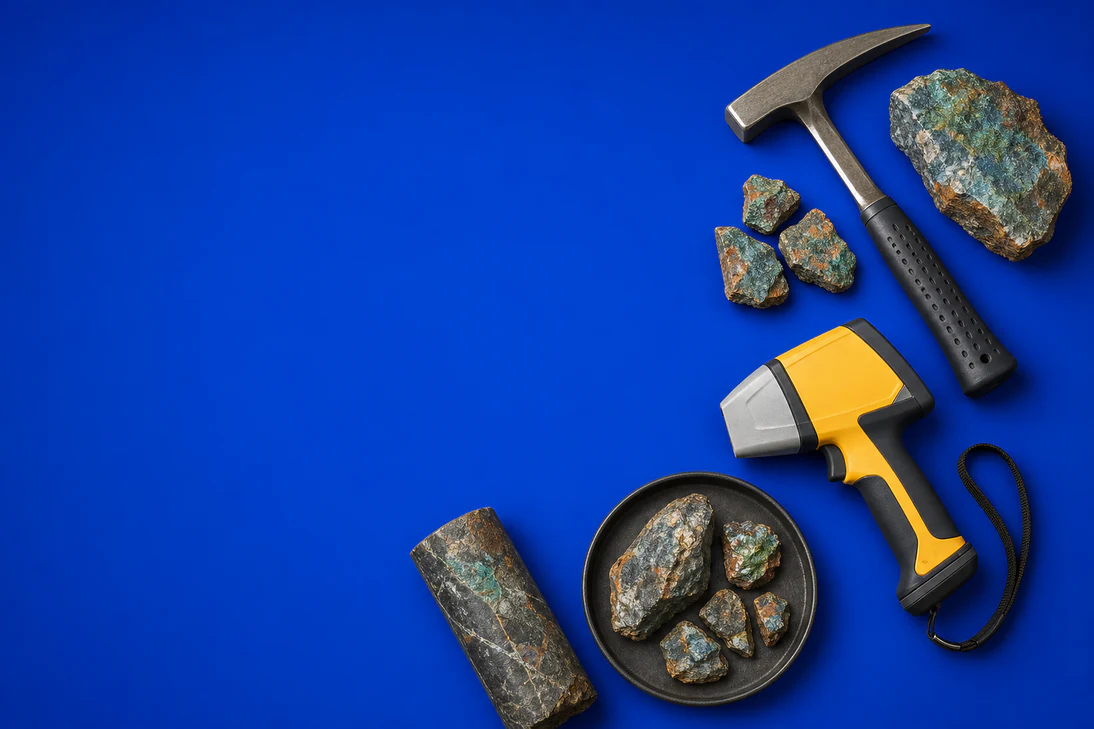
Blaze Minerals Limited (ASX:BLZ) has revealed compelling early-stage exploration results from the Krokodil Prospect, a newly identified copper-in-soil anomaly on its PL046 license within the Dinokwe Base Metals Project in Botswana. Rock chip sampling detected visible malachite, chalcopyrite, and galena, with handheld XRF analyses returning spot readings as high as 4.17% copper and 5.52% lead, underscoring a polymetallic system that demands further attention.
This anomaly spans over 1000 metres in strike and 100 metres in width, coinciding with an interpreted fault zone and associated splay structures indicative of significant hydrothermal fluid flow. The prospect’s geological setting within the Limpopo Mobile Belt, a region known for hosting major deposits such as the Selebi-Phikwe copper-nickel mine, adds weight to the potential significance of these findings.
Trenching Campaign to Pinpoint Mineralisation Source
Following the encouraging grab and composite sample results, Blaze plans an extensive trenching program to expose the in-situ source of the copper-rich rocks and to better understand the geometry and width of mineralisation at surface. This groundwork is a precursor to a potential drilling campaign aimed at testing mineralisation at depth, a critical step in advancing the project’s exploration status.
Managing Director Mathew Walker emphasised the confidence gained from the visible copper minerals and anomalous sampling, stating that the company is now ready to escalate field activities. The trenching will help refine the geological model and guide the design of subsequent drilling.
Dinokwe Project Positioned in a Prospective Geological Belt
The Dinokwe Project encompasses approximately 1771 square kilometres across three granted prospecting licenses and one application, all 100% owned by B&J Geoconsultants, in which Blaze is acquiring up to a 90% interest. The project lies within the Mahalapye and Baines Drift Complexes of the Limpopo Mobile Belt, an Archean-age geological province hosting significant base metal mineralisation.
Notably, the nearby Selebi-Phikwe deposit boasts an inferred resource of 24.7 million tonnes grading 1.50% copper and 0.92% nickel, highlighting the region’s potential. Historical exploration in the area, such as Albidon Limited’s drilling at the Sunnyside target, has intersected significant sulphide mineralisation, reinforcing the prospectivity of the district.
Early-Stage Exploration with Laboratory Assays Pending
The current results rely on handheld XRF readings of crushed rock-chip samples, which provide indicative but not definitive grades. Blaze plans to send representative samples to a South African laboratory for multi-element ICP:OES analysis, including precious metals like gold and silver, to validate and expand upon these initial findings.
The company has implemented quality control measures such as QA/QC samples and will continue its license-wide soil sampling campaign. The exploration approach remains cautious and methodical, reflecting the early stage of the project.
These developments build on Blaze’s recent strategic expansion in Botswana, where it secured a binding agreement to acquire up to 90% of three copper and nickel projects, including Dinokwe, positioning the company to leverage the region’s mineral potential binding agreement to acquire. The Krokodil Prospect’s discovery adds a tangible asset to this portfolio, potentially accelerating the company’s growth trajectory.
Bottom Line?
Blaze Minerals’ discovery at Krokodil offers a promising copper-lead-zinc target in a proven base metal belt, but confirmation through trenching and lab assays will be crucial before drilling plans solidify.
Questions in the middle?
- Will laboratory assays confirm the high-grade copper and lead indicated by handheld XRF?
- How will trenching results refine the geological model and impact drilling target selection?
- Could the polymetallic system at Krokodil also host significant precious metals like gold or silver?