Aurora Labs Secures $2 Million to Scale Defence Propulsion Production

Aurora Labs has landed a $1 million Australian Government grant, matched dollar-for-dollar, to boost production of its micro gas turbine propulsion systems for defence applications using commercial 3D printing technology.
- Awarded $1 million Defence Industry Development Grant
- Co-investment doubles funding to $2 million
- Funds to acquire commercial off-the-shelf metal 3D printer
- Strategic shift to hybrid manufacturing model
- Targets sovereign defence supply chains and attritable markets
 Add us as a preferred source on Google
Government Grant Accelerates Defence Manufacturing Scale-Up
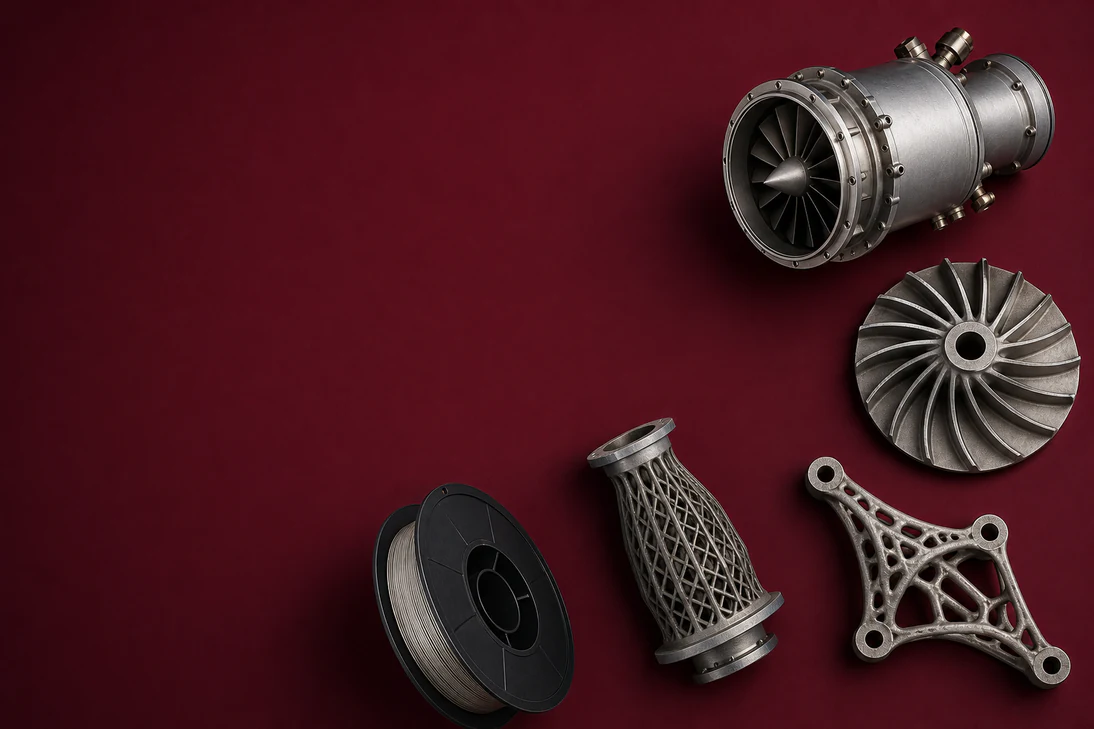
Aurora Labs (ASX:A3D) has secured a $1 million grant from the Australian Department of Defence’s Defence Industry Development Grants program, matched by a $1 million co-investment from the company itself. This $2 million war chest will fund the purchase and commissioning of a commercial off-the-shelf (COTS) metal 3D printer at its Canning Vale facility, a critical step to ramping up production of its proprietary micro gas turbine (MGT) propulsion systems designed for defence applications.
The funding validates Aurora’s position as a sovereign industrial manufacturer, directly aligning with Australia’s Sovereign Defence Industrial Priorities by bolstering domestic manufacturing capabilities for autonomous systems and guided weapons components. The new equipment aims to meet the expected surge in demand for propulsion units powering next-generation unmanned aerial vehicles and loitering munitions.
Hybrid Manufacturing Model Balances Innovation and Scale
Rather than abandoning its proprietary 3D printing technology, Aurora is adopting a hybrid production approach. High-risk research and development will continue on its own advanced LPBF (laser powder bed fusion) machines, preserving flexibility and IP protection. Meanwhile, commercial-scale manufacturing will transition to the newly acquired COTS industrial printers, enabling rapid capacity expansion and multi-material production.
This strategic shift is designed to accelerate Aurora’s move from low-rate initial production to higher-volume, repeatable manufacturing workflows that meet defence-grade certification standards. The new manufacturing infrastructure will also enhance process monitoring and quality assurance, crucial for defence contracts.
Targeting High-Demand Attritable Defence Markets
Aurora’s MGT propulsion units are tailored for attritable defence platforms, low-cost, one-way use systems where rapid production and reliability are paramount. Key target applications include loitering munitions, counter-unmanned aerial systems (C-UAS), and high-speed target drones for air defence training. These markets are expected to grow as defence doctrines increasingly rely on asymmetric, expendable technologies.
Strong validation comes from ongoing engagements with major defence primes and integrators such as MBDA, the Australian Department of Defence, and SPS. Aurora’s technology is gaining traction as a reliable domestic supplier capable of fulfilling full production lifecycle requirements for sovereign defence programs, building on its recent three-year Teaming Agreement with MBDA and manufacturing scale-up initiatives.
Implications for Sovereign Supply Chains and Market Position
By enhancing vertical integration and onshore production capacity, Aurora addresses critical vulnerabilities in defence supply chains exposed by international volatility. The shift to COTS manufacturing platforms also connects Aurora to global vendor support networks, improving resilience and scalability. This positions the company to meet delivery constraints from both domestic and allied defence partners, potentially accelerating commercial traction.
Managing Director Rebekah Letheby highlighted the operational milestone, emphasising the balance between innovation and production agility. The co-investment grant propels Aurora from R&D pioneer to a sovereign manufacturer capable of meeting the scale and quality demands of global defence markets.
Bottom Line?
Aurora’s $2 million funding boost marks a pivotal step toward scalable sovereign defence manufacturing, but execution of its hybrid production model and certification progress will be key to converting this strategic investment into commercial momentum.
Questions in the middle?
- How quickly will Aurora commission and integrate the new COTS 3D printer into production?
- What timelines and volumes does Aurora anticipate for transitioning from low-rate to high-rate manufacturing?
- How will Aurora’s expanding partnerships with defence primes translate into firm commercial orders?