Botala Energy Confirms Thicker, High-Quality Coal Seams at Serowe CBM Project

Botala Energy’s Pitse Pilot well 3.5B reveals 30% thicker and cleaner coal seams than expected, reinforcing the project's reservoir continuity and commercial gas production potential in Botswana.
- Serowe seam 13m thick, 30% above estimate
- Uniform, high-quality coal with natural cleats
- Lateral geological continuity across Pitse cluster
- Support wells showing gas build-up and strong permeability
- Dewatering expected to reach desorption in 6–8 weeks

Pitse Pilot Well 3.5B Exceeds Coal Thickness Expectations
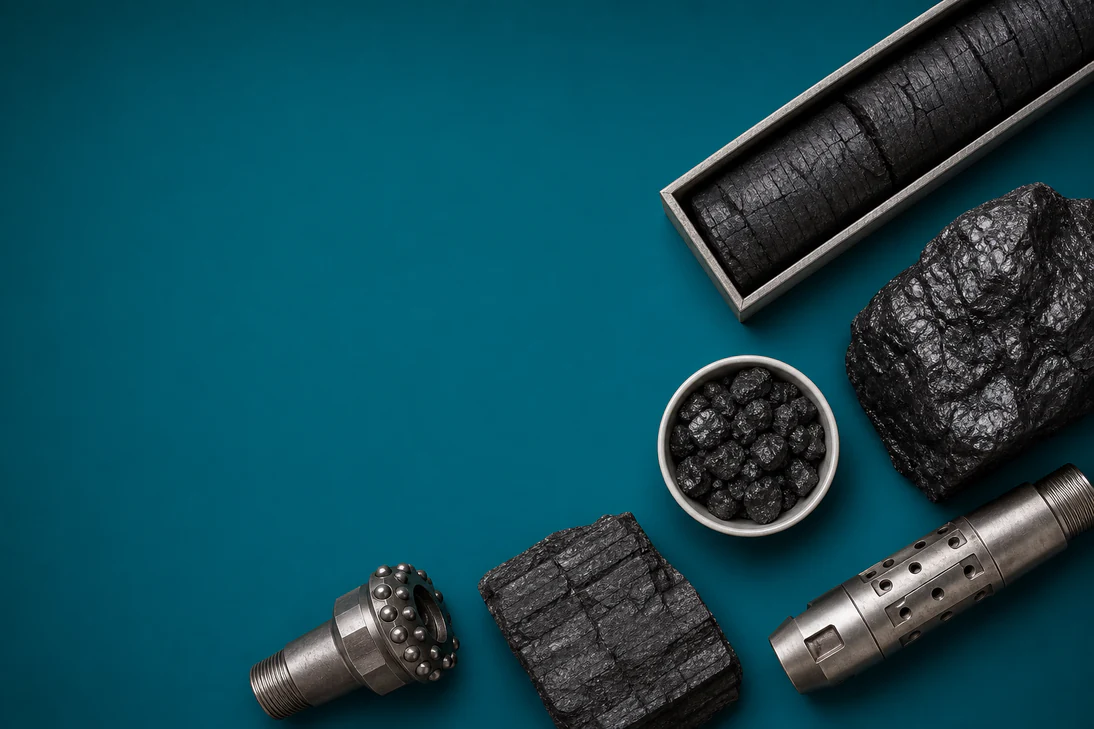
Botala Energy Ltd (ASX:BTE) has delivered a significant technical boost to its Serowe Coal Bed Methane (CBM) Project with open-hole wireline logging from the Pitse Pilot well 3.5B confirming a 13-metre thick Serowe coal seam; 30% thicker than the pre-drill estimate of around 10 metres. This thicker, cleaner, and more continuous coal seam strengthens Botala’s case for future commercial gas production from its 100%-owned Botswana acreage.
The well’s logging results reveal an 11-metre continuous column of high-quality coal, free from internal breaks or weaker rock layers, with bright vitrinite characteristics and extensive borehole enlargement indicating a naturally fractured and well-cleated reservoir. Such features are critical for permeability and effective stimulation, as they allow gas to flow more freely once the reservoir is dewatered.
Geological Continuity Across the Pitse Pilot Cluster
Crucially, the 3.5B well’s coal seam thickness and quality are consistent with nearby wells 3.1, 3.2, and 3.3, confirming lateral geological continuity across the Pitse Pilot cluster. The Serowe seam varies only between 12 and 14 metres across these wells, while the Upper Morupule seam shows similarly tight thickness variation. This uniformity across a cluster footprint spanning several hundred square metres is exceptional and provides a solid foundation for Botala’s planned full-field development, which targets around 108 wells.
Botala’s Chief Executive Officer Kris Martinick emphasised that the well not only confirmed coal presence but also demonstrated the reservoir quality indicators necessary for commercial gas production. The lateral consistency supports a repeatable development model, moving beyond isolated well results.
Support Wells Demonstrate Reservoir Responsiveness
Beyond the production well 3.5B, support wells 3.1 and 3.3 are already showing encouraging signs of gas build-up, with well 3.1 having completed a successful flare cycle producing approximately 6,500 standard cubic feet per day of gas. Well 3.3 is actively dewatering and exhibiting increasing casing pressure, indicating that reservoir pressure is approaching the desorption threshold where gas begins to flow freely from the coal matrix.
Strong water flows from support well 3.4A, producing about 45 barrels per day, further confirm the reservoir’s permeability via natural cleats. This permeability is vital for effective gas extraction once stimulation and flow testing commence. Botala expects the support wells to reach their desorption points within six to eight weeks, which will establish a pressure drawdown network essential for the production well’s upcoming flow tests.
Implications for Serowe CBM Project Development
These results bolster Botala’s development strategy targeting 3.5 petajoules per year of LNG from the Serowe gasfield, with all environmental approvals in place for the project’s infrastructure and pipeline corridor. The Pitse Pilot phase aims to demonstrate commercial CBM production and underpin the Bankable Feasibility Study for the broader Serowe-to-Leupane gas development.
While the logging and dewatering data are promising, the project’s next critical milestones include stimulation and extended flow testing of well 3.5B, which will provide clearer insight into commercial gas flow rates and reservoir performance. The company’s progress positions it well in a region with growing demand for stable power and LNG supply.
Bottom Line?
Botala’s confirmation of thicker, high-quality coal seams and reservoir continuity sets a strong technical foundation, but upcoming flow testing will be pivotal to validate commercial gas production potential.
Questions in the middle?
- Will flow testing of well 3.5B confirm sustainable commercial gas rates?
- How will the reservoir’s permeability translate into long-term production performance?
- What impact will these results have on project financing and development timelines?