Control Bionics Expands US and European Market Access with New Distribution Deals and Reimbursement Milestones

Control Bionics advances its neural-signal technology across assistive communication, sports, and medical sectors, securing key US reimbursement and distribution agreements while broadening its international footprint.
- NeuroNode gains US Medicare and German insurance coverage
- New US distribution agreements with Tobii Dynavox and PRC-Saltillo
- Long-term supply deal signed with New York Board of Education
- NeuroStrip trials expand across elite sports and rehabilitation globally
- Apple BCI integration progressing for Q3 2026 commercial release
 Add us as a preferred source on Google
US Reimbursement and Distribution Drive Assistive Technology Growth
Control Bionics Limited (ASX:CBL) has made significant strides in commercialising its NeuroNode assistive communication device in the United States. The awarding of the dedicated E2513 HCPCS reimbursement code has unlocked funding from Medicare, commercial insurance, and Medicaid, covering nearly 70% of the US population. This milestone underpins a strategic shift from direct retail sales to a scalable wholesale distribution model, enhancing adoption prospects.
Supporting this transition, Control Bionics has activated key distribution partnerships. Tobii Dynavox, following a five-state agreement, has commenced funded sales after completing onboarding and training. Meanwhile, PRC-Saltillo, with a nationwide US distribution agreement signed earlier this year, is preparing to roll out NeuroNode through its 70-strong sales team by late summer 2026. These partnerships aim to broaden access to users with complex communication needs and validate the device’s market potential.
Strategic Agreements and Market Expansion in Education and Europe
Beyond distribution, Control Bionics secured a long-term supply agreement with the New York Board of Education, establishing a vital purchasing pathway that also supports its US distributor network. This deal signals growing institutional acceptance and could catalyse further adoption in public sector channels.
Internationally, the NeuroNode achieved HMV insurance coverage in Germany, opening a critical reimbursement pathway in Europe’s largest healthcare market. The company is actively engaging with potential German distributors to capitalise on this opportunity, aiming to replicate its US market expansion model and broaden European reach.
NeuroTech Solutions Gain Traction in Sports and Rehabilitation
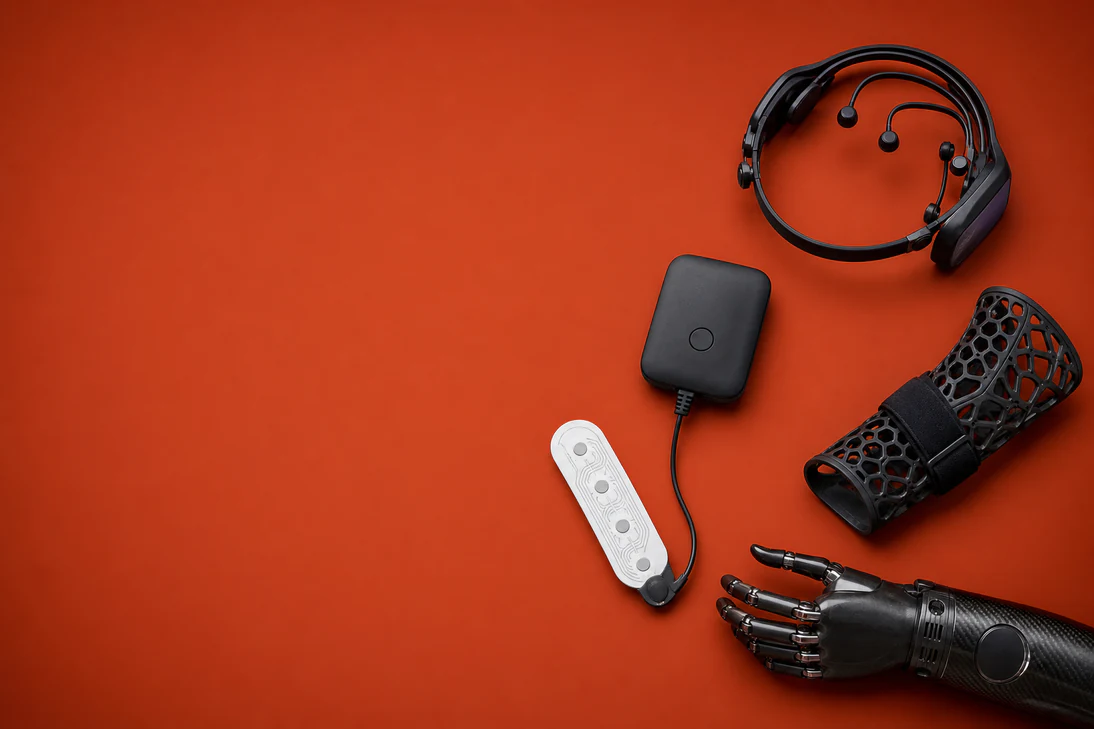
Control Bionics’ NeuroTech Solutions, centred on its NeuroStrip wearable sEMG platform, is progressing multiple trials with elite sports teams and rehabilitation providers across Australia, the United States, Japan, and Europe. Australian AFL and rugby league teams are engaged in return-to-play and athlete profiling trials, while the Australian Institute of Sport and Royal Rehab are exploring clinical and at-home rehabilitation applications.
In the US, partnerships with Ohio University, Weber State, and Mayo Clinic are advancing research into athlete concussion protocols, muscle activity profiling, and gait analysis. The rollout of NeuroStrip into Bay State Physical Therapy’s network and Mountain Land Physical Therapy’s clinics demonstrates growing commercial interest in rehabilitation settings, with innovative programs like the “Super Bridge” injury prevention initiative generating promising client outcomes.
Internationally, Control Bionics is onboarding a major European football club and an international rugby league team to trial NeuroStrip in performance and readiness assessments. In Japan, a neurological rehabilitation clinic has reported meaningful improvements in post-stroke gait stability using the technology, highlighting its clinical utility beyond sports.
Platform Expansion Through Apple BCI Integration and Research Partnerships
On the technology front, Control Bionics is integrating Apple’s Brain Computer Interface (BCI) protocol into its software, targeting a wide commercial release in Q3 2026. This integration is positioned to enhance user experience and unlock new applications beyond traditional assistive devices, reinforcing the company’s vision of a scalable neural-signal platform.
The company is also cultivating research collaborations with prestigious institutions including Mayo Clinic, Barrow Neurological Institute, Penn State Health, and the University of Sydney. These partnerships aim to validate the technology further, explore novel clinical and research use cases, and underpin long-term platform development and data strategies.
Bottom Line?
Control Bionics is converting reimbursement wins and distribution deals into a broader global presence, but the pace of scaling these commercial pathways will be critical to watch.
Questions in the middle?
- How quickly will NeuroNode sales ramp through new US distribution channels?
- What impact will German insurance coverage have on European market penetration?
- Can Apple BCI integration unlock meaningful new use cases beyond assistive technology?