Lithium Universe Advances Commercialisation of Gold Copper Recovery from E-Waste

Lithium Universe (ASX:LU7) has launched a detailed development program to commercialise a novel hydrometallurgical process for extracting gold and copper from electronic waste, aiming to disrupt traditional smelting with a more sustainable, low-energy method.
- Exclusive licence of GCDE technology from University of Edinburgh
- Comprehensive program targeting e-waste feedstock optimisation and reagent recycling
- Hydrometallurgical process avoids energy-intensive smelting
- Pilot plant design and commercial scalability studies underway
- Broader lithium refining and silver recycling strategies progressing

Innovative E-Waste Recycling Technology Set for Commercialisation
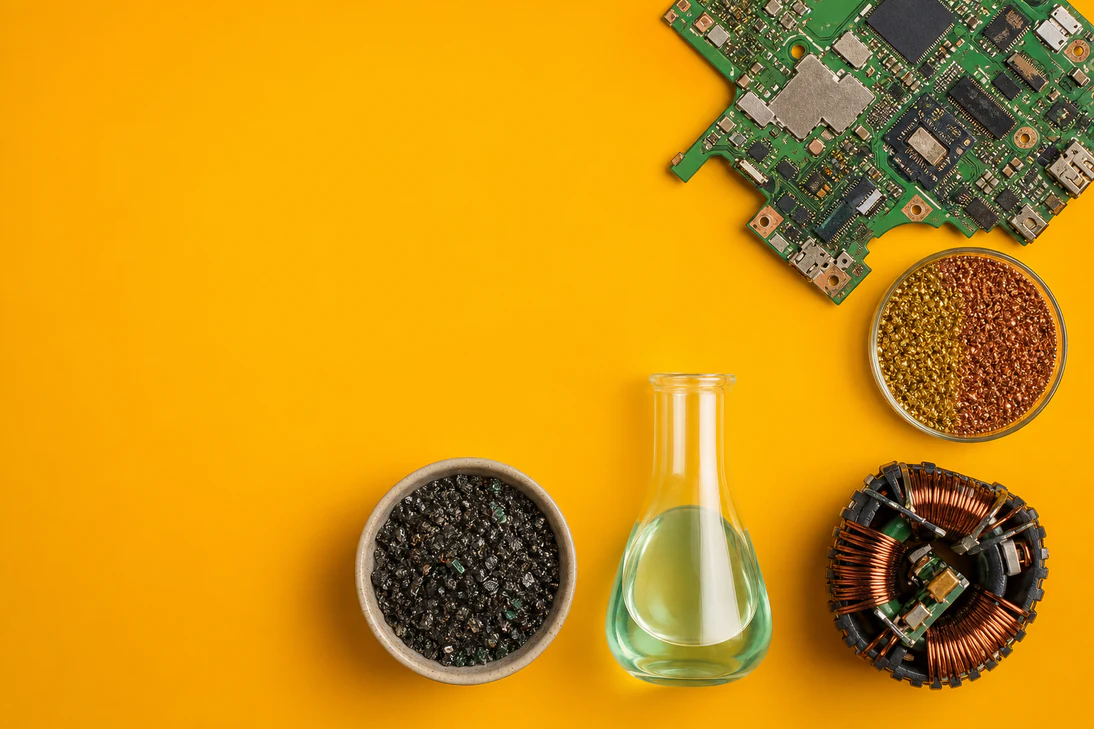
Lithium Universe Limited (ASX:LU7) is stepping beyond lithium refining with a bold push into sustainable precious metals recovery. The company has unveiled a comprehensive development program to commercialise the Gold Copper Diamide Extraction (GCDE) process, a hydrometallurgical technology licensed exclusively from the University of Edinburgh. This process selectively extracts gold and copper from electronic waste (e-waste) using reusable organic reagents, sidestepping the high temperatures and energy consumption of conventional smelting.
The GCDE technology leverages a diamide compound to precipitate gold from acidic leach solutions, followed by copper recovery using a chelating agent called pyrazine-2,3-dicarboxylic acid (PDCA). This staged approach promises environmental benefits such as reduced waste generation and lower energy use, alongside cost advantages by enabling smaller-scale, lower-capital operations.
Structured Development Program Targets Technical and Commercial Milestones
The company’s roadmap is methodical and ambitious. It begins with a thorough review of historic research and datasets from the University of Edinburgh’s research team, aiming to identify knowledge gaps and benchmark performance against existing recycling methods. Simultaneously, LU7 will source optimal high-volume e-waste feedstocks, focusing on printed circuit boards and telecommunications waste, to ensure consistent metal grades and manageable impurities.
Physical characterisation studies will optimise particle size, density, and flowability to enhance leaching efficiency and reagent contact. Pretreatment testwork will refine washing, milling, and dewatering processes to minimise contaminants that could impair metal recovery. LU7 plans metallurgical comparisons between hydrochloric acid/hydrogen peroxide leaching and traditional aqua regia systems to identify the most cost-effective and environmentally sound extraction route.
Reagent Recycling and Pilot Plant Design to Drive Commercial Viability
Key to the GCDE process is the recovery and reuse of costly organic reagents, including the diamide ligand and PDCA. LU7 will investigate ligand stability, degradation, and recycling efficiency to reduce operating costs. The company also intends to develop copper precipitation and electrowinning flowsheets to produce high-purity metallic copper, bolstering project economics.
These technical advances will feed into pilot plant design and commercial scalability studies, where LU7 will integrate the process into a continuous operation. This phase will assess throughput, reagent consumption, equipment sizing, and operational stability, providing preliminary capital and operating cost estimates to evaluate industrial-scale viability.
Expanding the Lithium and Silver Recycling Footprint
The GCDE program complements LU7’s broader strategy in critical materials recycling and lithium refining. The company has also acquired Macquarie University’s Microwave Joule Heating Technology and Jet Electrochemical Silver Extraction process for photovoltaic solar panel recycling, achieving high silver recovery with significant environmental benefits.
On the lithium front, LU7 is advancing its flagship Bécancour Lithium Refinery in Québec, targeting battery-grade lithium carbonate production, alongside plans for a second refinery in Texas to address North America’s lithium conversion gap. These initiatives position LU7 as a vertically integrated player across lithium and precious metal recovery, aligning with growing demand for sustainable supply chains.
CEO Iggy Tan emphasised the promise of the GCDE technology while acknowledging the extensive metallurgical and engineering work ahead to optimise recoveries, lower costs, and validate pilot-scale operations. The company’s approach reflects a patient, research-driven pathway to commercialisation that could redefine e-waste recycling economics and environmental impact.
Bottom Line?
LU7’s GCDE development program could reshape e-waste recycling, but commercial success hinges on scaling complex chemistry and securing sustainable feedstock and partnerships.
Questions in the middle?
- How will reagent stability and recycling efficiency impact operating costs at scale?
- What timelines can investors expect for pilot plant commissioning and commercial validation?
- Which e-waste feedstocks will prove most viable in terms of metal grades and supply consistency?