Imricor Advances FDA Approval with Third PMA Module Submission

Imricor Medical Systems has submitted the third of four Premarket Approval modules to the FDA, marking a key step towards US approval of its MR-guided cardiac ablation devices.
- Third PMA module covers non-clinical bench testing
- Submission includes Vision-MR Ablation Catheter 2.0 and related devices
- Final clinical module pending from VISABL-AFL trial data
- Part of modular FDA review process to streamline approval
- Three devices already cleared via 510(k) pathway
 Add us as a preferred source on Google
Third PMA Module Submission Marks Regulatory Milestone
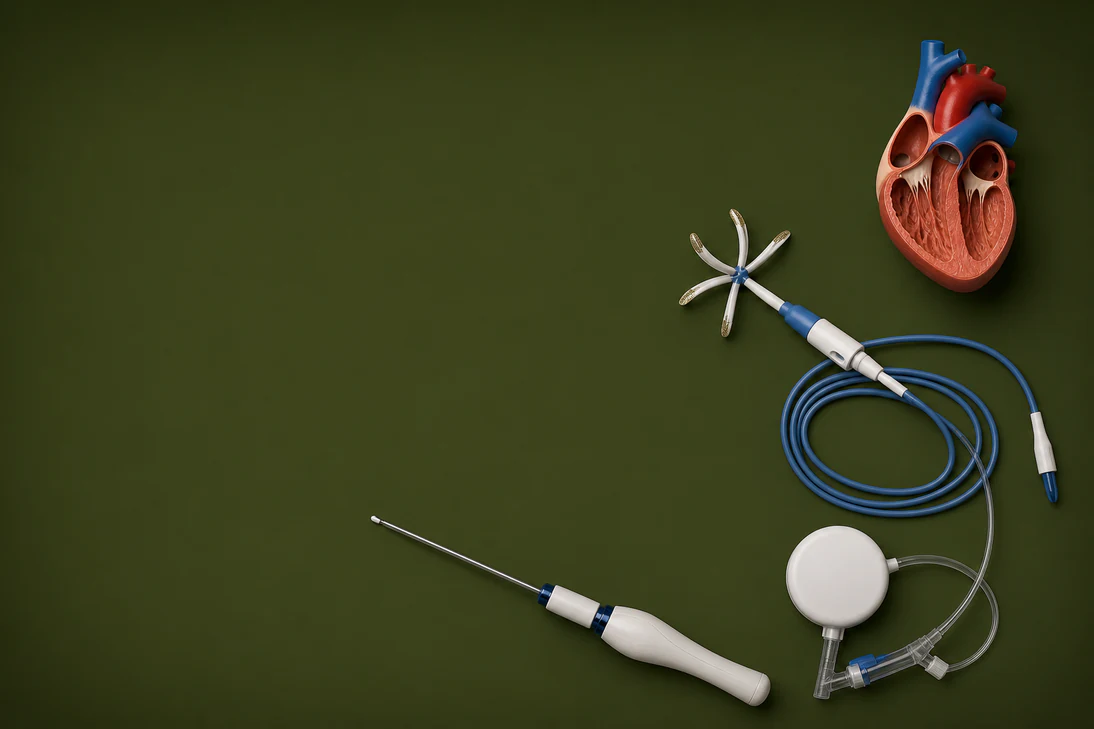
Imricor Medical Systems (ASX:IMR) has submitted the third module of its Premarket Approval (PMA) application to the US Food and Drug Administration (FDA), a significant advance in its quest to commercialise its interventional magnetic resonance (MR) cardiac ablation technology in the United States. This module focuses on non-clinical bench testing results for key devices including the Vision-MR Ablation Catheter 2.0, RF-5000 Ablation Generator, and RF-5000 Irrigation Tubing Set.
The submission, reportedly exceeding ten thousand pages, reflects years of rigorous design, manufacturing, and testing efforts. It encompasses product performance, sterile shelf life, packaging integrity, software and electrical safety, electromagnetic compatibility, MR safety, and usability assessments. Imricor’s Chair and CEO Steve Wedan described the milestone as a “tremendous effort” spanning multiple internal teams, underscoring the company’s commitment to securing FDA approval this year.
Modular Review Strategy and Existing FDA Clearances
Imricor is pursuing a modular review approach with the FDA, submitting different PMA modules sequentially to facilitate a streamlined evaluation. With the third module now lodged, only the final clinical module remains outstanding. This last module will present clinical data from the VISABL-AFL trial, which is in its later stages of completion and is pivotal for demonstrating the safety and efficacy of the Vision-MR Ablation Catheter 2.0 in treating type I atrial flutter under real-time MR guidance.
Alongside the PMA pathway, Imricor has secured FDA 510(k) clearances for three related devices: the NorthStar Mapping System, Vision-MR Diagnostic Catheter, and Vision-MR Diagnostic Catheter Cable. These approvals support the company’s broader strategy to build its US electrophysiology platform, which also includes ongoing clinical trials and regulatory submissions to expand indications and device offerings.
Implications for US Market Entry and Commercialisation
The FDA’s eventual approval of the PMA application would enable Imricor to market its Vision-MR Ablation Catheter 2.0 and associated devices for the treatment of atrial flutter using MR guidance; a technique that offers superior imaging over traditional x-ray fluoroscopy. This could position Imricor as a pioneer in MR-guided cardiac ablation, potentially transforming procedural safety and efficacy.
Investors will be watching the completion of the VISABL-AFL trial and the submission of the final clinical module closely, as these are critical to FDA’s regulatory decision. The company’s recent capital raise, which boosted cash reserves to support US commercialisation and clinical programs, provides a financial buffer as it navigates these regulatory hurdles.
While the modular approach aims to accelerate FDA review, timelines remain uncertain. The FDA’s feedback on Module 3 and the clinical data’s robustness will be key determinants of the approval trajectory. Imricor’s progress so far reflects a disciplined regulatory strategy, but the final outcome depends on forthcoming clinical evidence and regulatory assessments.
Bottom Line?
Completion of the clinical module and FDA feedback on non-clinical data will be pivotal in determining Imricor’s US market entry timeline.
Questions in the middle?
- How will the upcoming VISABL-AFL trial data influence FDA’s final approval decision?
- What timeline can investors realistically expect for the FDA’s review of the final PMA module?
- How will Imricor’s existing 510(k) clearances impact the commercial rollout of its full electrophysiology platform?