Ore Resources Confirms 1km Gold System Extension at Forrest Prospect

Ore Resources’ Phase 4 diamond drilling at the Forrest prospect reveals significant strike and depth extensions, expanding the gold system to over 1km strike and 250m depth, with further growth potential identified by geophysical surveys.
- Phase 4 diamond drilling confirms 1km strike and 250m depth gold extensions
- Key intercepts include 33m at 1.44 g/t Au and multiple down-dip extensions
- Geophysical surveys highlight additional untested structures for future drilling
- Exploration ongoing with aircore drilling and lithium program advancing
- Strong balance sheet with A$9.6 million cash and zero debt

 Add us as a preferred source on Google
Significant Gold Extensions Confirmed at Forrest
Ore Resources Ltd (ASX:OR3) has delivered a robust update from its Miriam Gold Project, with Phase 4 diamond drilling at the Forrest prospect confirming the gold system now extends over approximately 1 kilometre strike length and to a vertical depth of 250 metres. Importantly, mineralisation remains open both along strike and at depth, suggesting the potential for further resource growth.
Seven diamond core holes totaling 1,000 metres were completed in March 2026, strategically positioned to clarify structural controls and extend known mineralisation. Highlights include a standout intercept of 33 metres at 1.44 grams per tonne (g/t) gold from 135 metres in hole FGRC056D, extending previous results that ended in mineralisation. Other notable intercepts include 11 metres at 1.26 g/t from 244 metres (including 6 metres at 2.00 g/t) and multiple down-dip extensions ranging from 70 to 155 metres, confirming continuity below earlier reverse circulation (RC) drilling.
Structural Insights and Geological Controls
Diamond drilling has significantly enhanced Ore’s understanding of the Forrest system’s geology. Gold mineralisation is hosted within strongly sheared and altered mafic units associated with the regional Miriam Shear Zone. Locally, mineralisation is controlled by steeply dipping to vertical shear zones, with high-grade shoots likely influenced by subtle plunge or boudinage structures. The company notes some diamond holes deviated from planned pierce points due to highly foliated lithologies, indicating complex structural controls that require further targeted drilling to resolve.
Supporting this, a structural review by Model Earth Pty Ltd confirmed mineralisation occurs within near-vertical, highly strained tholeiitic basalts exhibiting biotite-amphibole-carbonate alteration and sulphide mineralisation. These insights are crucial for refining exploration targeting and resource modelling.
Geophysical Surveys Uncover New Targets
In parallel with drilling, Ore Resources conducted Sub Audio Magnetic (SAM) and ground gravity surveys, which have delineated mineralised structures extending beyond current drilling limits. The SAM survey identified a prominent linear conductive low interpreted as the mineralised shear zone, extending approximately 250 metres south beyond recent drill intercepts and covering a total strike length of 650 metres. Additionally, four new structural targets with limited to no drilling were identified, representing potential fluid pathways and future gold mineralisation zones.
Ongoing Exploration and Funding Position
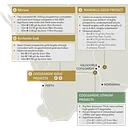
Ore’s exploration momentum continues with aircore drilling advancing at Miriam, testing regional prospects such as Forrest South, Burbanks Monarch, Goroke, Jungle, and follow-up at Canyon. Assay results from this program are expected in July. Meanwhile, a 3,000 metre RC drilling campaign at the Kangaroo Hills Lithium Project has been completed, with results due shortly.
The company’s strong balance sheet, with A$9.6 million in cash and zero debt as of 31 March 2026, underpins its ability to pursue an aggressive exploration agenda across the Coolgardie and Kal East Gold Projects throughout 2026.
Next Steps and Exploration Challenges
Ore plans targeted follow-up drilling at Forrest in the second half of 2026 to better define the geometry and plunge controls of high-grade shoots, which remain incompletely tested. Previous RC drilling has returned significant high-grade intercepts, but the diamond drilling has yet to fully intersect these shoots, partly due to drill deviations and complex structural settings.
These upcoming programs will be critical in confirming the true widths and continuity of mineralisation, which are currently reported as down-hole lengths. The integration of geophysical data with structural interpretations will guide drilling to unlock further extensions and potentially upgrade resource confidence.
Bottom Line?
Forrest’s expanding gold system and new geophysical targets position Ore Resources for a potentially significant resource upgrade pending follow-up drilling.
Questions in the middle?
- Will follow-up drilling successfully delineate the high-grade plunging shoots at Forrest?
- How will the newly identified structural targets impact resource growth potential across Miriam?
- What timeline can investors expect for updated resource estimates incorporating Phase 4 results?