Strickland Metals Hits 94.3% Gold Recovery at Gradina Deposit

Strickland Metals has reported a significant leap in gold recovery rates at its Gradina Deposit, achieving an average 94.3% recovery and higher gold concentrate grades, marking a key milestone ahead of its Rogozna Project Pre-Feasibility Study.
- Gradina Deposit gold recovery improves to 94.3%
- Gold concentrate grades average 21.1 g/t
- Testwork supports upcoming 2027 Pre-Feasibility Study
- Rogozna Project resource now 9.24Moz AuEq
- Company maintains strong $81 million cash position
Exceptional Metallurgical Results Enhance Gradina's Value
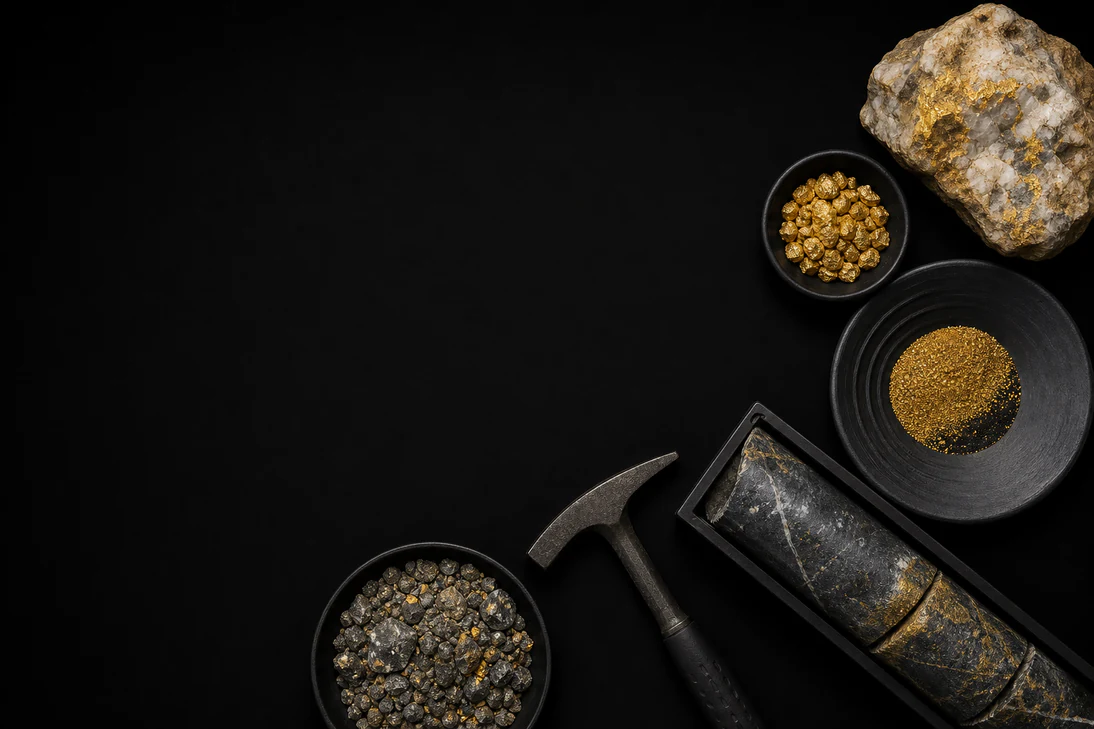
Strickland Metals Limited (ASX:STK) has unveiled metallurgical testwork results from its 1.8 million ounce gold-only Gradina Deposit within the Rogozna Gold and Base Metals Project in Serbia that outshine previous benchmarks. The latest phase of testing delivered an average gold recovery rate of 94.3%, up from 89.9% in 2025, alongside improved gold concentrate grades averaging 21.1 grams per tonne (g/t). This advance signals a meaningful de-risking step for the project’s gold development pathway.
These tests, conducted on 942 kilograms of mineralised core samples by ALS Metallurgy Laboratories in Perth and overseen by Macromet, focused on optimising grind size and flotation techniques. The results demonstrate the robustness of the Gradina deposit, with gold recoveries to rougher concentrate ranging between 89.4% and 97.5%, and an average mass pull of 12.7%.
Refining Plant Design Ahead of Pre-Feasibility Study
The improved metallurgical performance feeds directly into the ongoing Pre-Feasibility Study (PFS) scheduled for 2027, informing plant configuration and process design. Strickland’s Managing Director Paul L’Herpiniere highlighted that these results validate the deposit’s quality and provide critical inputs for concentrate marketing strategies and payability studies.
Further testwork is underway to deepen understanding of ore zones with elevated base metal concentrations, aiming to maximise gold concentrate grades and recoveries across variable ore types. The company’s approach confirms the focus on producing a gold-pyrite concentrate, as attempts to produce a separate zinc concentrate were unsuccessful, reinforcing the gold-centric development strategy for Gradina.
Strong Resource Base and Funding Position
The Gradina Deposit’s resource was recently upgraded by 50% to 1.8 million ounces at 2.8 g/t gold, contributing to the Rogozna Project’s total Mineral Resource Estimate of 9.24 million ounces gold equivalent. This sizeable resource underpins the project’s Tier-1 potential in the region.
Financially, Strickland remains well-positioned with approximately $81 million in cash and liquid assets as of March 2026, providing ample runway to advance development activities. The company’s broader Rogozna portfolio includes other deposits such as Shanac and Medenovac, which also possess substantial gold and base metal resources.
Technical Insights from Flotation and Grind Size Optimization
The testwork revealed that grinding to a primary grind size of P80 75 microns yielded excellent gold recoveries, with a finer grind of 53 microns offering minor recovery improvements but at the cost of concentrate grade dilution due to increased mass pull. This nuanced balance will inform plant design choices.
Gold concentrate grades ranged from 14.2 g/t to 28.4 g/t, consistently above the target grade of 15 g/t, indicating a high-quality concentrate. The flotation process successfully separated gold from zinc, reducing dilution in the gold-pyrite concentrate and enhancing concentrate grade by approximately 2.5 g/t in samples with variable zinc content.
Low gravity gold recovery (<10%) suggests the gold is predominantly fine and locked within sulphides, which aligns with the flotation-centric extraction approach.
Next Steps in Development and Market Positioning
As Strickland progresses its workflow pipeline, further metallurgical results and development updates are anticipated in the coming months. The company is focusing on refining its understanding of ore variability and concentrate specifications to optimise both operational and commercial outcomes.
With the PFS on the horizon and a strong balance sheet, Strickland is poised to advance the Rogozna Project’s gold development, potentially strengthening its position in the European mining landscape.
Bottom Line?
Strickland’s improved gold recoveries at Gradina sharpen the project’s economic profile but upcoming PFS outcomes will be pivotal in translating metallurgical gains into viable mining plans.
Questions in the middle?
- How will the improved gold recovery impact the overall project economics in the upcoming PFS?
- What are the implications of the unsuccessful zinc concentrate production for base metal recovery strategies?
- To what extent could further drill results and resource updates modify the current development timeline?