ABx Lowers Radioactivity in Second Rare Earth Carbonate with Strong Customer Interest

ABx Group has confirmed its second mixed rare earth carbonate sample from Tasmania’s Deep Leads deposit exhibits even lower radioactivity than the first, reinforcing its exemption from radiological control and attracting positive feedback from key customers.
- Second MREC sample shows reduced radioactivity
- Exemption from radiological control maintained
- Higher heavy rare earth content including dysprosium and terbium
- Positive validation from Ucore Rare Metals and RETi
- Plans to expand customer evaluation and advance commercialisation
Second Rare Earth Carbonate Sample Surpasses Maiden in Purity
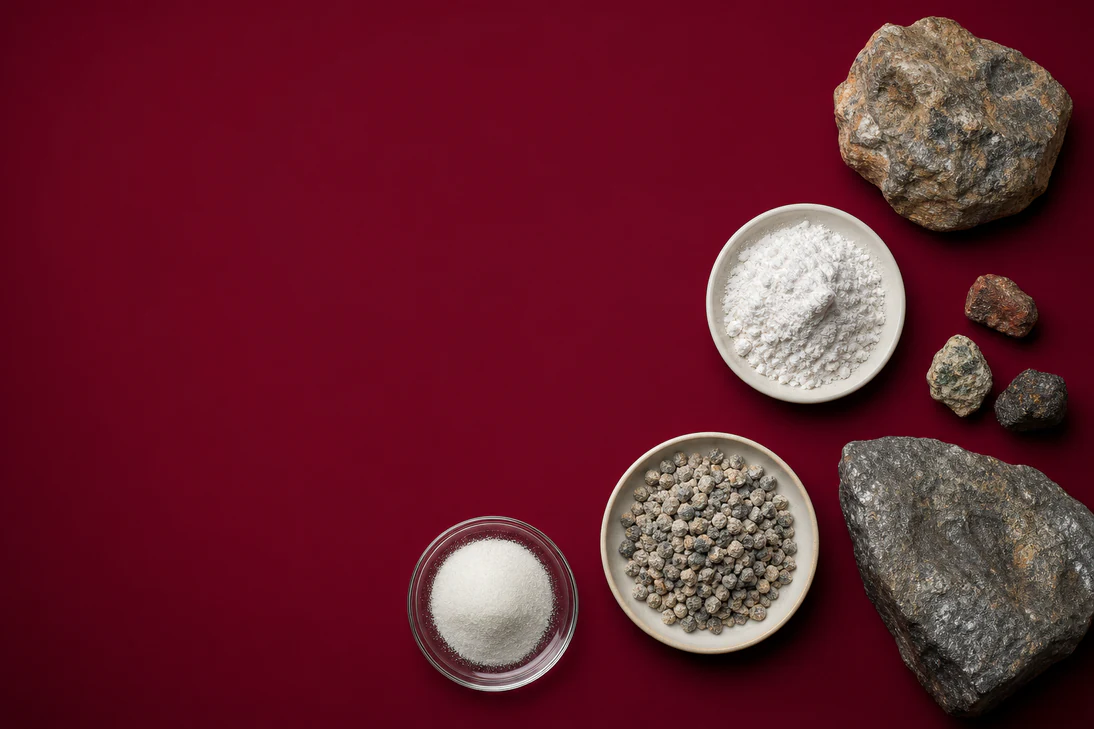
ABx Group Limited (ASX:ABX) has reported that its second mixed rare earth carbonate (MREC) sample from the Deep Leads deposit in northern Tasmania contains even lower levels of radioactivity than its maiden product, further confirming exemption from radiological control by the Australian Nuclear Science and Technology Organisation (ANSTO). This outcome is significant as it minimises regulatory burdens related to shipping and handling, and positions ABx favourably against competitors who may require costly processing steps to reduce radioactive impurities.
Customer Feedback Validates Product Quality and Market Appeal
The company has distributed maiden MREC samples to six potential customers across Australia and North America, receiving overwhelmingly positive feedback. Notably, Ucore Rare Metals Inc., which is developing rare earth processing facilities in North America, praised the product and is collaborating with ABx under a Memorandum of Understanding to explore supply pathways. Additionally, Rare Earth Technologies Inc. (RETi) confirmed the high purity of the Deep Leads MREC and its suitability for RETi’s refining technology. ABx plans to broaden the customer qualification program by distributing subsamples of the second MREC, which contains higher proportions of valuable heavy rare earths such as dysprosium (Dy) and terbium (Tb), while also reducing impurities like aluminium and iron.
Strategic Advantages in Rare Earth Supply Chain
ABx’s process achieves high rare earth extraction at ambient temperatures and pressures with minimal acid use, resulting in a low-cost, low-impurity product. This contrasts with many clay-hosted rare earth projects globally that struggle to extract significant quantities under such conditions. The elevated heavy rare earth content in ABx’s MREC is particularly valuable given the acute supply risks and premium pricing for Dy and Tb oxides, which Benchmark Mineral Intelligence recently reported at nearly US$200/kg and over US$900/kg respectively in China, with European prices even higher. This strategic positioning could enhance ABx’s appeal to Western supply chains seeking non-China sources.
Ongoing Commercialisation and Project Development
ABx is advancing its commercialisation efforts with plans to distribute the second MREC sample to additional prospective customers and deepen engagement with potential offtake and strategic partners. Concurrently, the company is conducting economic and metallurgical studies, leveraging partnerships with ANSTO and engineering firms to optimise project design. Exploration continues across expanding tenements in northern Tasmania to potentially increase resource size. CEO Dr Mark Cooksey highlighted the exceptional characteristics of the Deep Leads project and the competitive advantages brought by low radioactivity and strong customer interest.
Technical Confirmation of Low Radioactivity
ANSTO’s gamma spectrometry analysis confirmed that all radionuclides in the uranium and thorium decay chains within the second MREC are below 0.5 Bq/g, with uranium-238 measuring 0.41 Bq/g. These values are 50–90% lower than those recorded in the maiden MREC, well within the International Atomic Energy Agency’s exemption limit of 1.0 Bq/g, classifying the product as exempt from radiological control. This technical validation supports ABx’s claim that no additional impurity removal step will be necessary, reducing processing complexity and cost relative to competitors.
Bottom Line?
ABx’s low-radioactivity, heavy rare earth-rich carbonate is carving a competitive niche, but the path to commercial supply hinges on broad customer qualification and economic study outcomes.
Questions in the middle?
- How quickly can ABx convert strong customer interest into binding offtake agreements?
- What are the potential cost savings from avoiding radioactive impurity removal compared to peers?
- How might shifts in rare earth pricing outside China affect ABx’s commercial strategy?