Critical Resources Advances Solid-State Battery to Full-Format Pouch Testing

Critical Resources has scaled its solid-state battery program from coin cells to full-format pouch cells, marking a key manufacturing milestone with electrochemical testing now underway. The next phase aims to integrate its proprietary sulphur-free solid-state electrolyte into these cells.
- DSD-deposited cathode moves to full-format pouch cells
- Electrochemical testing underway with early conditioning positive
- Liquid electrolyte baseline isolates cathode performance
- Integration of sulphur-free ASE electrolyte next step
- Program conducted at South Dakota School of Mines
From Coin Cells to Full-Format Pouch Cells
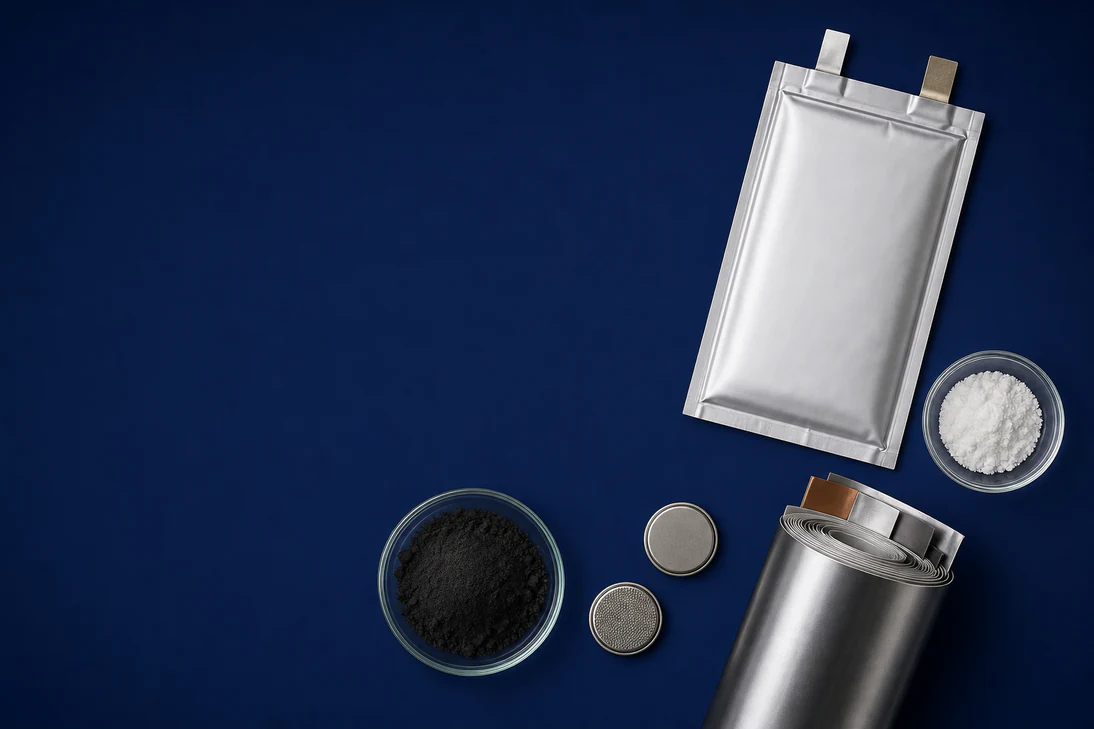
Critical Resources (ASX:CRR) has taken a significant step forward in its solid-state battery development by moving from coin-cell testing to full-format pouch cells incorporating its Dry Supersonic Deposition (DSD) cathode composite. This transition is a standard scale-up in battery development, shifting from chemistry validation in small coin cells to demonstrating the cathode's manufacturability and function in a full working cell format.
The pouch cells currently use a liquid electrolyte as a baseline reference, isolating the cathode's performance before integrating the company's proprietary amorphous solid-state electrolyte (ASE). Early conditioning cycles at a low 0.05C rate have proceeded as expected, though detailed performance metrics such as capacity, efficiency, and cycle life remain under evaluation.
Validating Manufacturing with Solvent-Free Deposition
The DSD process, a solvent-free, room-temperature deposition method, produces the cathode composite without binders, furnaces, or compression steps. This dry, single-step manufacturing approach aligns with Critical Resources’ strategy to license its battery materials and manufacturing intellectual property rather than engage in cell production itself.
The pouch cells bring together two core workstreams: the DSD cathode manufacturing and the ASE electrolyte development. While the current cells pair the DSD cathode with a liquid electrolyte, the integration of ASE as a thin-film solid-state electrolyte is the next technical hurdle. This step aims to unify the sulphur-free electrolyte with the DSD process, advancing towards a fully solid-state battery.
Benchmarking and Next Technical Milestones
Critical Resources has benchmarked its ASE electrolyte with an ionic conductivity of 3.2 mS cm⁻¹ and an activation energy of 0.27 eV, performance metrics competitive with sulphide-class electrolytes but without sulphur's associated risks. The ASE electrolyte's integration into pouch cells is underway, following successful deposition of the cathode composite.
Alongside ASE, the company holds optioned IP for a high-temperature electrolyte (HTE) developed with NASA support, intended for later integration. These developments are being conducted at the South Dakota School of Mines & Technology under the supervision of Dr Alevtina Smirnova, whose research forms the basis of Critical Resources’ exclusive IP option.
Roadmap to Commercialisation and Licensing
Critical Resources is methodically progressing through technical gates designed to de-risk its solvent-free manufacturing route while maintaining a capital-light, laboratory-focused approach. Next steps include completing electrochemical testing of both coin and pouch cells, optimising the deposition process, and submitting samples for independent validation.
By proving the DSD process in full-format cells and integrating its sulphur-free solid-state electrolytes, Critical Resources aims to broaden licensing and partnership opportunities in defence, industrial, and high-reliability infrastructure markets. This approach reflects the company’s intent to capitalise on its IP portfolio rather than enter cell manufacturing directly.
Bottom Line?
Critical Resources’ measured progress in scaling its solvent-free cathode manufacturing and integrating sulphur-free solid electrolytes positions it well for future licensing, but commercial viability hinges on forthcoming performance data and independent validation.
Questions in the middle?
- How will full electrochemical testing results influence licensing interest?
- Can the ASE electrolyte integration maintain performance gains in a full solid-state cell?
- What timelines does Critical Resources foresee for independent validation and market partnerships?