Sentinel Metals Intersects Hydrothermal Breccia Below Historical Drilling at Columbia

4 min read
8:40am on Monday 22nd of June, 2026 AEST ~8am, 22nd Jun, 26
Popular on LinkedIn
Sentinel Metals has successfully completed its first diamond drill hole at the Columbia Gold-Silver Project, intersecting a hydrothermal breccia zone beneath the historically targeted oxide horizon, validating a geophysical conductor and opening new exploration avenues.
- First diamond hole reaches 330m depth beneath historical drilling
- Hydrothermal breccia intersected at 288m confirms geophysical target
- HSAMT survey validated for deeper exploration targeting
- Assay results expected in six weeks
- Second drill hole underway testing deeper porphyry-style target
 Add us as a preferred source on Google
Maiden Drill Hole Breaks New Ground Beneath Historical Limits
Sentinel Metals (ASX:SNM) has taken a significant step at its Columbia Gold-Silver Project in Montana by completing its first diamond drill hole, reaching 330 metres, some 150 metres deeper than any previous drilling. This maiden hole, DDCO26-001, was designed specifically to test a discrete conductive body identified by the company's high-resolution hybrid-source audio-magnetotellurics (HSAMT) survey, situated beneath the near-surface oxide horizon that historically capped exploration efforts.
Hydrothermal Breccia Confirms Geophysical Conductor
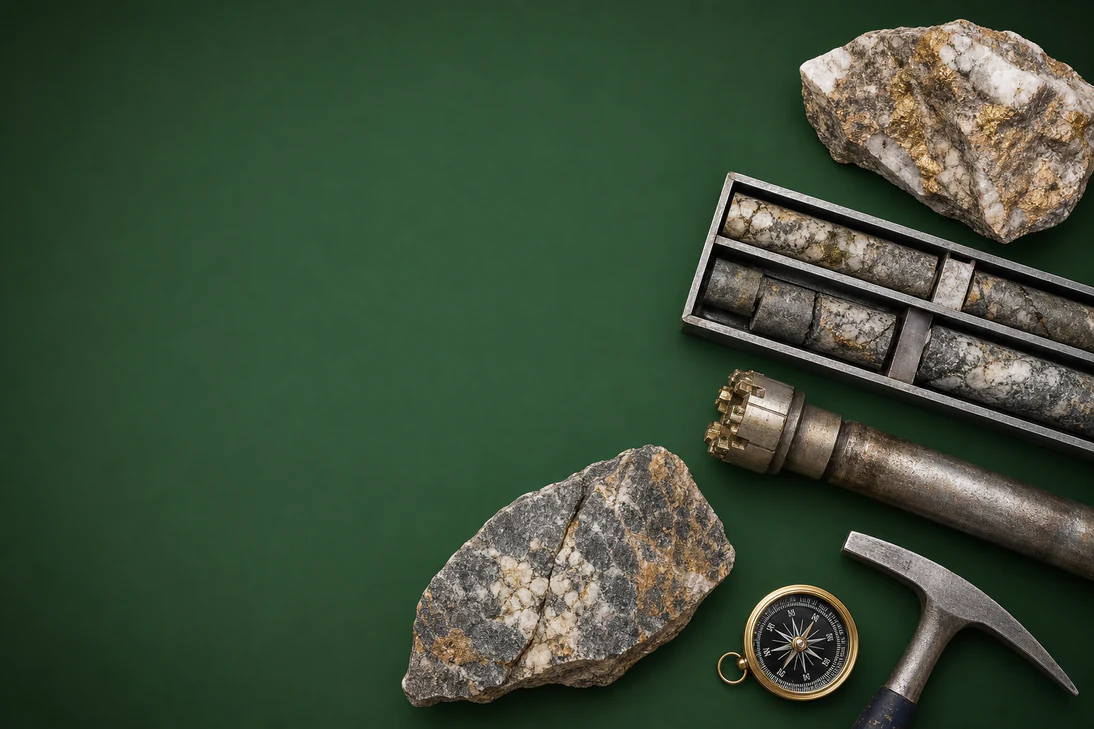
At around 288 metres, the drill core intersected a hydrothermal breccia zone coinciding with the HSAMT conductor. This breccia comprises angular clasts within a sulphide-rich matrix, including pyrite veins intensifying toward the hole’s base. Sentinel interprets this breccia as a phreatic fluid depressurisation pathway, a geological feature where ascending hydrothermal fluids transition from confined, low-permeability rock to a more permeable near-surface environment, often driving mineralisation in epithermal systems. This discovery validates the HSAMT survey as an effective tool for targeting mineralisation below the historically drilled oxide cap.
Historical Drilling Focused on Oxide Horizon, Leaving Deeper Zones Untested
Previous explorers concentrated on the soft, oxidised, near-surface material amenable to heap leaching, ceasing drilling where rock hardness increased sharply, the boundary between oxide and fresh rock. Sentinel’s Managing Director Matt Herbert noted the new core confirms this transition, explaining why earlier holes were abandoned. Importantly, the fresher and harder andesite below remains untested for gold mineralisation, and the breccia intersection marks the first direct test of this deeper system.
Assay Results Pending as Drilling Continues
While visual logging reveals encouraging geological features, no assay results are yet available, and Sentinel cautions that visual observations are not a proxy for grade or economic significance. Assays from DDCO26-001 are expected in approximately six weeks, after which the company will assess the mineralisation’s grade and continuity. Meanwhile, the second drill hole is underway, targeting a deeper, conceptual porphyry-style target also identified by the HSAMT survey but not yet tested. This ongoing program is part of a broader ~5,000-metre diamond drilling campaign aimed at expanding understanding of the Columbia system’s vertical and lateral extent.
Geological Setting Supports Potential for a Vertically Extensive System
The Columbia Project is interpreted as a low-sulphidation epithermal gold-silver system hosted by a near-vertical andesitic intrusive complex about 30 million years old. The HSAMT resistivity model clearly images a clay-altered andesite conduit framed by resistive metasediments. Sentinel’s geological interpretation suggests the near-surface oxide resource and the newly intersected breccia represent different levels of a vertically extensive hydrothermal system, with the HSAMT survey indicating potential mineralisation extending beyond current drilling depths.
Resource Context and Next Steps
The Columbia project hosts an inferred Mineral Resource Estimate of 21.4 million tonnes at 1.3 g/t gold and 4.6 g/t silver, equating to 920,000 ounces of gold and 3.14 million ounces of silver, constrained within an optimised shell. Sentinel plans follow-up drilling to test the extent and continuity of the breccia zone and continues refining deeper targets from the HSAMT dataset. The company’s approach to integrating geophysical targeting with historical data marks a strategic shift towards unlocking the project’s deeper potential.
Bottom Line?
The intersection of hydrothermal breccia beneath the oxide cap validates Sentinel’s geophysical targeting and sets the stage for assay results that could redefine Columbia’s resource potential.
Questions in the middle?
- Will assay results confirm economically significant gold or silver grades in the newly intersected breccia zone?
- How extensive is the hydrothermal breccia system laterally and at depth beyond current drilling?
- Can the conceptual porphyry-style target identified by HSAMT translate into a new mineral resource with further drilling?