Provaris Advances Large-Scale LCO2 Tank Design Toward Maritime Approval

Provaris Energy has hit a major FEED milestone, submitting its detailed engineering package for the YP-Provaris LCO2 tank to DNV for maritime certification, positioning the company for significant CCS supply chain opportunities.
- FEED milestone completed with detailed engineering submitted to DNV
- Tank engineered as Type C equivalent with 25,000 cbm capacity
- DNV approval process expected to conclude by August 2026
- Yinson Production selects tank for CCS supply chain projects
- Final FEED stage includes material and welding tests

Engineering Package Submitted to DNV for Maritime Certification
Provaris Energy Ltd (ASX:PV1) has marked a significant technical milestone by completing the Front-End Engineering Design (FEED) package for its proprietary YP-Provaris low pressure liquefied CO2 (LCO2) tank and submitting it to classification society DNV. This submission initiates the General Approval for Ship Application (GASA) process, a key step towards maritime certification that will underpin commercial deployment in carbon capture and storage (CCS) supply chains.
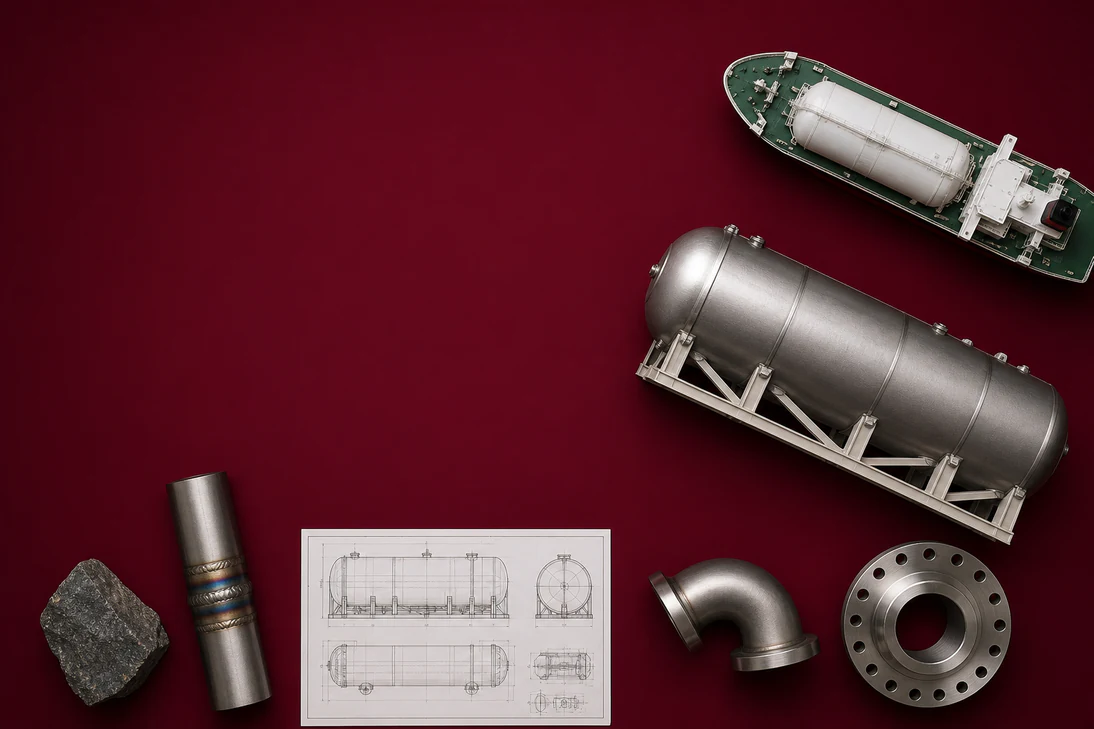
The YP-Provaris tank is designed as a Type C equivalent maritime containment system, engineered to meet the International Gas Carrier (IGC) Code’s safety and performance standards. At 25,000 cubic metres, it significantly exceeds the typical 7,000 cbm capacity of alternative Type C tanks, aiming to unlock economies of scale in offshore CO2 transport and storage.
Testing and Approval Timeline Extends Through 2026
DNV’s design review is scheduled for completion by August 2026, following ongoing collaboration through 2025 and 2026 to validate the tank’s structural integrity and safety features. The final FEED phase includes rigorous material selection and welding procedure testing, conducted at Provaris’ robotic fabrication facility in Norway, to substantiate strength and fatigue calculations and support DNV’s approval process.
Provaris Chief Technical Officer Per Roed emphasised the advanced nature of the engineering package, noting it surpasses typical Approval in Principle (AiP) requirements. This comprehensive design work aims to give shipowners, yards, and CCS project developers greater confidence in the tank’s readiness for integration and commercial use.
Strategic Partnership with Yinson Expands Commercial Reach
The tank’s commercial prospects have been bolstered by its selection by Yinson Production for their CCS supply chain development, which includes floating storage and injection units (FSIUs), LCO2 carriers, and terminal storage solutions. This partnership extends the tank’s application beyond initial maritime transport to a broader offshore CCS infrastructure network, potentially supporting projects with capacities under 10 million tonnes per annum of LCO2.
This collaboration aligns with forecasts from DNV projecting global CCS investments approaching US$80 billion by 2030, with marine and offshore transport infrastructure playing a pivotal role in scaling carbon management solutions. Provaris’ design aims to reduce unit costs and improve project economics by enabling larger-scale, safer, and more efficient CO2 transport and storage.
Future Development and Commercialisation Pathway
Looking ahead, Provaris plans to integrate the YP-Provaris tank into Yinson’s FEED activities for FSIUs and continue development of LCO2 carriers and terminal storage designs. The companies are also exploring a joint venture to streamline execution readiness and align licensing revenue with final investment decisions in CCS projects.
The ongoing approval process and testing milestones will be critical to de-risking the tank’s commercialisation and enabling Provaris to capitalise on growing demand for maritime CO2 transport solutions. The company’s robotic welding and fabrication capabilities further position it to deliver scalable, high-quality containment systems.
Bottom Line?
Provaris is closing in on maritime certification for its large-scale LCO2 tank, a crucial step toward unlocking commercial CCS transport and storage opportunities.
Questions in the middle?
- Will DNV’s approval timeline remain on track through August 2026 amid rigorous testing?
- How will the joint venture with Yinson shape Provaris’ licensing and revenue model?
- What impact will scaling the tank capacity to 25,000 cbm have on CCS project economics?