Ballymore’s Gravity Survey Uncovers Multiple Drill Targets at Ruddygore

Ballymore Resources has expanded its gravity survey at the Ruddygore Project, revealing several high-priority targets beyond its flagship Torpy’s discovery. The results validate prior drilling and set the stage for a busy exploration campaign backed by government funding.
- Expanded gravity survey identifies multiple new targets
- Torpy’s anomalies align with high-grade drill results
- New targets coincide with geochemical and geophysical signatures
- Survey supported by A$383,000 Queensland government funding
- Drilling and modelling campaigns underway through 2026
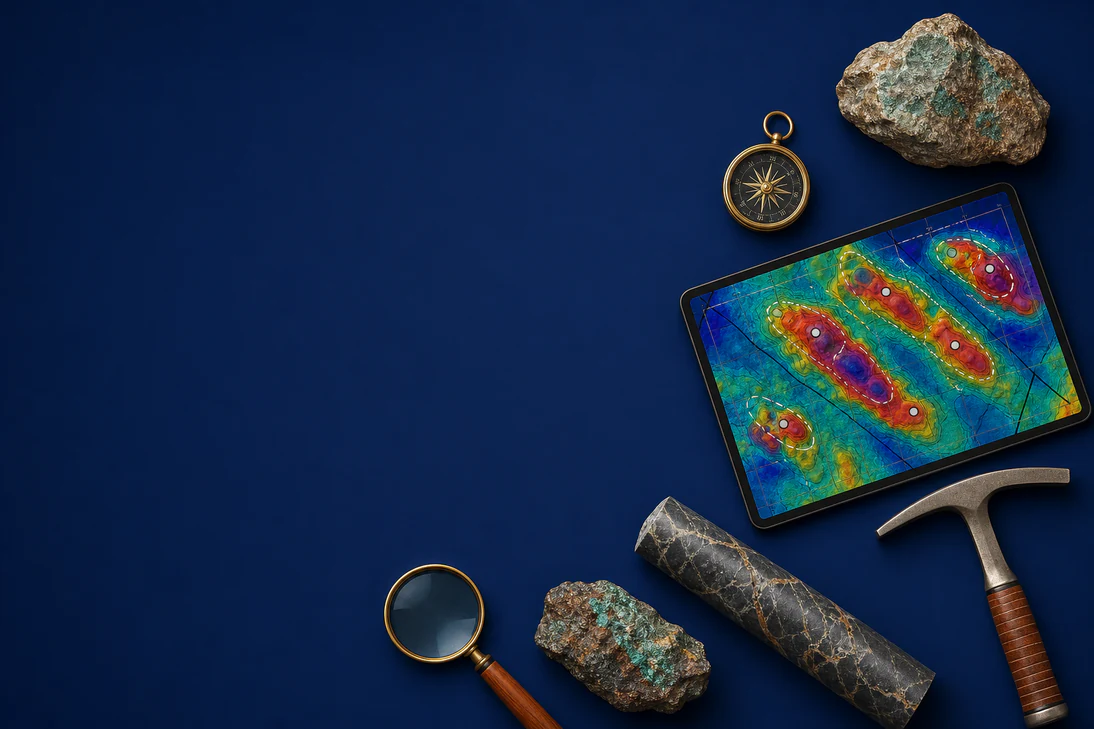

Expanded Gravity Survey Validates and Extends Torpy’s Discovery
Ballymore Resources (ASX:BMR) has significantly upgraded its Ruddygore Project near Chillagoe, North Queensland, following an expanded high-resolution ground gravity survey. The survey has identified multiple discrete gravity anomalies that not only validate Ballymore’s high-grade Torpy’s silver-lead-zinc discovery but also reveal a suite of new high-priority drill targets across the district-scale project.
Initial gravity results exceeded expectations, prompting Ballymore to extend the survey while crews were still in the field. The final tally of 1,948 gravity stations now covers key prospects including Torpy’s, Little Torpy’s, MAN03, Eleventh, Armada East, and Maniopota, each showing compelling geophysical and geochemical signatures supportive of significant mineralisation.
Multiple Targets Align with Historic Mines and Modern Data
The Torpy’s area remains the jewel in the crown, with gravity anomalies closely matching recent drill intersections that delivered exceptional silver and lead grades, such as 10 metres at 483 g/t silver and 19.3% lead. Nearby Little Torpy’s also hosts a strong gravity anomaly coincident with lead-zinc soil geochemistry and historic workings, marking it as a prime follow-up target.
Beyond Torpy’s, the survey delineated significant anomalies at MAN03, Eleventh, Armada East, and Maniopota. These targets feature coincident magnetic, electromagnetic, and geochemical anomalies alongside mapped skarn alteration and hydrothermal breccias, suggesting the presence of district-scale mineral systems. For example, MAN03’s 750m by 300m gravity anomaly overlays a high-quality electromagnetic target and skarn alteration zones, enhancing confidence in its prospectivity.
Government Funding Accelerates Exploration Momentum
The gravity survey was partly funded by a A$383,000 grant from the Queensland Government’s Collaborative Exploration Initiative, easing the cost burden on shareholders and accelerating data acquisition. Ballymore plans to integrate the gravity data with existing electromagnetic, magnetic, and geochemical datasets to refine and prioritise a portfolio of drill-ready targets.
Managing Director David A-Izzeddin highlighted the strategic value of applying modern geophysical techniques to the historic Chillagoe Mining District. He emphasised that the gravity results reinforce the view that Ruddygore hosts multiple significant mineral systems beyond Torpy’s, potentially within a large mineralised corridor ripe for exploration.
Ongoing Drilling and Upcoming Catalysts
Drilling at Torpy’s continues to expand the footprint of massive to semi-massive sulphide mineralisation, with multiple high-grade shoots now identified and assays pending. The current campaign targets potential up-dip extensions and new structural zones, underscoring the early-stage nature of this discovery.
Ballymore expects several catalysts in the coming months, including assay results from ongoing drilling, final gravity data modelling, and the generation of new drill targets across the broader Ruddygore Project. These developments come on the back of substantial recent capital raises that have bolstered Ballymore’s exploration capacity in Queensland.
Ruddygore’s Diverse Mineral Potential within a Historic District
Covering 556 square kilometres adjacent to Chillagoe, Ruddygore encompasses a variety of deposit styles, including porphyry copper-gold, skarn-hosted copper-gold-lead-zinc, sediment-hosted massive sulphide, and intrusive-related gold systems. The project area has a rich mining heritage but remains underexplored using modern techniques, positioning Ballymore to unlock new discoveries.
With planned activities through 2026 including completion of the Torpy’s drilling program, final gravity data modelling, commencement of a magnetotelluric survey at Dittmer, and preparation for maiden resource estimates, Ballymore is advancing a multi-asset exploration pipeline aimed at delivering near-term growth in Queensland’s prolific mineral belts.
Bottom Line?
Ballymore’s expanded gravity survey at Ruddygore sharpens the focus on multiple promising targets, setting up a potentially transformative exploration phase as drilling and modelling progress through 2026.
Questions in the middle?
- How will final 3D gravity modelling influence Ballymore’s drill targeting and prioritisation?
- Can ongoing drilling at Torpy’s confirm continuity and scale of high-grade mineralisation?
- What potential does the Maniopota target hold given its extensive skarn alteration and coincident anomalies?