Amaero Secures US$344,000 BPMI Contract for Submarine Piping Production

Amaero has won a US$344,000 low-rate-initial-production contract from Bechtel Plant Machinery to supply piping for the US submarine industrial base, leveraging its advanced PM-HIP manufacturing technology.
- US$344,000 contract awarded for submarine piping production
- Six prior undisclosed contracts underpin production progress
- PM-HIP technology endorsed by US Navy for critical components
- BPMI projects demand for up to 400 PM-HIP parts annually
- Amaero positioned as a leader in near-net-shape defense manufacturing
 Add us as a preferred source on Google
Production Contract Boosts Amaero’s Defense Footprint
Amaero Inc. (ASX:3DA) has landed a US$344,000 low-rate-initial-production contract from Bechtel Plant Machinery, Inc. (BPMI) to produce piping components critical to the US submarine industrial base. This award marks a tangible step forward in Amaero’s multi-year collaboration with BPMI and the U.S. Navy, aimed at strengthening domestic shipbuilding supply chains.
While the company had not previously disclosed six earlier contracts with BPMI spanning development to demonstration and first article production phases, the cumulative work has paved the way for this production contract. Amaero’s Chairman and CEO Hank J. Holland highlighted the company’s unique numerical modelling and metallurgical expertise as key differentiators positioning it as an industry leader.
PM-HIP Gains Traction as Naval Supply Chain Solution
The U.S. Navy recently recognised powder metallurgy-hot isostatic pressing (PM-HIP) as a mature manufacturing technology, validating its role as a viable alternative to traditional large castings and forgings. BPMI estimates an annual demand of up to 400 PM-HIP components to meet current and near-term shipbuilding requirements.
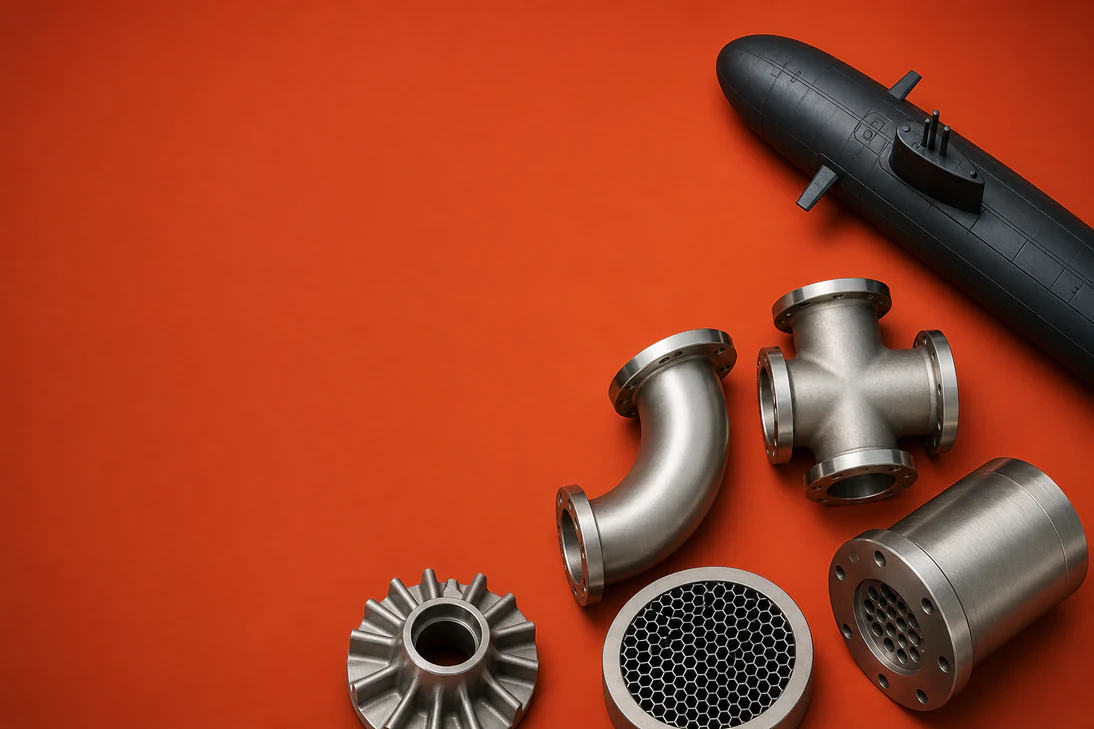
PM-HIP enables the production of large, near-net-shape components such as valves, manifolds, and pressure vessels with forged-equivalent material properties. Amaero’s proprietary simulation tools and engineering team have demonstrated success in meeting the demanding standards of defense and industrial applications, offering shorter lead times and greater manufacturing flexibility.
Strategic Collaboration Underpins Industrial Base Strengthening
BPMI’s Executive Manager of Industrial Base Management, Nathan Weiderspahn, emphasised the importance of Amaero’s technical rigor in advancing innovative manufacturing methods to support the Navy’s long-term shipbuilding objectives. The contract award is a meaningful milestone in expanding production capacity for critical submarine components.
Amaero’s recent operational developments include commissioning a third advanced atomizer to boost powder production capacity, reflecting a broader push to scale its domestic manufacturing footprint. This contract win aligns with the company’s strategic focus on addressing bottlenecks in the maritime industrial base supply chain through advanced manufacturing technologies.
Bottom Line?
Amaero’s growing production contracts and PM-HIP expertise position it well to capitalize on expanding US naval shipbuilding demands.
Questions in the middle?
- How quickly can Amaero scale production to meet BPMI’s projected demand for 400 PM-HIP components annually?
- Will further production contracts follow as the U.S. Navy deepens its commitment to PM-HIP technology?
- How might Amaero’s expanded powder production capacity influence its competitive positioning in defense manufacturing?