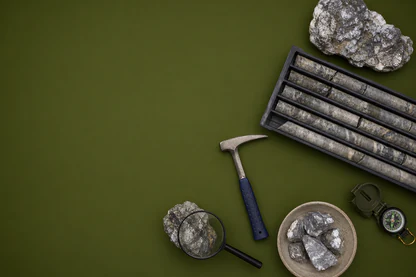
Ioneer Advances Rhyolite Ridge with Korean Strategic MOUs

Ioneer has signed non-binding MOUs with Korea’s KIND and Hyundai Engineering, edging closer to a Final Investment Decision for its Rhyolite Ridge lithium-boron project in Nevada.
- Non-binding MOUs with KIND and Hyundai Engineering signed
- KIND considering equity investment, Hyundai Engineering procurement role
- Over US$220 million invested and 70% engineering completed
- Project critical for US-Korea supply chain collaboration
- MOUs bring Rhyolite Ridge nearer to Final Investment Decision
 Add us as a preferred source on Google
Strategic Korean Partnerships Signal Progress at Rhyolite Ridge
Ioneer Ltd (ASX:INR, NASDAQ: IONR) has taken a significant step forward in advancing its Rhyolite Ridge lithium-boron project by signing non-binding Memorandums of Understanding (MOUs) with Korea Overseas Infrastructure & Urban Development Corporation (KIND) and Hyundai Engineering. The agreements underline the project's strategic importance, not only as a critical minerals asset but also as a linchpin in securing supply chains between the United States and the Republic of Korea.
Under the MOUs, KIND, a Korean public institution focused on overseas infrastructure investments, is considering an equity stake in Rhyolite Ridge. Hyundai Engineering, a major player in engineering, procurement, and construction, is exploring a role in procurement activities for the project. While non-binding, these MOUs mark a deepening of collaboration on a project that hosts North America's only lithium-boron reserve, a rare and valuable resource globally.
Substantial Investment and Engineering Progress
Since 2016, Ioneer has poured over US$220 million into Rhyolite Ridge, completing more than 70% of the advanced engineering work required to bring the project to fruition. The mine is designed to process ore into finished lithium and boron products entirely on-site, promising to generate 275 to 300 permanent jobs in rural Nevada. This development aligns with broader US efforts to secure domestic supplies of critical minerals essential for energy transition technologies.
The project has already secured a US$996 million loan from the US Department of Energy and cleared final federal permitting hurdles by late 2024, positioning it as one of the most advanced critical minerals projects in the country. Ioneer's previous capital raises and legal victories have set the stage for these strategic partnerships, which are crucial as the company approaches a Final Investment Decision.
Geopolitical and Industrial Implications
The involvement of KIND and Hyundai Engineering reflects the geopolitical weight of Rhyolite Ridge. KIND’s mandate to support Korean companies in overseas infrastructure and critical minerals projects fits neatly with Korea’s industrial ambitions and supply chain security. Hyundai Engineering’s interest in procurement signals confidence in Ioneer’s execution capabilities and the project's readiness, with the company highlighting Rhyolite Ridge's advantages in permitting and construction preparedness.
This trilateral cooperation could strengthen the US-Korea economic partnership, particularly in the context of critical minerals supply chains that underpin electric vehicle manufacturing and renewable energy technologies. Ioneer’s existing offtake agreements with major auto industry players, including Ford and a Toyota-Panasonic joint venture, further underscore the project's market relevance.
Next Steps Towards Final Investment Decision
While the MOUs are non-binding and do not guarantee future investment or procurement contracts, they represent a tangible move toward a Final Investment Decision (FID). Ioneer’s executive leadership emphasises that these partnerships bring the project closer to breaking ground, framing Rhyolite Ridge as a once-in-a-generation asset for US critical minerals production.
Investors and observers will be watching closely for announcements of binding agreements and further capital commitments, which will be pivotal in confirming the project's financing and construction timelines. The project's advancement also raises questions about how evolving geopolitical dynamics and supply chain strategies will shape the critical minerals sector in the coming years.
Bottom Line?
The MOUs with KIND and Hyundai Engineering mark a strategic milestone, but binding commitments and the timing of the Final Investment Decision remain key uncertainties.
Questions in the middle?
- Will KIND convert its interest into a binding equity investment?
- What specific procurement roles will Hyundai Engineering undertake, and how will that impact project costs?
- How will shifting geopolitical tensions influence the US-Korea partnership on critical minerals?