eMetals Uncovers High-Grade Tungsten at Utah’s Historic Garnet Mine

eMetals Limited has reported promising high-grade tungsten intercepts from underground sampling at its Mineral Range Tungsten Project in Utah, setting the stage for imminent drilling.
- Significant tungsten grades up to 0.76% WO3 over 1.22 meters
- Successful re-entry and sampling of historic Garnet Mine underground levels
- Use of UV light and LiDAR technology for mineralisation identification and 3D mapping
- Project covers 2,072 acres with multiple historic tungsten mines
- Drilling program in final planning stages for current quarter
 Add us as a preferred source on Google
High-Grade Tungsten Confirmed Underground at Garnet Mine
eMetals Limited (ASX:EMT) has delivered encouraging assay results from its Mineral Range Tungsten Project in Utah, with underground sampling at the historic Garnet Mine returning high-grade tungsten mineralisation. Channel samples revealed intercepts including 1.22 meters at 0.76% WO3, a notable grade that underpins the project’s exploration potential in an area with a rich history of tungsten production.
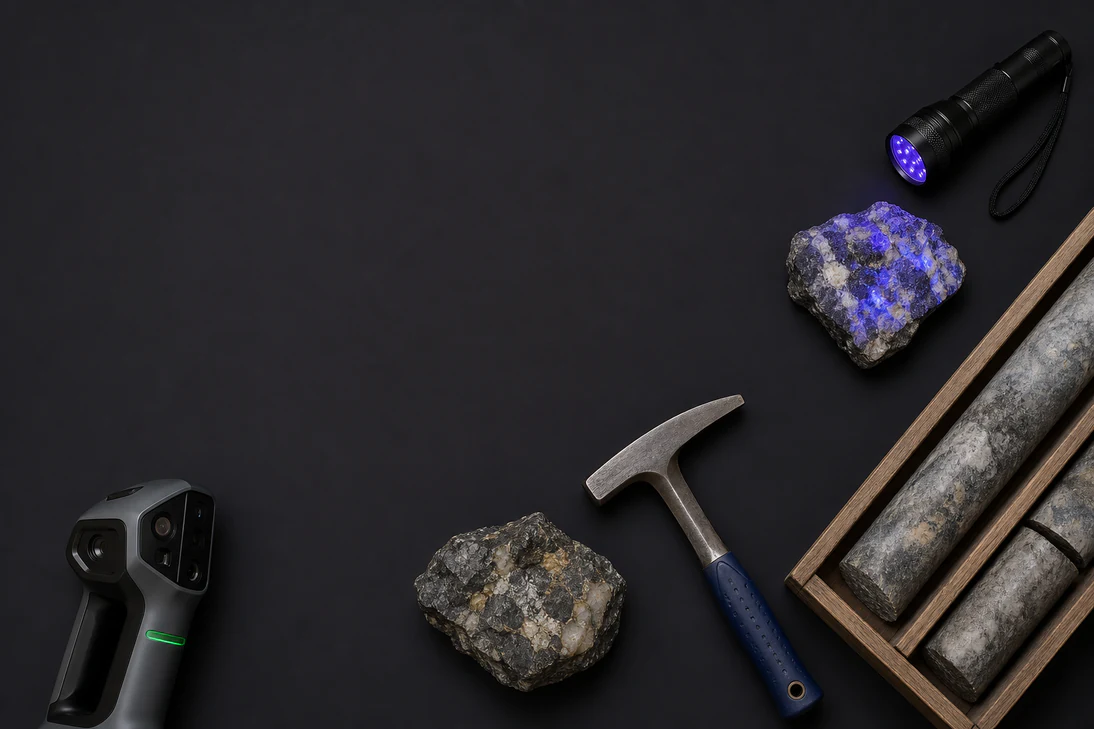
The company successfully re-entered the Garnet Mine at the 40-foot and 100-foot levels, as well as a winze extending 30 feet below, using shortwave ultraviolet (UV) light to identify scheelite mineralisation underground. This hands-on approach, combined with advanced Exyn Pak SLAM LiDAR 3D scanning, enabled eMetals to generate detailed models of the workings and estimate volumes of historically mined material, enhancing geological understanding.
Project Scale and Historical Context Bolster Prospects
Covering 2,072 acres across 109 mineral claims, the Mineral Range Project encompasses multiple prospects with significant potential to extend known mineralisation. The region’s legacy includes several past-producing mines such as Garnet, Big Pass, and Two R’s, which collectively yielded hundreds of tonnes of tungsten at grades around 0.6–0.8% WO3 during the 1940s.
These historical operations provide a valuable benchmark for eMetals’ current exploration, as the company targets high-grade tungsten within garnet-rich skarn zones; identified as the most productive mineralisation style in the district. The recent sampling program, consisting of eight channel and two grab samples, was reconnaissance in nature but designed to confirm mineralisation presence and support geological interpretation.
Assay Results Inform Imminent Drilling Plans
Assays from the Garnet Mine underground workings showed tungsten grades ranging from 0.04% to 0.76% WO3 over sample widths between 1.2 and 5.5 meters. Noteworthy intercepts include 1.22 meters at 0.76% WO3, 5.5 meters at 0.18% WO3, and 1.5 meters at 0.27% WO3. These results suggest grade may increase with depth, a dynamic Executive Director Mathew Walker described as "extremely encouraging."
Walker highlighted that the findings provide "stand-out exploration targets" for the drilling program, which is in its final planning stages and scheduled for the current quarter. The company aims to use these data to refine high-priority drill targets and expand known mineralised zones through diamond drilling, geological logging, and modelling.
Sampling Methodology and Limitations
The sampling was conducted with industry-standard protocols, including channel samples collected perpendicular to mineralised horizons and analysed by ALS laboratories using four-acid digestion and ICP-AES. While the results are promising, the company notes that the true widths of mineralisation remain undetermined due to the early-stage nature of the work and irregular sample spacing. No drilling has yet been undertaken, and independent verification of assays is pending.
Despite these caveats, the integration of modern technology like LiDAR scanning and UV-assisted mineral identification marks a methodical approach to advancing the project beyond historical data. The Mineral Range Project’s tenure is secure, with no known impediments to ongoing exploration.
Bottom Line?
The latest underground assays at Mineral Range set a solid foundation for upcoming drilling, but true mineralisation continuity and widths remain to be confirmed.
Questions in the middle?
- Will the planned drilling confirm the continuity and true widths of the high-grade tungsten zones?
- How might independent assay verification impact investor confidence and project valuation?
- Could the integration of LiDAR and UV technology accelerate delineation of economically viable tungsten resources?