Krakatoa Confirms Visual Antimony Zones at Zopkhito Amid JORC Upgrade Drive

Krakatoa Resources has verified significant visual antimony mineralisation in early 2026 drilling at its Zopkhito project, advancing efforts to formalise a JORC-compliant resource estimate. Assays remain pending as the company prepares for underground sampling and metallurgical testing.
- Multiple zones of visual antimony confirmed in surface and underground drilling
- 2026 program aims to convert foreign resource to JORC 2012 standard
- Pending assays expected later in 2026
- Underground bulk sampling and metallurgical studies planned
- Mining license valid until 2042 with option to acquire 80% interest
 Add us as a preferred source on Google
Visual Antimony Mineralisation Validates Historical Models
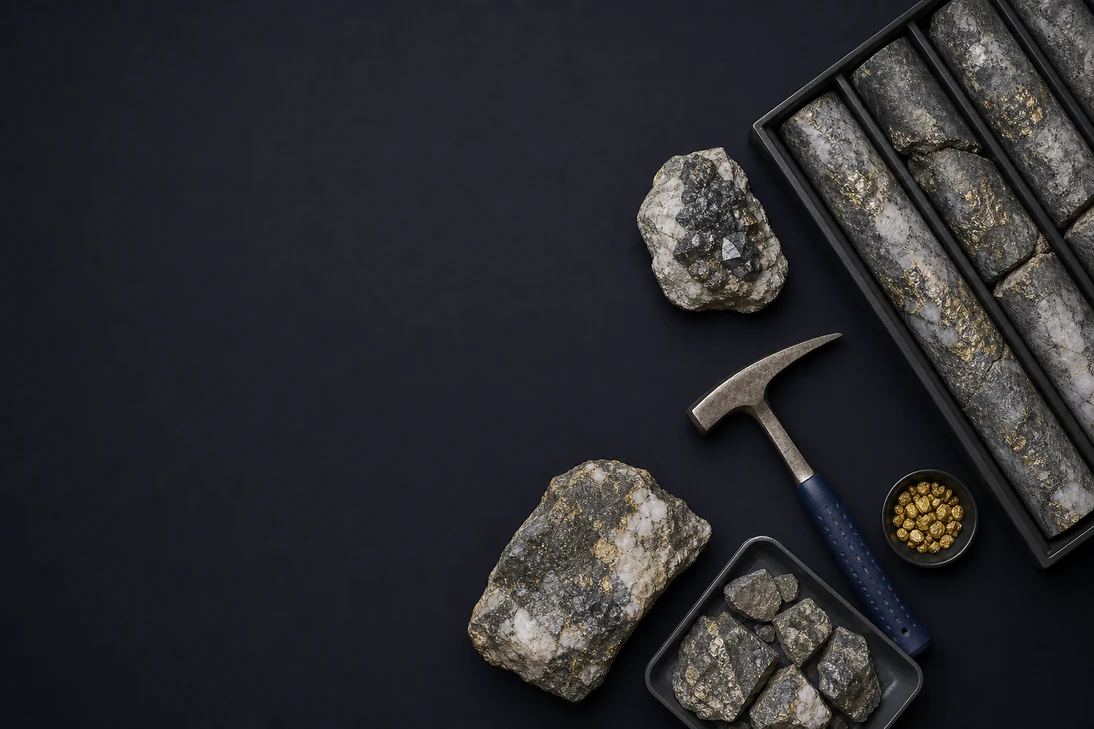
Krakatoa Resources (ASX:KTA) has reported encouraging early results from its 2026 drilling campaign at the Zopkhito Antimony-Gold Project in Georgia's Caucasus region. Initial diamond drill holes have intersected multiple zones of significant visual antimony mineralisation, including a standout 2.86-metre interval featuring a 60-centimetre section of massive quartz and stibnite with visual estimates suggesting around 50% stibnite content. These findings reinforce the continuity of mineralised veins first identified in historical exploration.
CEO Mark Major highlighted the systematic approach to testing the veins, noting each hole enhances geological understanding and underpins progress toward a maiden JORC-compliant Mineral Resource Estimate (MRE). While visual estimates provide a promising snapshot, the company cautions that laboratory assays are essential to determine precise grades and impurities, with assay results expected later this year.
Drilling Progress and Sampling Strategy
As of early July, Krakatoa has completed two surface diamond drill holes and four underground in-adit core sampling holes. The drilling targets known antimony and gold mineralised veins within historical underground workings, with visual stibnite mineralisation observed as vein and vug fill, occasionally transitioning into massive stibnite. Adjacent arsenopyrite-rich sulphide alteration zones suggest potential gold mineralisation, though gold assays remain pending.
Underground panel and bulk sampling are slated to commence imminently, complementing the drilling data. Concurrently, metallurgical optimisation and preliminary mining studies are planned to support the broader development strategy. Environmental baseline studies and permitting activities continue in parallel to ensure regulatory readiness.
Project Scale and Historical Context
The Zopkhito project spans 1,779 hectares under a mining license valid until March 2042. Krakatoa holds an exclusive option to acquire up to 80% of the project. The site benefits from extensive historical exploration dating back to 1929, including underground drives and channel sampling, which established a foreign resource estimate of 225,000 tonnes at 11.6% antimony and 7.1 million tonnes at 3.7 grams per tonne gold. However, this foreign estimate is not yet compliant with JORC 2012 standards.
The current drilling campaign is designed to integrate modern geological data with historical datasets to convert this foreign resource into a JORC-compliant MRE. This upgrade is critical to underpinning future resource growth and project valuation.
Next Steps and Market Implications
Krakatoa anticipates a steady stream of operational updates and assay results through 2026 as it advances Zopkhito. The company’s recent capital raise of $1.6 million, which supports ongoing drilling and resource definition efforts, underpins this momentum. The combination of promising visual mineralisation, a clear path to JORC certification, and planned metallurgical and environmental studies positions Zopkhito as a potentially strategic asset in Europe’s critical mineral supply chain.
Bottom Line?
Pending assays and upcoming bulk sampling will be pivotal in confirming Zopkhito’s resource potential and advancing its JORC upgrade ambitions.
Questions in the middle?
- Will assay results confirm the high-grade antimony and gold mineralisation suggested by visual estimates?
- How effectively will Krakatoa convert the foreign resource estimate into a JORC-compliant Mineral Resource Estimate?
- What impact will metallurgical test work and environmental studies have on the project’s development timeline?