Visionflex Achieves Positive Cash Flow and Launches Unattended Access Product

Visionflex Group turned the corner with positive operating cash flow in Q4 FY26 and the launch of its unattended access capability, while securing new contracts to expand its virtual healthcare footprint.
- Positive operating cash flow of $0.7m in Q4 FY26
- Annual Recurring Revenue up 3% to $1.95m
- New $0.8m NSW Health and $0.3m RFDS SA/NT contracts
- Launch of unattended access capability with RFDS SA/NT deployment
- Full-year operating cash outflow reduced by $1.9m on prior year
 Add us as a preferred source on Google
Turning Cash Flow Positive Amid Cost Cuts
Visionflex Group Limited (ASX:VFX) closed FY26 on a high note, delivering a $0.7 million operating cash inflow in the June quarter; a notable $0.4 million improvement on the previous corresponding period. The company also recorded positive operating cash flow for the entire second half of FY26, marking a clear improvement in financial discipline. Over the full year, operating cash outflow shrank by $1.9 million to $1.2 million, reflecting deliberate cost base reductions and a February workforce restructuring that cut ongoing expenses without hampering sales capacity.
Revenue Deferrals Mask Underlying Demand
Despite the improved cash position, unaudited revenue for Q4 FY26 fell 23% to $1.5 million, with full-year revenue down 10% to $4.2 million. This decline stems largely from customer-driven deferrals of hardware deliveries into Q1 FY27, rather than lost orders. These committed contracts remain intact and are expected to convert into revenue upon shipment. Meanwhile, cash receipts rose 3% in the quarter and 8% for the year, underscoring steady cash collection despite timing shifts in revenue recognition.
Recurring Revenue and Contract Wins Signal Growth
Visionflex’s Annual Recurring Revenue (ARR) edged up 3% year-on-year to $1.95 million at June 30, with subscription contracts secured during the quarter; including upgrades and network expansions for the Royal Flying Doctor Service (RFDS) SA/NT; set to contribute further as deployments roll out in FY27. The company locked in several key contracts in Q4: a $0.8 million deal with NSW Health to supply clinical hardware for its Remote Patient Monitoring Digital Uplift initiative, and $0.3 million in contracts with RFDS SA/NT for subscription upgrades, expansion, and the rollout of Visionflex’s new unattended access capability.
Unattended Access Launch Opens New Markets
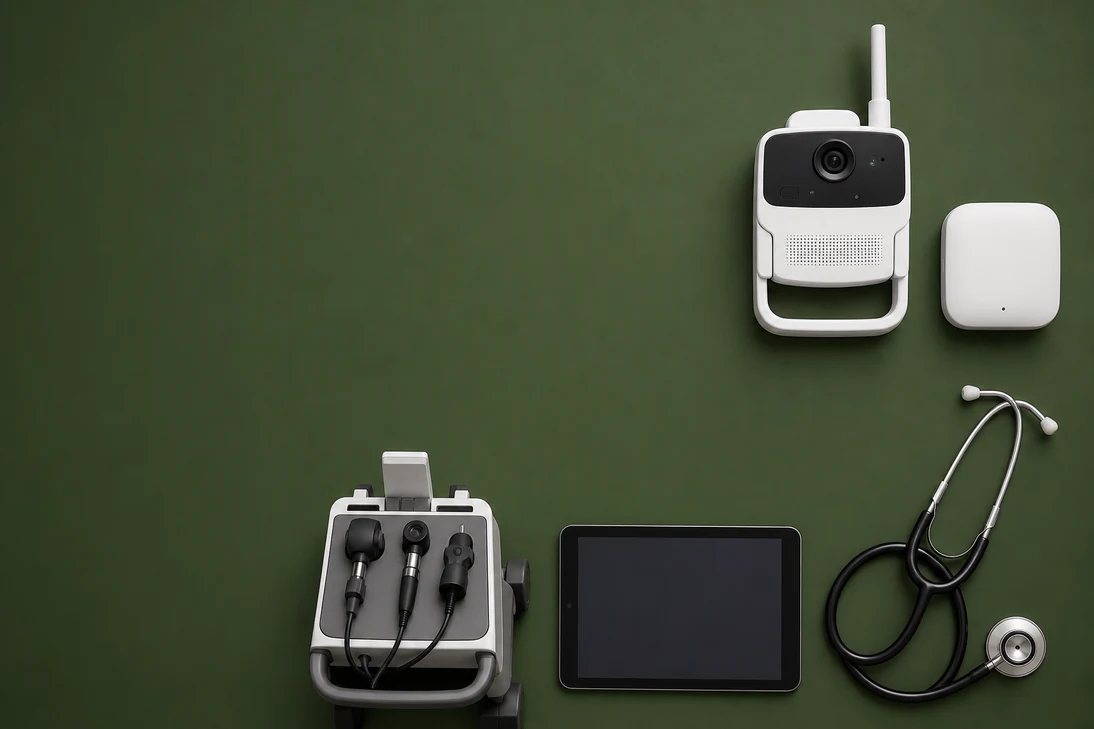
Visionflex unveiled its unattended access capability in Q4, a significant product innovation allowing clinicians to conduct fully remote consultations and operate clinical examination devices without any operator present at the patient’s location. This breakthrough removes the previous need for trained staff alongside patients, enabling deployments in unstaffed clinics, remote resource sites, and after-hours aged care settings. RFDS SA/NT is the first customer to adopt this technology, with network deployment commencing in Q1 FY27. The company also enhanced its platform’s user experience and integration capabilities, preparing for larger enterprise-scale rollouts.
FY27 Priorities and Potential ARR Variability
Heading into FY27, Visionflex aims to maintain its lean cost structure and convert its robust sales pipeline, focusing on further aged care, health, and resources sector deployments. A notable transition is underway as some aged care subscriptions move from PHN-funded programs to customer-funded models, which may introduce ARR variability depending on each facility’s platform utilisation and retention outcomes. The company is actively engaging customers to manage this transition and plans to offset any ARR fluctuations with new subscription contracts. Larger enterprise opportunities remain in the pipeline, subject to procurement and contracting processes.
Visionflex ended FY26 with $1.6 million in cash and access to $1.05 million in undrawn funding, including a convertible note facility and a new R&D funding arrangement, providing a solid liquidity buffer for its growth initiatives.
Bottom Line?
Visionflex’s positive cash flow and innovative unattended access launch position it well, but FY27 ARR variability and contract execution remain critical to watch.
Questions in the middle?
- How will the transition from PHN-funded to customer-funded aged care subscriptions impact ARR retention?
- What is the timeline and scale for RFDS SA/NT’s rollout of unattended access across its network?
- Which larger enterprise opportunities in the pipeline might convert to contracts in FY27?