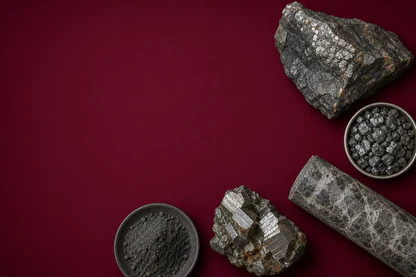
Shafter Core Re-Analysis Reveals 54% Higher Silver Grades

Black Bear Minerals' re-assay of historic drill core at its Shafter Silver Project in Texas reveals significantly higher silver grades and new polymetallic mineralisation, underpinning plans to expand the resource and advance mine restart studies.
- 54% increase in contained silver from historic core re-assays
- New gold, lead, and zinc mineralisation identified in historic core
- Re-analysis program to extend across all legacy drill programs
- Plans for infill drilling to validate resource and support JORC conversion
- Existing infrastructure supports low-capital mine restart strategy
 Add us as a preferred source on Google
Historic Core Re-Analysis Uncovers Higher Silver Grades
Black Bear Minerals (ASX:BKB) has reported a substantial uplift in silver grades following a re-analysis of historic drill core from its Shafter Silver Project in Texas. Notably, drillhole SW5 returned 6.7 metres at 408 grams per tonne (g/t) silver from 9.1 metres, including 1.2 metres at 1,222g/t silver; a 54% increase in contained silver compared to the original 6.7 metres at 266g/t intercept. Another example, drillhole 201200306, showed 23.8 metres at 147g/t silver, up from 134g/t previously, with some intervals increasing in width due to more extensive sampling.
This re-assay effort also revealed significant polymetallic mineralisation previously undetected, as historic samples were mostly analysed for silver alone. Drillhole 201200602 returned 3.1 metres at 181g/t silver, 0.7g/t gold, 1.1% lead, and 3.4% zinc, with a peak gold intercept of 1.2 metres at 1.5g/t gold. These findings highlight broader exploration potential beyond silver, with gold and base metals now in focus.
Extending Re-Analysis and Validation Drilling
Encouraged by these results and recent twin-hole drilling that also exceeded historic grades, Black Bear is expanding its re-analysis program to all available legacy drill core. The company aims to sample beyond previously targeted intervals, addressing historic selective sampling biases that may have overlooked mineralisation. This comprehensive review will support a maiden JORC-compliant Mineral Resource Estimate, converting the current 17.57 million ounce silver foreign estimate prepared under Canadian NI 43-101 standards.
Black Bear is also planning limited infill drilling to validate the resource and improve confidence in areas with sparse historic data. The company intends to integrate polymetallic assay results into future resource models and metallurgical testwork, assessing the economic contribution of gold, lead, and zinc by-products.
Strategic Asset with Established Infrastructure
The Shafter Project benefits from substantial existing infrastructure, including a permitted Merrill-Crowe processing plant, refinery, grid power, water rights, and over 160 kilometres of historic underground workings. The historic Presidio Mine produced 35.2 million ounces of silver at an average grade of 521g/t between 1883 and 1942.
Located within the prolific Sierra Madre Belt, the project lies near the world-class Peñasquito mine operated by Newmont. Black Bear’s CEO Dennis Lindgren emphasised that the re-analysis results strengthen confidence in the deposit's continuity and growth potential, providing a solid foundation for advancing exploration and restart studies.
Polymetallic Upside and Broader Portfolio
Beyond silver, the polymetallic potential at Shafter is gaining attention, with recent rock chip sampling returning assays up to 3,100g/t silver, 4.5% zinc, and 6% lead outside the current resource area. The company is systematically re-logging and sampling historic core to better understand the distribution of gold, lead, zinc, and vanadium, aiming to incorporate these metals into future resource estimates.
Black Bear also holds the Independence Gold Project in Nevada, with a JORC-compliant resource of over 2.2 million ounces gold equivalent, and a lithium exploration portfolio in Quebec’s James Bay region, providing diversified exposure to precious and critical metals.
Next Steps and Investor Implications
The company’s next phase involves broadening historic core re-assays, infill drilling, and metallurgical testwork to refine resource estimates and support a potential low-capital mine restart. The historic core re-analysis results suggest previous assay methods may have underrepresented grades, which could materially enhance project economics if confirmed.
While the foreign mineral resource estimate is not yet JORC-compliant and conversion remains uncertain, these developments provide a compelling rationale for investors to watch Black Bear’s progress closely. The combination of higher silver grades, polymetallic credits, and existing infrastructure positions Shafter as a promising candidate for rapid development in a mining-friendly jurisdiction.
Bottom Line?
Black Bear Minerals’ historic core re-assays at Shafter reveal higher silver grades and polymetallic potential, setting the stage for resource upgrades and mine restart studies.
Questions in the middle?
- Will extended re-analysis confirm a consistent uplift across the entire historic core dataset?
- How materially will polymetallic credits enhance the economic viability of the Shafter Project?
- What timeline can investors expect for the maiden JORC Mineral Resource Estimate and restart feasibility outcomes?