EMVision Advances Brain Scanner Trials and Secures $17.1m Cash Reserves

EMVision Medical Devices has hit key enrolment milestones in its pivotal brain scanner trial, expanded clinical endpoints, and maintained a strong cash position with $17.1 million on hand.
- Pivotal trial surpasses enrolment milestones
- Acute ischaemia detection endpoint planned
- Successful aeromedical feasibility study completed
- Peer-reviewed validation of AI technology published
- Cash reserves of $17.1 million with $4.6 million grants
 Add us as a preferred source on Google
Pivotal Trial Momentum Builds Toward FDA Clearance
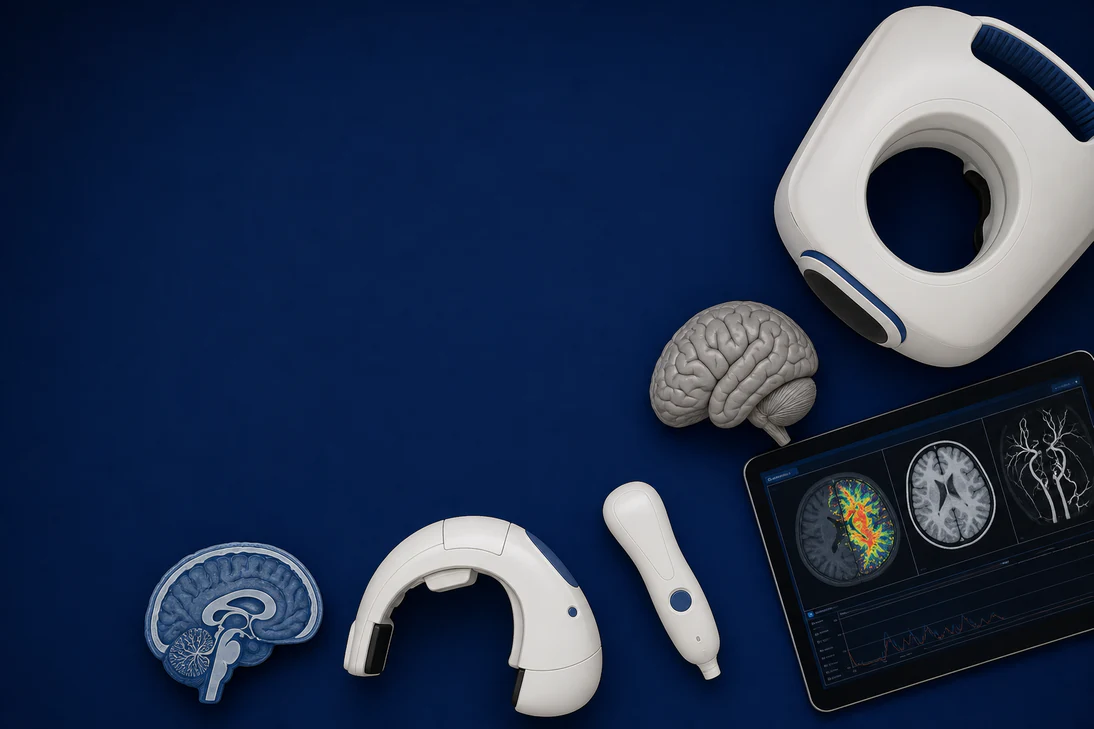
EMVision Medical Devices (ASX:EMV) is steadily advancing its emu™ point-of-care brain scanner, crossing significant enrolment thresholds in its pivotal (validation) trial. Recruitment across eight leading US and Australian hospitals, including Mayo Clinic and Royal Melbourne Hospital, has accelerated, positioning the company for full enrolment by late 2026 or early 2027. The trial aims to demonstrate haemorrhage detection sensitivity and specificity above 80%, a key regulatory hurdle for FDA De Novo clearance.
Notably, EMVision is preparing to expand the trial’s scope by adding an acute ischaemia detection endpoint, leveraging data from ongoing continuous innovation studies. This addition could materially enhance the device’s clinical utility by enabling rapid identification of both major stroke types in a single scan. The company plans a pre-submission meeting with the FDA to discuss this protocol amendment, which may require modest sample size adjustments. This strategy reflects a push to differentiate the emu™ device commercially from other point-of-care technologies.
First Responder Device Shows Real-World Feasibility
EMVision’s First Responder brain scanner, a lightweight, portable evolution of the emu™, has successfully completed an aeromedical feasibility and usability study in partnership with the Royal Flying Doctor Service (RFDS). The study demonstrated the device’s operational compatibility across diverse and challenging environments, including in-flight conditions over 14 aeromedical transfers. Feedback from flight nurses and patients was positive, reinforcing the device’s potential to address critical diagnostic delays in rural and remote stroke care.
Additionally, a Mobile Stroke Unit study in collaboration with Ambulance Victoria and Royal Melbourne Hospital is nearing completion, with preliminary findings aligning with earlier aeromedical insights. Preparations are also underway for a road ambulance clinical study, which will test the production-equivalent device in high-volume emergency settings, completing the pre-hospital testing spectrum.
Peer-Reviewed Publication Validates AI Foundations
Following quarter-end, EMVision’s proprietary radio-frequency brain scanning technology and AI algorithms were independently validated in a peer-reviewed paper published in npj Digital Medicine, a leading journal within the Nature portfolio. The research detailed the device’s strong diagnostic performance, with haemorrhagic stroke detection sensitivity at 92% and specificity at 85%, and ischaemic stroke detection sensitivity at 95% and specificity at 80%. This publication not only endorses the scientific underpinnings of the emu™ scanner but also supports the algorithmic framework for the First Responder device, underpinning future regulatory submissions and intellectual property claims.
Financial Position Supports Continued Development
EMVision closed the quarter with $17.1 million in cash reserves and an additional $4.6 million in non-dilutive grant funding available, including milestone payments from the Industry Growth Program and Australian Stroke Alliance. Net operating cash outflows were $1.267 million, reflecting ongoing investment in R&D and clinical activities. The company’s strong balance sheet provides a runway exceeding 13 quarters at current burn rates, underpinning confidence in its ability to execute through upcoming clinical milestones and regulatory submissions.
EMVision also continues to engage with the military health sector, participating in the Medical Technology Enterprise Consortium and preparing for a presentation at the US Department of Defense’s Military Health System Research Symposium. These efforts highlight the broader applicability of its technology in austere and pre-hospital environments beyond civilian stroke care.
Bottom Line?
EMVision’s clinical and regulatory progress, backed by robust cash reserves and peer-reviewed validation, sets a solid stage for its upcoming FDA submission and commercialisation pathway.
Questions in the middle?
- How will the addition of acute ischaemia detection affect the timeline and regulatory review of the pivotal trial?
- What insights will the upcoming Mobile Stroke Unit study report reveal about pre-hospital device integration?
- Can EMVision leverage military health collaborations to accelerate adoption of its First Responder device?