Great Bear Exploration Locks High-Priority Targets Ahead of 2026 Field Program

Great Bear Exploration is gearing up for a major 2026 field campaign at its vast Great Bear Project in Canada, armed with fresh high-grade assay results and a cutting-edge airborne geophysics survey to refine drill targets.
- Engaged Aurora Geosciences and Xcalibur Smart Mapping for field and geophysical support
- Independent review identified multiple Tier 1 exploration targets including underexplored southern area
- 2026 program includes high-resolution FALCON airborne gravity and magnetic survey
- Rock chip sampling returned impressive copper, gold and silver assays
- Logistics leverage Rae Airstrip and winter ice highway for cost-effective operations
High-Grade Assays and Airborne Survey Set Stage
Great Bear Exploration Ltd (ASX:GBL) is primed to kick off its 2026 field activities at the Great Bear Project in Canada's Northwest Territories with a compelling mix of new high-grade surface assay results and a state-of-the-art airborne geophysical survey. The company has contracted Xcalibur Smart Mapping to conduct a FALCON Airborne Gravity Gradiometer, Magnetic and Radiometric survey, a technique regarded as market-leading, to sharpen its understanding of the project's structural and lithological framework ahead of drilling.
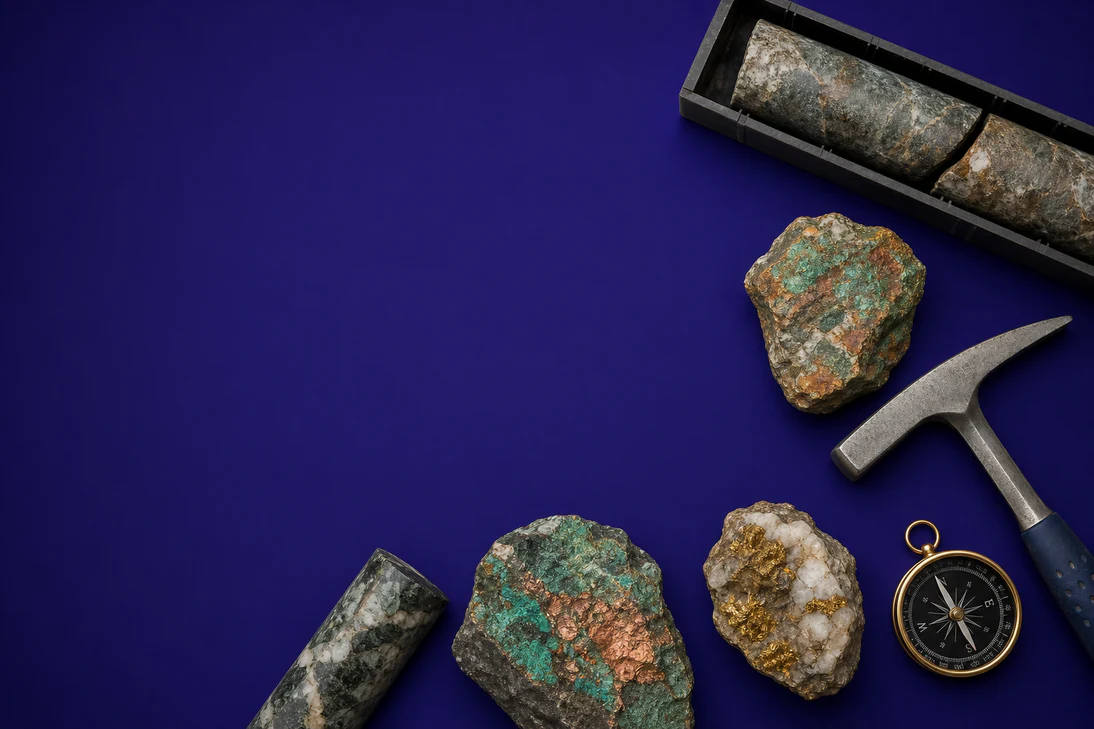
Complementing this, rock chip sampling from recent campaigns has yielded standout grades including copper assays exceeding 40%, gold above 16 g/t, and silver assays reaching tens of thousands of grams per tonne in select samples. These results, while from surface grab samples and not drill cores, underscore the project's rich mineral potential and provide immediate technical news flow as Great Bear advances towards drill-ready targets.
Independent Review Unlocks New Target Zones
Resource Potentials, a globally recognised mineral targeting consultancy, has completed a comprehensive integration of historical and recent datasets. Their analysis has generated multiple high-priority Tier 1 exploration targets, notably including a previously overlooked southern portion of the project area. This underexplored zone is earmarked for immediate ground validation, expanding the potential footprint for IOCG, copper, and precious metal mineralisation within Great Bear's extensive 2,800 square kilometre landholding.
Executive Director Rod McIllree emphasised the disciplined approach: "By combining Aurora's unmatched Northwest Territories experience, Xcalibur's industry-leading airborne geophysics and Resource Potentials' globally recognised mineral systems expertise, we are rapidly advancing a pipeline of high-conviction drill targets for spring next year." The company is mindful of operational risks and the limited availability of service providers late in the season, hence the focus on thorough pre-drill groundwork.
Logistics and Operational Readiness
Great Bear is leveraging key regional infrastructure to streamline its exploration campaign. Rae Airstrip, one of the largest in the region and situated within the company’s licence area, has been inspected and is in excellent condition with vegetation clearing underway. This airstrip, combined with the winter ice highway network, allows the company to move heavy equipment, including drill rigs and fuel, to the project site at a fraction of the cost of charter flights.
The company is also investing in a dedicated camp infrastructure to control long-term costs and ensure operational efficiency. Discussions are ongoing with preferred drilling contractors for a heli-supported reverse circulation drilling campaign planned for 2027, aiming to mobilise two rigs for over 5,000 metres of drilling.
Exploration Targets and Regional Potential
The Great Bear Project sits within the Great Bear Magmatic Zone, a prolific geological setting known for Iron Oxide Copper Gold (IOCG) deposits and associated epithermal and skarn mineralisation. Historical work primarily targeted uranium and silver, leaving copper and gold largely underexplored until recently. The current program’s focus on systematic rock chip sampling and geological mapping across priority targets such as Phoenix IOCG, Viper, Slider, Charlie, Coyote, and Contact Lake Belt aims to validate surface geochemistry and test extensions of known mineralisation.
With a robust pipeline of targets and a clear strategy to integrate modern geophysics with historical data, Great Bear is positioning itself to unlock significant value as it moves towards drilling next year.
Bottom Line?
Great Bear’s blend of high-grade surface results, advanced geophysics, and strategic logistics sets a strong foundation for a disciplined 2027 drilling campaign.
Questions in the middle?
- How will airborne geophysics data reshape the prioritisation of drill targets?
- What are the potential challenges in mobilising drilling rigs given the remote location and seasonal constraints?
- Could the newly identified southern area redefine the scale of mineralisation at Great Bear?