Iltani Advances Ore Sorting at Orient with Strong Grade Upgrades

Iltani Resources has demonstrated significant grade upgrades and waste rejection in first-pass TOMRA ore sorting tests at its Orient Silver-Indium Project, advancing plans for bulk testing and potential cost savings.
- TOMRA XRT ore sorting upgrades silver, indium, lead, zinc grades
- High-grade sample doubled metal concentrations with 58% waste rejection
- Low-grade sample showed up to 16× grade upgrade with 96% waste rejection
- Seven-hole PQ diamond drilling planned for bulk ore sorting samples
- Ore sorting could reduce processing plant size and operating costs
 Add us as a preferred source on Google
Ore Sorting Validates Pre-Concentration Potential
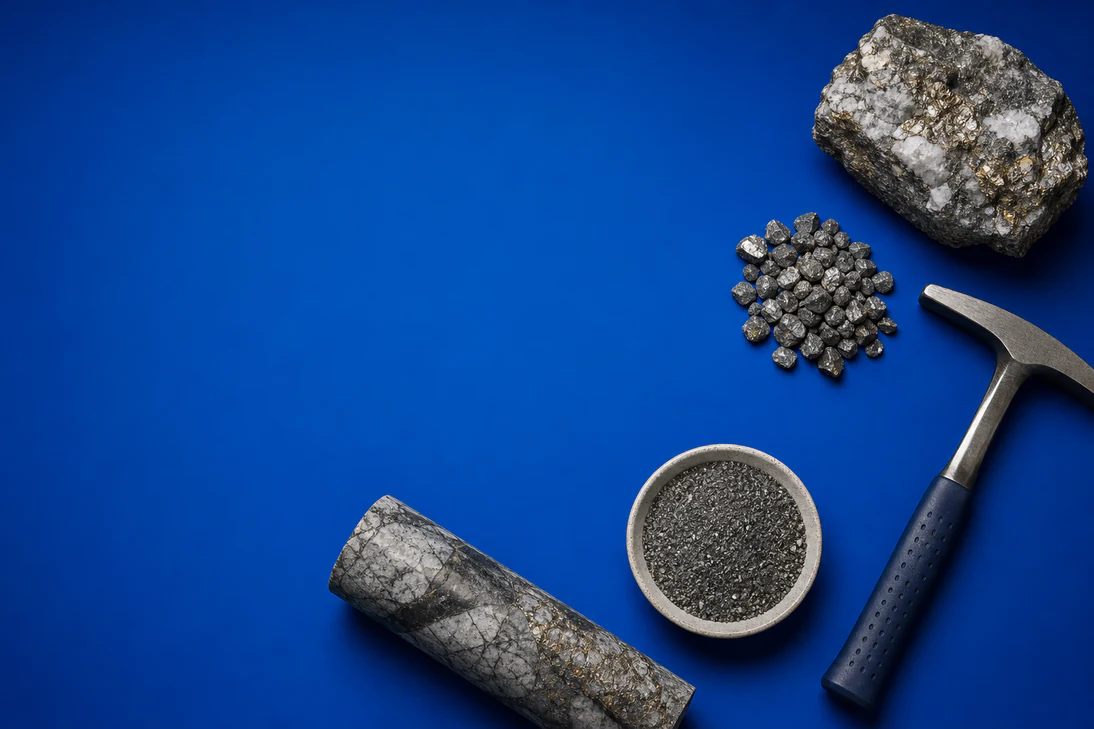
Iltani Resources (ASX:ILT) has taken a significant step forward at its Orient Silver-Indium Project in Queensland by completing first-pass ore sorting test work using TOMRA’s X-ray Transmission (XRT) technology. The tests, conducted on screened 6–25 mm fractions of both high-grade and low-grade reverse circulation (RC) chip samples, delivered striking results with substantial metal grade upgrades and mass rejection of waste rock.
The high-grade sample saw silver concentrations rise from 130 g/t to 265 g/t and indium from 199 g/t to 427 g/t, effectively doubling metal grades while rejecting 58% of the feed mass as waste. Even more dramatic was the low-grade sample upgrade, where silver jumped from 26 g/t to 325 g/t and indium from 27 g/t to 437 g/t, achieving upgrade factors as high as 16.1× for indium and 13.2× on average, all while discarding 96% of the mass.
Technical Basis and Implications for Project Economics
The success of the ore sorting hinges on the strong density contrast between sulphide minerals, primarily galena (lead sulphide) and sphalerite (zinc sulphide), and the siliceous host rock, combined with the coarse distribution of sulphides in the tested material. TOMRA’s XRT technology exploits this contrast by identifying dense mineral-bearing particles via X-ray attenuation, enabling selective rejection of barren rock before milling.
According to Managing Director Donald Garner, the ability to remove a significant proportion of waste prior to milling could translate into meaningful capital and operating cost savings. These include a smaller milling circuit, reduced energy consumption, lower tailings storage requirements, and potentially a downsized processing plant. Additionally, upgrading mineralised waste to higher-grade feed could further enhance project economics.
Next Phase: Bulk Testing with PQ Diamond Core
While these initial tests used RC chip samples, which generated a notable fines fraction excluded from sorting, the next phase will employ larger PQ diameter (85 mm) diamond core samples expected to produce fewer fines and provide a more representative assessment of ore sorting performance. Iltani has planned a seven-hole PQ diamond drilling program to supply approximately 700 kg of material for bulk sorting tests at TOMRA’s Sydney facility.
This upcoming work will also include downstream comminution and flotation testing on sorted products and waste fractions to evaluate overall process flowsheet benefits, aiming to integrate ore sorting results into future economic studies and process design.
Orient Project’s Scale and Resource Context
The Orient Silver-Indium Project is Australia’s largest known silver-indium deposit, with a current Mineral Resource Estimate (MRE) of 34.2 million tonnes at 110.4 g/t silver equivalent (Ag Eq.) using a 60 g/t Ag Eq. cut-off grade. A broader resource at a 30 g/t Ag Eq. cut-off stands at 62.5 million tonnes grading 81.5 g/t Ag Eq. The deposit hosts high-grade sulphide veins dominated by silver-rich galena and indium-rich sphalerite, with historical metallurgical test work confirming recoveries of silver, indium, lead, and zinc into payable concentrates.
Iltani’s extensive drilling program has been steadily upgrading and expanding the resource base, with recent results from Orient West confirming multiple high-grade silver-indium intercepts over open pittable depths, reinforcing the project’s development potential. The company also holds a substantial Exploration Target of 15.4–18.8 million tonnes at 95–117 g/t Ag Eq. that it aims to convert to Mineral Resources through further drilling.
Operational and Strategic Outlook
These ore sorting results dovetail with Iltani’s broader strategy to leverage advanced processing technologies to enhance project economics and sustainability. By potentially reducing milling throughput and tailings volume, ore sorting aligns with cost efficiency and environmental management goals.
The upcoming PQ drilling and bulk test work will be critical to validate these first-pass findings at scale and refine the metallurgical flowsheet. Investors should watch for results from these tests and subsequent economic studies to better understand the impact on project capital intensity and operating cost profiles.
Bottom Line?
Iltani’s ore sorting success at Orient signals a promising pathway to lower costs and improved project economics, pending validation from upcoming bulk tests.
Questions in the middle?
- How will bulk ore sorting tests with PQ core compare to initial RC chip results in terms of upgrade factors and mass rejection?
- What impact will ore sorting have on the overall processing plant design and capital expenditure estimates?
- Can the company successfully integrate ore sorting into the flowsheet without compromising metal recovery, especially for indium and silver?