Stelar Metals Unveils New Tungsten Targets with Ultra-High-Definition Survey

Stelar Metals has leveraged ultra-high-definition airborne survey technology to expose previously hidden tungsten-bearing structures at its Hill of Leaders project, setting the stage for targeted drilling in covered areas.
- Ultra-high-definition survey reveals subtle tungsten structures
- New targets identified beneath shallow cover
- AI-powered processing enhances target definition
- RC drilling program to commence imminently
- Survey flown at 25m line spacing and 30m altitude

Breakthrough Imaging Uncovers Hidden Tungsten Structures
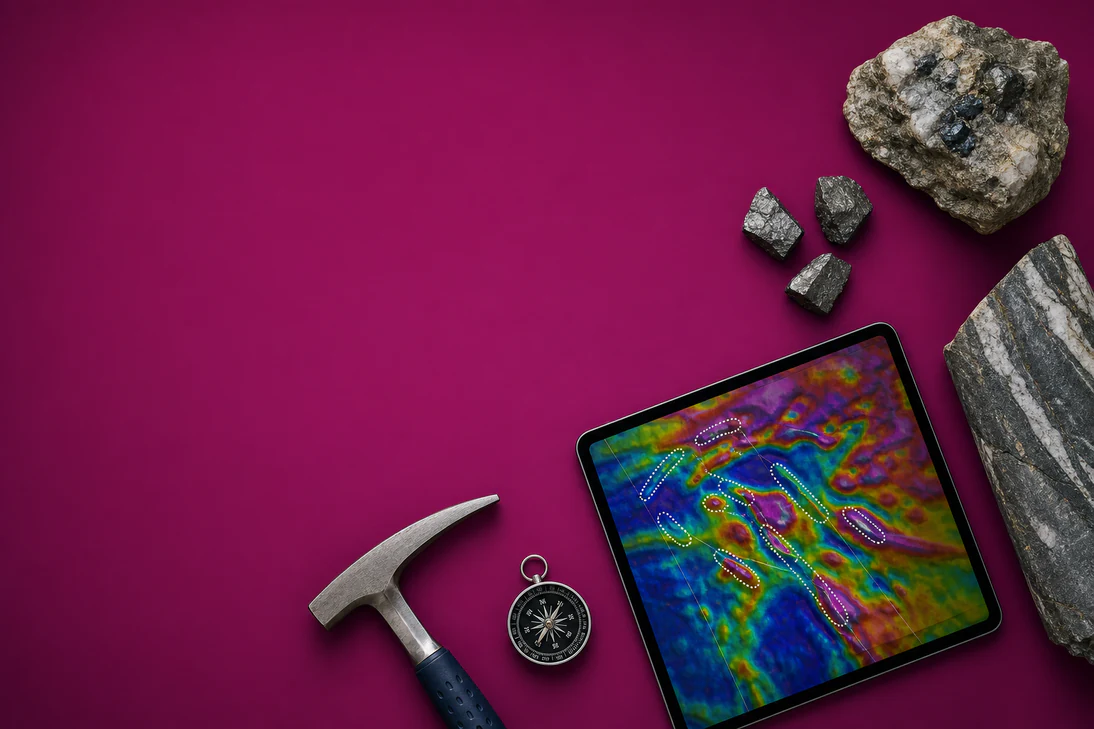
Stelar Metals (ASX:SLB) has taken a significant step forward at its Hill of Leaders Tungsten Project in the Northern Territory by completing an ultra-high-definition (UHD) airborne magnetic and radiometric survey that has revealed multiple new tungsten drill targets. The survey’s fine-scale imaging has exposed subtle geological structures and alteration patterns that were invisible in previous detailed airborne data, promising to sharpen exploration focus in a terrain complicated by shallow cover.
Historical tungsten-rich vein sets at Hill of Leaders are known to occupy delicate faults and structures within the granite host rock. However, much of the granite is obscured by shallow cover, limiting traditional exploration methods. The UHD survey, flown at a tight 25-metre line spacing and 30-metre altitude, has successfully detected these elusive structures extending beyond outcrop areas, opening fresh ground for exploration where prior efforts were sparse.
AI Processing to Refine Drill Targets Ahead of RC Campaign
Stelar is applying AI-powered algorithms to the newly acquired data to enhance the identification and prioritisation of tungsten-bearing structures. Executive Chair Stephen Biggins highlighted that this technology is uncovering targets that previous explorers could not see, providing a robust, data-backed pipeline for the upcoming reverse circulation (RC) drilling program scheduled to start within weeks.
The final magnetic and radiometric datasets are still pending, but preliminary interpretations already point to promising zones where tungsten mineralisation may be concentrated. These targets are especially significant given the historical lack of bedrock drilling beneath the mineralised veins, a fact that underscores the project’s exploration upside and first-mover advantage.
Survey Methodology and Data Quality
The survey utilized a MagSpec fixed-wing Cessna 210 equipped with a Geometrics cesium vapour sensor capable of 0.001 nT resolution and an RSI spectrometer for radiometric data. Data were collected at high frequency and processed using industry-standard methods, including NASVD smoothing for radiometric channels. This approach has yielded an exceptional improvement in data quality over historical surveys, as illustrated by side-by-side comparisons of aeromagnetic images.
Such precision is critical in a geological setting where tungsten mineralisation is hosted in narrow vein sets within granite, and where subtle structural features control ore distribution. The survey’s orientation, with flight lines perpendicular to the dominant geological strike, was designed to avoid sampling bias and optimise structural detection.
Implications for Tungsten Exploration in Northern Territory
The Hill of Leaders project benefits from a strategic location and a management team with proven Northern Territory discovery credentials. This latest survey complements recent rock chip sampling that identified high-grade tungsten mineralisation over a broad 2-kilometre corridor, confirming the project's potential scale and polymetallic character. The combination of cutting-edge geophysical data and AI analytics positions Stelar Metals to efficiently target its maiden drilling program and accelerate resource definition.
With tungsten critical to global net zero ambitions, the project’s ability to unlock new drill targets beneath cover could prove pivotal in addressing supply constraints. The upcoming RC drilling results will be a key milestone to watch as they will validate the new targets and potentially expand the known mineralised footprint.
Bottom Line?
Stelar’s high-resolution survey and AI-driven targeting could redefine tungsten exploration at Hill of Leaders, but drilling results will be crucial to confirm the promise beneath cover.
Questions in the middle?
- Will the upcoming RC drilling confirm tungsten mineralisation in the newly defined targets beneath cover?
- How effectively will AI-powered processing distinguish economically viable structures from geological noise?
- What scale of tungsten resource could emerge if these subtle structures prove mineralised?