Blaze Minerals Uncovers High-Grade Copper-Lead-Zinc Mineralisation at Krokodil Prospect

Blaze Minerals has reported significant copper, lead, and zinc mineralisation at its Krokodil Prospect within Botswana’s Dinokwe Project, supported by trenching and rock-chip sampling results. The company is advancing exploration amid tight cash reserves, aiming for a capital raise to sustain operations.
- Large copper-in-soil anomaly identified at Krokodil Prospect
- Trenching campaign confirms high-grade copper, lead, zinc mineralisation
- Dinokwe Project spans 1,771 km2 in Limpopo Mobile Belt
- Exploration expenditure of $118,000 for the quarter
- Cash reserves at $44,000 with plans for capital raising
 Add us as a preferred source on Google
Significant Copper-Lead-Zinc Mineralisation Confirmed at Krokodil Prospect
Blaze Minerals Limited (ASX:BLZ) has made a compelling case for its Dinokwe Project in Botswana after identifying a substantial copper-in-soil anomaly at the Krokodil Prospect. Soil sampling revealed copper concentrations up to 288ppm over a strike length of approximately 1,000 metres by 100 metres wide, marking a robust target zone within the Limpopo Mobile Belt.
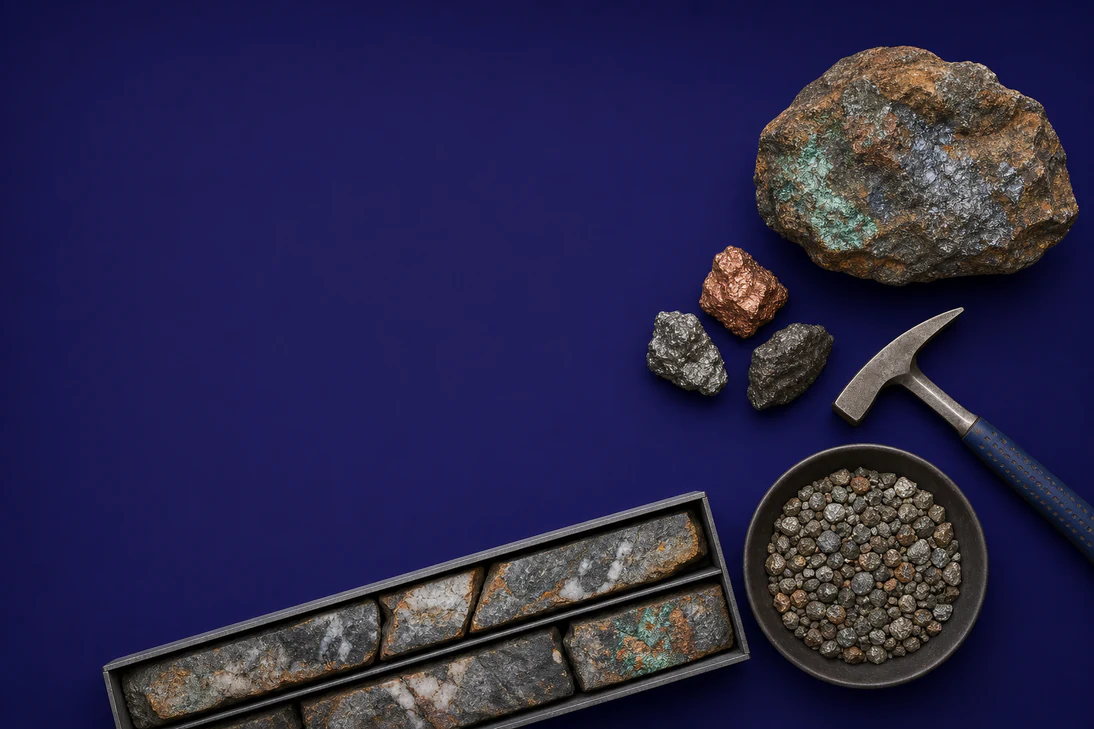
Subsequent geological mapping and rock-chip sampling tied this anomaly to a fault zone with splay structures indicative of significant fluid flow, a classic hallmark of mineralising systems. Handheld XRF analyses of grab samples with visible copper and lead minerals reported spot grades as high as 5.52% copper and 2.79% lead, with additional crushed and composite samples confirming multi-element mineralisation including zinc.
Trenching Campaign Extends Understanding of Mineralisation
To test the primary mineralised zone, Blaze completed seven trenches totaling 443 metres, oriented perpendicular to the interpreted strike of the mineralised fault. Detailed mapping and 89 channel samples from the trenches yielded spot XRF readings up to 8.59% copper and 2.96% lead, reinforcing the prospect’s potential for high-grade copper-lead-zinc mineralisation. These results await full laboratory assay analysis to better define the mineral resource.
The Dinokwe Project, covering 1,771 square kilometres, lies within a prolific geological setting that hosts the Selebi-Phikwe copper-nickel deposit located roughly 150 kilometres to the north. This regional context adds weight to the significance of Blaze's findings and the prospectivity of its tenure.
Broader Project Portfolio and Financial Position
Beyond Dinokwe, Blaze holds interests in the Kalahari and Molopo Projects in Botswana, targeting copper-silver and nickel-copper-PGE mineralisation respectively, although no fieldwork was conducted on these during the quarter. In Uganda, the company’s Ntungamo Project has yielded a critical minerals discovery of gallium and rubidium, while the Mityana Project remains under review after drilling returned no significant lithium results.
Financially, Blaze reported exploration expenditure of $118,000 for the quarter, with no mining production activities. The company ended the period with just $44,000 in cash, reflecting a net operating cash outflow of $322,000. Management acknowledges this limited runway and intends to manage cash flow prudently until a capital raising is completed. Previous successful raises include $2.522 million in mid-2025 and $1.25 million in late 2024, providing some confidence in the company’s ability to secure further funding when necessary.
Payments to related parties during the quarter totalled $102,000, covering director fees and consulting services. Blaze’s binding agreement to acquire up to 90% of B&J Geoconsultants, which owns the Dinokwe tenements, remains a key strategic asset underpinning its Botswana exploration ambitions.
Bottom Line?
Blaze Minerals’ promising copper-lead-zinc results at Krokodil highlight potential value, but tight cash reserves make upcoming funding a critical factor for sustained progress.
Questions in the middle?
- What will full assay results reveal about the extent and grade of mineralisation at Krokodil?
- How soon can Blaze secure capital to maintain and accelerate its exploration programs?
- Will the company pursue drilling to build on trenching results and advance toward a resource estimate?