dorsaVi Validates RRAM-Neuromorphic Synergy with 10x Edge AI Gains

dorsaVi has confirmed its RRAM memory and neuromorphic IP operate synergistically, projecting up to 10x performance gains for robotics and exoskeletons. The company also finalized its first integrated RRAM-CMOS validation chip design, advancing towards tape-out and commercialisation.
- RRAM and neuromorphic IP validated as integrated system
- RRAM materials qualified for commercial CMOS foundry
- Stable RRAM performance confirmed up to 150°C
- Sensor count and battery life improvements modelled
- First integrated RRAM-CMOS validation chip design completed

RRAM and Neuromorphic IP Combine for Edge AI Leap
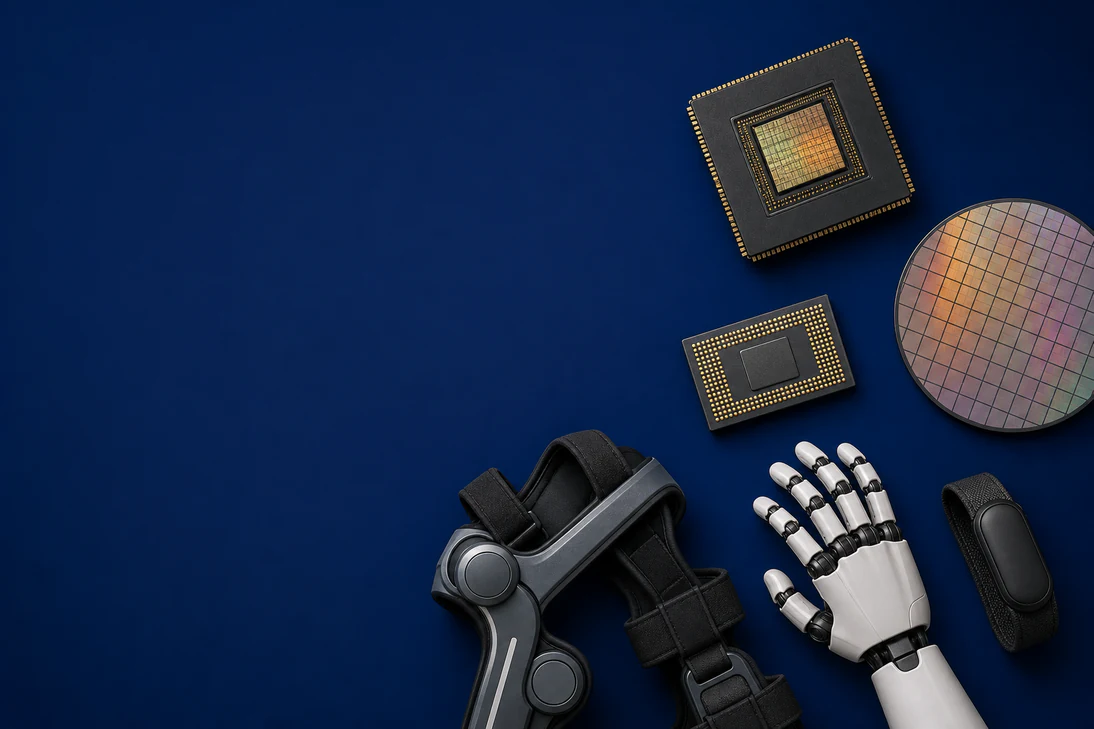
dorsaVi (ASX:DVL) has taken a significant stride in its quest to embed AI intelligence directly at the edge with its latest quarterly update. The company validated that its resistive RAM (RRAM) platform and neuromorphic IP portfolio function together as a coherent system, projecting performance improvements of up to 10 times for robotics and exoskeleton applications. This synergy is crucial for devices that must sense, decide, and act in real time without relying on cloud connectivity.
By integrating memory, signal conversion, and compute closer together, dorsaVi aims to tackle the longstanding “Memory Wall” problem where excessive data shuttling between processor and memory drains power and adds latency. Their approach promises to reduce sensor counts by 25–50%, cut wireless data volume by up to 100 times, and more than double battery life for wearable robotics, key factors for improving mobility and operational endurance.
RRAM Materials Cleared for Commercial CMOS Foundries
Backing the technology validation, dorsaVi successfully qualified all three candidate RRAM material stacks for Back-End-of-Line (BEOL) compatibility on standard commercial CMOS foundry lines. This milestone de-risks the pathway toward volume manufacturing at the 22-nanometre node, with a 180nm test chip tape-out targeted for Q3 2026 and full 22nm design slated for the second half of 2027.
The three-stack qualification provides flexibility and reduces single-stack risk, a critical factor in semiconductor manufacturing. The company’s design review confirmed the compute-in-memory macros can execute inference directly within the memory array, a direct response to the industry-wide energy inefficiency caused by data movement between memory and processors.
Thermal Stability Meets Automotive-Grade Standards
dorsaVi also demonstrated that its RRAM cells maintain stable, fully reversible performance up to 150°C under AEC-Q100 automotive-grade testing. The cells showed zero permanent thermal degradation after cycling through temperatures from room temperature to 150°C and back, confirming robust physical and electrical characteristics.
This predictable temperature response opens the door for temperature-aware voltage optimisation, potentially reducing energy consumption further by adjusting read and write parameters dynamically based on operating conditions.
Integrated RRAM-CMOS Validation Chip Ready for Fabrication
With this design milestone behind it, dorsaVi is poised to engage partners and customers across exoskeleton, defence, robotics, and industrial AI markets, aiming to embed its ultra-edge intelligence platform into next-generation wearable sensors and robotic systems.
Financial Position and Strategic Momentum
As of 30 June 2026, dorsaVi held a cash balance of $2.1 million. The company recorded cash receipts from customers of $315,000 in Q4 FY26, with operating cash outflows around $1.46 million. These figures reflect the timing of receipts and ongoing investment in RRAM and neuromorphic development.
Alongside technical progress, dorsaVi reinforced its exoskeleton and robotics strategy through partnerships and research renewals, including collaborations with Georgia Southern University and licensing robotics IP from NTU Singapore. These moves underpin its ambition to become a leading provider of AI-driven edge intelligence in wearable and robotic technologies.
Bottom Line?
dorsaVi’s technical validations and chip design completion mark critical steps toward commercialising low-power, high-performance edge AI for robotics and wearables, but successful tape-out and silicon testing will be pivotal next milestones.
Questions in the middle?
- Will dorsaVi’s integrated RRAM-CMOS chip meet performance targets in silicon testing?
- How quickly can the company transition from validation chip to volume manufacturing at 22nm?
- What partnerships or contracts will emerge as dorsaVi moves toward commercial deployments in exoskeleton and robotics markets?