Metals Australia Reports $2.56 Billion NPV for Quebec Graphite Projects

4 min read
8:26am on Thursday 30th of July, 2026 AEST ~8am, 30th Jul, 26
Popular on LinkedInPopular on HotCopper
Metals Australia has reported maiden ore reserves and strong economic studies for its Lac Carheil Graphite Project in Quebec, with a combined after-tax NPV of AUD 2.56 billion, positioning the company for a strategic revaluation as it advances feasibility studies.
- Maiden ore reserve of 21.5 Mt grading 11.14% graphite at Lac Carheil
- Upstream PFS shows pre-tax NPV of AUD 790.8 million and 22% IRR
- Downstream Battery Anode Material refinery PEA reveals pre-tax NPV of AUD 2.93 billion and 25.6% IRR
- Combined project after-tax NPV totals AUD 2.56 billion, equivalent to AUD 1,067 per reserve tonne
- Manindi Vanadium-Titanium-Magnetite project advancing with metallurgical test work underway
Transformational Graphite Economics in Quebec
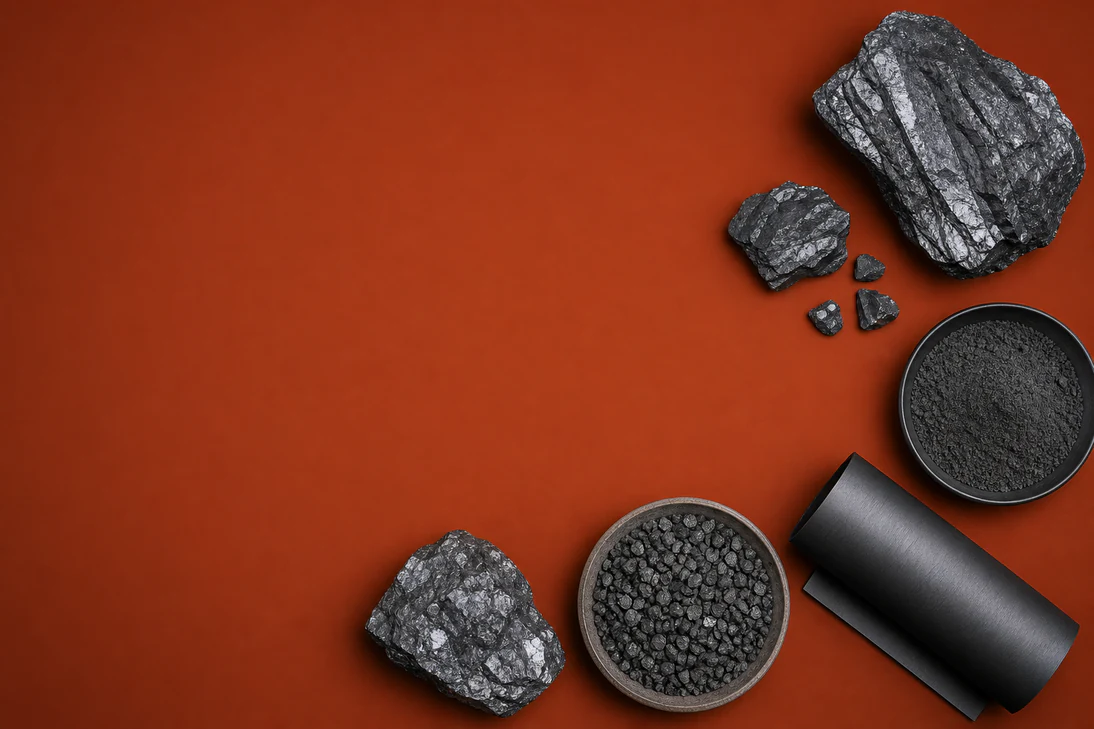
Metals Australia Limited (ASX:MLS) has delivered a major milestone for its Lac Carheil Graphite Project in Quebec, unveiling maiden ore reserves of 21.5 million tonnes grading 11.14% graphitic carbon. This translates to 2.4 million tonnes of contained graphite and boosts Canada's graphite reserves by 40%, from 5.9 million to 8.3 million tonnes. The upstream prefeasibility study (PFS) outlines an open cut mine and flake graphite concentrate plant with robust economics, a pre-tax net present value (NPV-8) of AUD 790.8 million and an internal rate of return (IRR) of 22%, supported by a 24-year mine life and annual production of approximately 101,000 tonnes of high-purity graphite concentrate.
Capital expenditure is estimated at USD 346.3 million, but Canadian Clean Technology Manufacturing Investment Tax Credits could reduce effective CAPEX to USD 249.6 million. Operating costs stand at USD 474 per tonne of product, with an all-in sustaining cost of USD 533 per tonne, against a conservative forecast product price of USD 1,385 per tonne. The project benefits from proximity to mining communities like Fermont, Wabush, and Labrador City, supporting a workforce peak of 183 full-time employees.
Battery Anode Material Refinery Drives Upside
The downstream Preliminary Economic Assessment (PEA) for a Battery Anode Material (BAM) refinery near Baie-Comeau reveals even more compelling economics. Designed to process 75,000 tonnes of fine flake graphite concentrate annually into 51,000 tonnes of coated spherical purified graphite suitable for lithium-ion battery anodes, the refinery boasts a pre-tax NPV of AUD 2.93 billion and an IRR of 25.6%. Total CAPEX is pegged at USD 884 million, potentially reduced to USD 621 million after tax credits. Operating costs are estimated at USD 2,362 per tonne of product, with sales prices forecast at USD 8,926 per tonne, underpinning a strong margin.
With 227 jobs expected at the refinery, the project aligns with Baie-Comeau’s vision to become a graphite value-addition hub, supported by local infrastructure and skilled labour pools. Both upstream and downstream projects are now advancing to feasibility studies, with metallurgical test work underway and environmental surveys commenced.
Integrated Project Value and Strategic Positioning
Combined, the upstream and downstream projects deliver an after-tax NPV of AUD 2.56 billion, equivalent to around AUD 1,067 per reserve tonne, an impressive valuation gap compared to the company’s current enterprise value of AUD 3.95 per reserve tonne based on a 1.8 cent share price. Metals Australia’s CEO Paul Ferguson highlighted this disparity as an opportunity for significant revaluation as investor awareness grows around the project’s scale and strategic importance in the North American battery supply chain.
Stakeholder engagement in Quebec and Toronto has increased, with the company leveraging the rising interest in graphite following the Nouveau Monde Graphite Project’s construction start. Permitting progress includes new exploration permits for the Corvette River Gold and Base Metals Projects, allowing trenching and drilling through mid-2028.
Australian Vanadium-Titanium-Magnetite Project Advances
Back home, Metals Australia continues to develop its Manindi Vanadium-Titanium-Magnetite (VTM) project in Western Australia. Geological modelling is underway to support a Mineral Resource Estimate, while metallurgical test work aims to produce high-purity TiO2 and iron-vanadium concentrates. Early drilling results have confirmed high-grade mineralisation over a 1.2-kilometre strike length, with true widths between 75 and 95 metres and vertical depths extending to 260 metres. Further test work will explore mineral extraction and recovery, including vanadium and gallium.
Financial Position and Next Steps
Metals Australia ended the quarter with cash of AUD 3.733 million, down slightly due to exploration and study expenditures. The company expects to receive Canadian mineral exploration tax credit rebates next quarter, potentially recovering up to 45 cents on the dollar for eligible expenditures. The focus remains on advancing feasibility studies in Quebec, marketing the integrated graphite project to investors and partners, and progressing metallurgical programs in Australia.
Bottom Line?
Metals Australia’s Quebec graphite projects have established a compelling economic foundation, but translating this into market value hinges on successful feasibility outcomes and strategic partnerships.
Questions in the middle?
- How will Metals Australia bridge the valuation gap between project NPV and current market capitalisation?
- What timeline and funding strategies will the company pursue to advance feasibility studies and construction?
- How might evolving graphite and battery material market dynamics impact project economics and off-take agreements?