Audeara’s AI Chip Licensing Moves Into Commercial Production with Optek

Audeara has reached a key milestone as its chip-level AI licensing partnership with Optek enters commercial production, receiving initial purchase orders worth about A$31,000. This validates Audeara’s scalable fee-per-chip licensing model and sets the stage for broader applications in audio and hearing health.
- Chip-level AI licensing partnership enters commercial production
- First purchase orders total approximately A$31,000
- Deployment includes AI noise-reduction technology on semiconductor chips
- Validates fee-per-chip licensing strategy with Optek
- Foundation laid for consumer audio and hearing-health applications

Commercial Production Validates Licensing Model
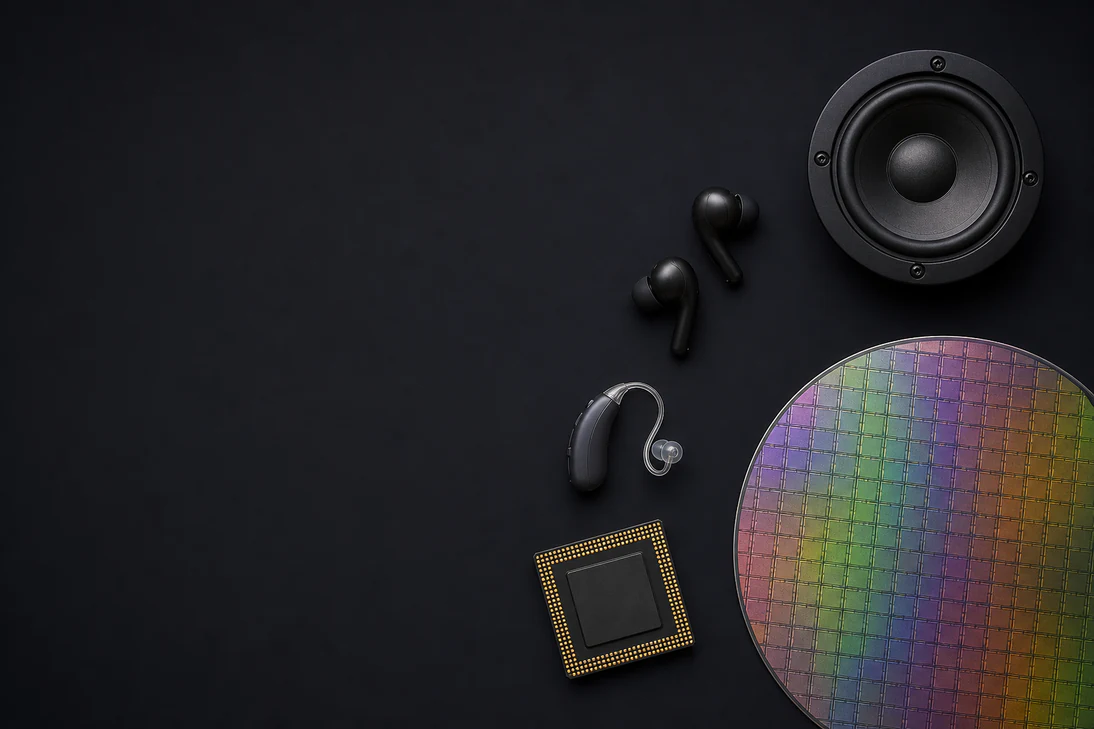
Audeara Limited (ASX:AUA) has crossed a significant commercial threshold with its chip-level AI licensing partnership alongside Optek Microelectronics moving into full production. The company has received its first purchase orders for licensed AI audio technology embedded in two separate customer product programs, valued at around A$31,000. While modest in financial terms, this milestone is crucial as it marks the first revenue-generating deployment of Audeara’s proprietary AI audio algorithms under its fee-per-chip licensing model.
This transition from development to commercial production confirms Audeara’s ability to adapt and optimise its AI noise-reduction technology for integration on third-party semiconductor platforms. It also demonstrates the company’s capacity to meet the technical demands of a semiconductor partner and its customers, progressing through validation and acceptance phases to commercial deployment.
AI Noise Reduction at the Chip Level
The core technology deployed includes Audeara’s AI noise-reduction algorithms, implemented efficiently on-chip to support low latency and high-quality speech and sound processing. This on-chip approach is essential for audio applications constrained by processing power and latency requirements, such as consumer audio devices, hearables, and hearing aids.
By embedding AI capabilities directly onto semiconductor chips, Audeara lays a technical foundation that could extend its AI audio suite across a variety of products requiring enhanced speech clarity and processing efficiency. This capability aligns with the company’s broader roadmap targeting assistive listening and hearing-health markets.
Strategic Implications and Future Revenue Streams
Audeara’s CEO James Fielding highlighted the strategic importance of this milestone, noting that the successful on-chip deployment proves the viability of their capital-light, scalable licensing strategy. The fee-per-chip model allows Audeara to monetise its technology without the need for heavy capital investment, positioning it well for growth as production scales.
The commercial terms of the licensing agreement remain confidential, reflecting competitive sensitivities. However, future revenue recognition will depend on additional licensed products being ordered and manufactured under approved programs. This development builds on the company’s recent momentum, following record FY26 revenue and cash receipts, driven in part by advances in AI audio licensing and other technology deployments.
Optek Partnership and Market Positioning
Optek, a seasoned player with over 20 years in professional audio DSP SoC design, provides a strong semiconductor platform for Audeara’s AI technology. Their collaboration brings together expertise in intelligent audio chipsets and AI, targeting global consumer electronics and professional audio markets.
The commercial production milestone underscores the potential for Audeara’s AI audio algorithms to be embedded widely through partnerships with semiconductor providers and OEM/ODM customers, expanding reach beyond its direct product sales. This approach could accelerate adoption across diverse audio applications, including new-energy vehicles and assistive listening technologies.
Bottom Line?
Audeara’s breakthrough in chip-level AI licensing sets a scalable revenue path but hinges on broader customer adoption and volume growth.
Questions in the middle?
- How quickly will additional licensed products move from development to commercial production?
- What is the potential scale of revenue from the fee-per-chip licensing model in the medium term?
- How will Audeara navigate competitive pressures in AI audio technology licensing?